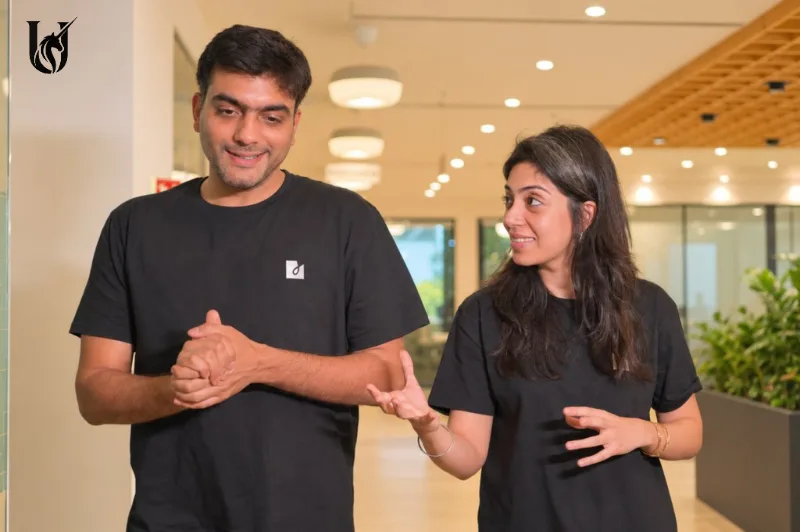
Indian semiconductor startup Bharat Semi has raised $24 Mn in an all-equity seed funding round led by Info Edge Group, South Park Commons and Indus Bridge Ventures. New Delhi-based company will use the capital to develop AI-enabled image sensors, strengthen its engineering teams and expand its presence in international markets.
The round also saw participation from Valour Capital, Micromax, Gaingels and individual investors. The funding comes as Bharat Semi works towards commercialising its first generation of programmable image sensors, with initial production targeted for 2027.
Founded in 2021 by Vrinda Kapoor and Vinayak Dalmia, Bharat Semi is developing chips that combine image capture, processing and artificial intelligence capabilities on a single device. The startup is positioning the technology for applications across smart homes, industrial automation, surveillance, drones and aerospace.
Bharat Semi's approach to AI-powered image sensors
Conventional imaging systems often rely on separate components for image capture, image signal processing and computing. Bharat Semi is developing programmable sensors that bring these functions closer together on a single chip.
The objective is to allow devices to interpret visual information at the point where it is captured, rather than constantly transferring data to separate processing hardware.
Co-founder Vrinda Kapoor said that this integrated architecture could reduce system costs by at least 70% compared with conventional arrangements involving separate sensors, image signal processors and system-on-chips. This is a company estimate and has not been independently established as a market-wide cost saving.
Potential applications include smart air conditioners that detect whether a room is occupied and drones capable of processing visual information without relying on expensive external computing systems.
The startup's first-generation sensors are currently in the prototyping stage. Its second-generation products, expected to include more advanced AI capabilities, are targeted to reach the prototype stage by mid-2027. The company plans to put these newer sensors into customers' hands by the end of 2027.
General Atomics and Kaynes Semicon among design wins
Bharat Semi says it has secured design wins with US defence technology company General Atomics and India's Kaynes Semicon.
These early customer engagements are significant for a startup that is still pre-revenue and has yet to begin commercial production of its image sensors. Design wins indicate that a company's technology has been selected or incorporated into a customer's product-development plans, but they should not be confused with large-scale commercial orders or recognised revenue.
The company has around 75 employees across India and the United States, including a team of approximately 10–12 people in Santa Clara, California. It plans to expand its US workforce to around 20 by mid-2027 and has also started hiring engineers in Europe.
Founders target global semiconductor opportunity
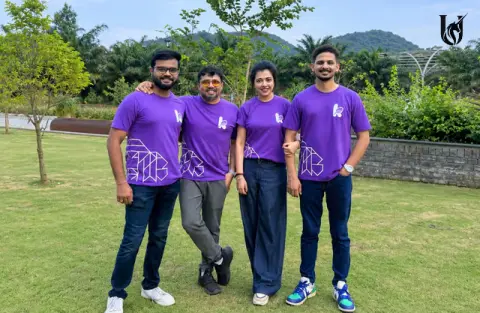
Bharat Semi was co-founded by Vrinda Kapoor and Vinayak Dalmia in late 2021.
Kapoor is a South Park Commons fellow with an earlier background in healthcare technology. Dalmia, the company's managing director, has previously worked at McKinsey and in private equity. Its chief technology officer, Boyd Fowler, previously held the same role at image-sensor manufacturer OmniVision.
The founders are targeting international markets, particularly the United States, while building engineering and product-development capabilities in India.
The latest funding will support product development, engineering expansion and the company's go-to-market plans. Kapoor told Mint that the capital is intended to support the business for approximately two-and-a-half years, during which it aims to become revenue-positive and deploy around six products with major customers. These are management targets, not achieved milestones.
Fabless business model separate from proposed chip factory
Bharat Semi's image-sensor strategy is based on a fabless model. It plans to focus on semiconductor design and software while outsourcing chip manufacturing to external fabrication partners.
This is separate from the semiconductor fabrication project the company announced in 2024, which involved a proposed technology partnership with the US Space Force. That initiative remains under development, and the company is looking for domestic partners to build and operate the facility.
Kapoor has clarified that the new $24 Mn seed funding will not be used to finance the proposed fabrication project.
The distinction matters as India seeks to strengthen its semiconductor ecosystem. Building a globally competitive chip-design company does not require the same infrastructure or capital commitments as establishing and operating a semiconductor fabrication plant.
For Bharat Semi, the immediate challenge is to convert its sensor prototypes and early design wins into commercially deployable products. Its ability to meet the 2027 production timeline and secure repeat customer demand will be important tests of whether its integrated sensing-and-AI approach can compete in global markets.