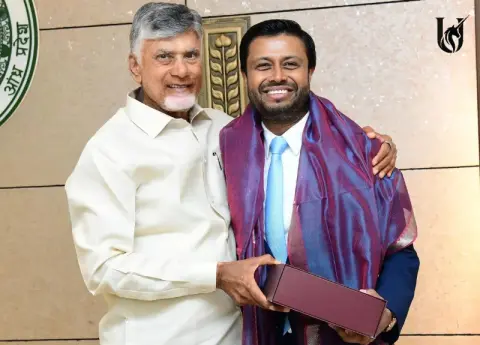
Chennai-based space-tech startup Agnikul Cosmos has signed MoU with the Andhra Pradesh government to invest Rs 510 crore in a facility in Tirupati district. The proposed unit will manufacture orbital data centre platforms and reusable rockets, adding a new dimension to India's growing private space industry.
The agreement, signed during the CII Partnership Summit 2026, will support two areas of the company's business: manufacturing platforms that can host data centres in orbit and assembling launch vehicles for missions from the nearby Sriharikota spaceport.
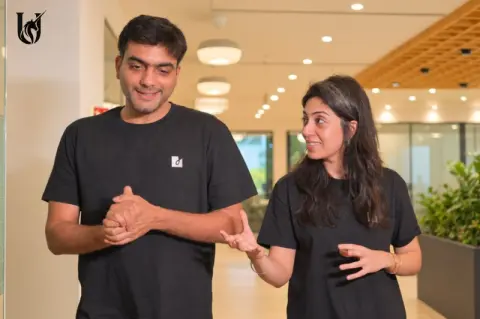
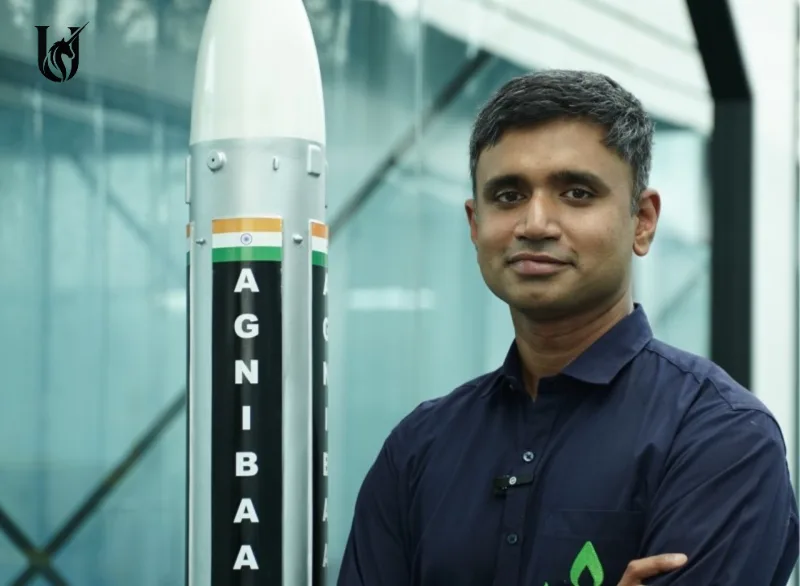
Agnikul co-founder and CEO Srinath Ravichandran said the company has developed technology that can turn the upper stage of its rocket into an in-space platform capable of hosting data centre infrastructure. The company is also looking to establish a manufacturing facility in Tirupati to build these units.
The project is expected to create around 350 employment opportunities, according to reports on the investment agreement. However, the Rs 510 crore figure represents a proposed investment under the MoU, not capital already deployed.
How Agnikul plans to build data centres in space
Unlike conventional launch vehicles, which discard their upper stages after placing payloads into orbit, Agnikul wants to extend the use of this section of its rocket.
The company's approach is to retain the upper stage in orbit and use it as a platform for hosting computing infrastructure. This could allow customers to integrate data centre hardware, including processors used for demanding computing workloads, with the rocket's upper-stage platform.
Ravichandran has cited access to solar energy and the possibility of avoiding some of the water requirements associated with terrestrial data centre cooling as potential advantages of space-based computing.
The company says it has patented the underlying technology and is already developing a test version at its existing facilities. The proposed Tirupati factory is intended to support manufacturing at a larger scale.
However, commercial deployment will depend on overcoming significant engineering and operational challenges, including radiation exposure, thermal management, reliable power systems, communication links and the cost of launching and maintaining hardware in orbit.
Reusable Agnibaan rocket mission planned for 2027
The second focus of the Andhra Pradesh facility is rocket manufacturing and assembly. Its proximity to Sriharikota is expected to support launch operations, particularly missions targeting equatorial and low-inclination orbits.
Agnikul is preparing to test a reusable rocket mission in the first half of 2027, according to Ravichandran's comments to Fortune India.
The planned architecture involves recovering the lower stage after it separates from the rocket, while the upper stage is intended to remain in orbit and potentially serve as a platform for other applications, including data centres.
This is an important distinction from conventional rocket recovery programmes: Agnikul is exploring ways to reuse the upper stage's functionality in space rather than simply bringing the entire stage back to Earth.
The company has already achieved a notable milestone. On May 30, 2024, it launched Agnibaan SOrTeD, the world's first rocket to fly with a single-piece 3D-printed engine. The sub-orbital technology demonstrator was launched from Agnikul's privately developed launchpad at Sriharikota.
The 2024 flight demonstrated key indigenous technologies. It was not, however, an orbital commercial launch or a demonstration of a fully reusable rocket.
Government support adds to Agnikul's reusable rocket programme
The Andhra Pradesh agreement follows a separate government-backed funding arrangement for Agnikul's reusable launch vehicle development.
In September 2026, the Technology Development Board under the Department of Science and Technology signed an agreement to provide Rs 200 Cr in financial support under the Research Development and Innovation Fund. The support, structured through optionally convertible debentures, is intended to advance the Agnibaan reusable launch vehicle programme from Technology Readiness Level 4 towards Level 8.
The Rs 200 Cr support is separate from the Rs 510 Cr Andhra Pradesh MoU and should not be treated as part of the same investment announcement.
Founded in 2017, Agnikul Cosmos was established by Srinath Ravichandran and Moin SPM, with Professor Satyanarayanan R. Chakravarthy among the company's founding academic figures. The IIT Madras-incubated startup is developing small-satellite launch vehicles powered by 3D-printed rocket engines.
Why the project matters for India's space-tech ecosystem
Agnikul's plan places India among the countries exploring the possibility of moving some computing infrastructure beyond Earth. Global technology companies are also investigating the concept. Google's Project Suncatcher, for example, has moved into early orbital testing of satellite-based AI computing hardware.
For Agnikul, the opportunity is to connect two emerging markets: commercial launch services and in-space infrastructure. If its upper-stage platform can be developed into a reliable hosting system, it could create an additional use for rocket technology beyond delivering satellites into orbit.
The immediate test, however, is execution. The company will need to demonstrate reliable reusable launch operations, validate its orbital platform technology and establish a commercially viable manufacturing model.
The Rs 510 crore MoU marks a significant expansion plan for Agnikul. Whether it becomes a scalable business in orbital computing will depend on the technical results and customer demand that follow.
Editorial notes
-
Founder names: Srinath Ravichandran and Moin SPM are identified as co-founders. Professor Satyanarayanan R. Chakravarthy is described as a founding academic figure/advisor, not automatically presented as a company co-founder.
-
Investment status: Rs 510 crore is the proposed investment under the Andhra Pradesh MoU. It should not be described as money already spent.
-
Government support: The separate Rs 200 crore RDI agreement is financial support for reusable rocket development, not part of the Rs 510 crore state MoU.
-
Timeline: The first-half 2027 reusable mission is a company target, not a completed or independently verified launch date.
-
Technology status: The 2024 Agnibaan SOrTeD flight was sub-orbital. It did not demonstrate an operational orbital data centre or a fully reusable rocket.
-
Employment: The reported 350-job figure is a project expectation, not confirmed employment already created.