Oister Global has launched a dedicated deep-tech investment fund targeting Rs 400 Cr, with a Rs 200 Cr greenshoe option that could take its total corpus to Rs 600 Cr. The fund will invest in eight to 10 growth-stage Indian technology companies, focusing on businesses that have moved beyond product development and are preparing to scale commercial operations.
Registered as Oister Global Scheme II, the fund is a SEBI Category II Alternative Investment Fund (AIF). It will have a six-year tenure, with an extension of up to two years subject to investor approval.
The strategy is designed to address a funding gap between early-stage venture capital and larger institutional investments. Oister intends to back companies with proven technology, defensible intellectual property, paying customers and a clear route towards commercial expansion.
Which sectors will the Oister Deep Tech Fund target?
The fund will focus on areas including:
-
Space technology, defence and aerospace
-
Semiconductors and electronics
-
Quantum technologies
-
Advanced mobility
-
Advanced materials
-
Energy storage
Rather than financing companies at the research or concept stage, Oister will look for businesses that have crossed what investors often describe as the 'valley of death' - the difficult transition from technology development to commercialisation.
Its preferred companies will have patented technology in India and international markets, multiple revenue streams, and domestic as well as overseas customers.
The capital will support production expansion, execution of customer orders and wider commercial adoption. According to The Unicorn Magazine, the fund is considering investments of approximately Rs 70 Cr to Rs 100 Cr per company.
Oister has already identified an initial shortlist of potential investments, with further opportunities to be assessed as the fund is deployed.
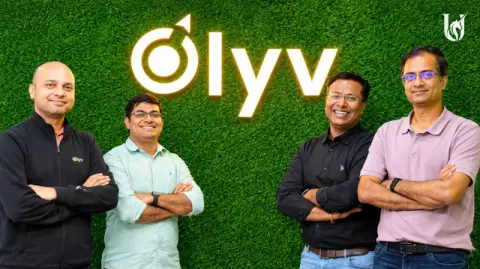
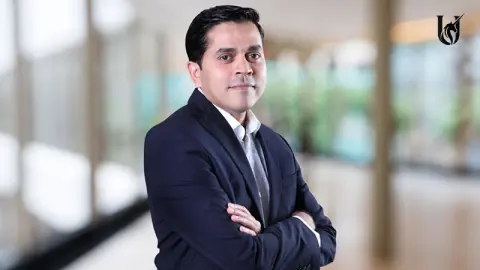
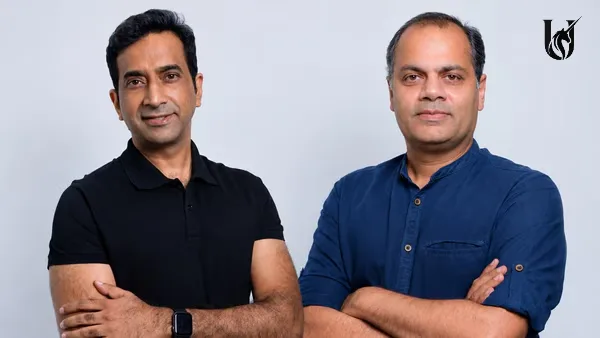
Rohit Bhayana and Sandeep Sinha lead Oister Global
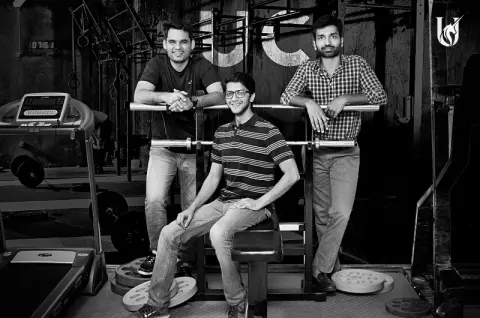
Oister Global was founded by Rohit Bhayana and Sandeep Sinha, who serve as co-CEOs and co-founders.
Bhayana said that while investment in deep technology is increasing, companies often struggle to secure growth capital after their initial development stage. He said the fund aims to support businesses at the point where technology must translate into commercial operations.
Sinha said deep-tech companies have different funding requirements from software startups because they often spend years developing products before requiring substantial capital for manufacturing, deployment and sales.
The fund's investment approach will prioritise paying customers and clear commercial applications rather than scientific potential alone.
Oister describes its investment philosophy as a "glass-box" approach, emphasising transparency and a structured assessment of investment opportunities.
India's deep-tech funding grows, but late-stage capital remains limited
The fund launch comes as India's deep-tech investment market records stronger activity.
According to the IVCA Bharat DeepTech Report 2026, Indian deep-tech companies attracted approximately $2.96 billion across 189 deals in 2025, making it the strongest year on record. Cumulative private equity and venture capital investment reached $11.4 Bn across 957 deals between 2015 and July 2026.
However, the number of companies progressing to later funding stages remains a concern.
The World Intellectual Property Organization's (WIPO) Global Innovation Index 2026 identifies 453 Indian deep-science startups and spinouts, of which only 18 are classified as late-stage. The comparable figures are 12,752 companies and 1,980 late-stage businesses in the United States, and 3,466 companies and 582 late-stage businesses in China.
WIPO's deep-science dataset has a specific scope and should not be interpreted as a count of every deep-tech startup operating in these countries.
For investors, the opportunity is increasingly about financing the transition from successful prototypes and initial customer orders to repeatable production and global sales.
Oister's concentrated fund structure reflects this shift. By targeting a small portfolio of established technology businesses, it is positioning itself around commercial scale-up rather than early-stage experimentation.
The fund's eventual impact will depend on how effectively it converts its proposed corpus into investments and helps portfolio companies build sustainable businesses.
Editorial notes
-
Fund size: Rs 400 crore is the base fundraising target. The additional Rs 200 cr greenshoe option takes the potential corpus to Rs 600 Cr; this is not confirmation that the full amount has been raised.
-
Portfolio: The fund plans to invest in eight to 10 companies. The initial shortlist is not a confirmed portfolio announcement.
-
Investment cheque size: Rs 70-100 Cr Each company range is reported by The Unicorn Magazine, not stated in the supplied announcement.
-
Market data: The approximately $3 billion figure is rounded from the IVCA reported $2.96 billion. WIPO's 453 company figure refers specifically to deep-science startups and spinouts, not the entire Indian deep-tech startup population.
-
Founders: Rohit Bhayana and Sandeep Sinha are Oister Global's co-founders, not founders of the companies the fund may invest in.