Urban Company has opened a QIP to raise up to Rs 2,500 Cr, setting a floor price of Rs 161.03 per equity share. The Gurugram-based home services platform plans to use the fresh capital to expand its businesses, with Rs 600 crore earmarked for InstaHelp, its instant domestic-help service, as it continues to invest in growth despite rising quarterly losses.
The company's Fund Raise Committee approved the opening of the issue and the preliminary placement document on November 16, 2026. The QIP follows board approval on October 16 and a special resolution passed by shareholders through a postal ballot on November 15.
Urban Company may offer institutional investors a discount of up to 5% on the floor price. The final issue price will be determined in consultation with the book-running lead managers.
The company has proposed a fundraise of up to Rs 2,500 Cr. The launch of the QIP does not, by itself, confirm that the entire amount has been raised or allotted.
How Urban Company plans to use the QIP proceeds
According to the preliminary placement document, Urban Company has identified five specific uses for Rs 1,475 Cr of the proposed proceeds:
| Proposed allocation | Amount |
|---|---|
| InstaHelp expansion | Rs 600 Cr |
| Marketing and brand building | Rs 540 Cr |
| Technology development and cloud infrastructure | Rs 200 Cr |
| Office rent | Rs 85 Cr |
| R&D for Native products | Rs 50 Cr |
| Total specified allocation | Rs 1,475 Cr |
The remaining Rs 1,025 Cr is intended for inorganic growth opportunities and general corporate purposes, according to reports on the placement document.
The company plans to deploy the Rs 600 Cr allocated to InstaHelp over three financial years: Rs 150 Cr in FY27, Rs 300 Cr in FY28 and Rs 150 Cr in FY29.
The allocation highlights the importance of InstaHelp to Urban Company's expansion strategy. The service competes with quick domestic-help platforms such as Snabbit and Pronto.
InstaHelp growth comes with higher financial losses
Urban Company's Q2 FY27 results show the financial trade-off involved in scaling its newer business.
For the quarter ended September 30, 2026, operating revenue increased 41.4% YoY to Rs 537.3 Cr from Rs 380 cr. However, consolidated net loss widened to Rs 182.5 Cr from Rs 59.3 Cr in the corresponding quarter last year.
The company's reported adjusted EBITDA loss stood at Rs 144 Cr, reflecting a Rs 174 Cr investment in InstaHelp during the quarter.
The core business excluding InstaHelp remained profitable at the adjusted EBITDA level, generating Rs 30 Cr, up 213% YoY. This distinction is important: the overall loss is being driven substantially by investment in the fast-growing domestic-help vertical, while the established business continues to generate positive adjusted EBITDA.
InstaHelp completed 6.2 million orders during Q2 FY27, up 63% sequentially, while its net transaction value reached Rs 71 Cr. The company also reported that its adjusted EBITDA loss per order improved to Rs 279 from Rs 346 in Q1 FY27.
For comparison, Snabbit founder Aayush Agarwal said his company fulfilled 6.45 million orders in the same quarter. These are company-reported figures and have not been independently audited on a like-for-like basis.
Urban Company founders pursue the next phase of growth
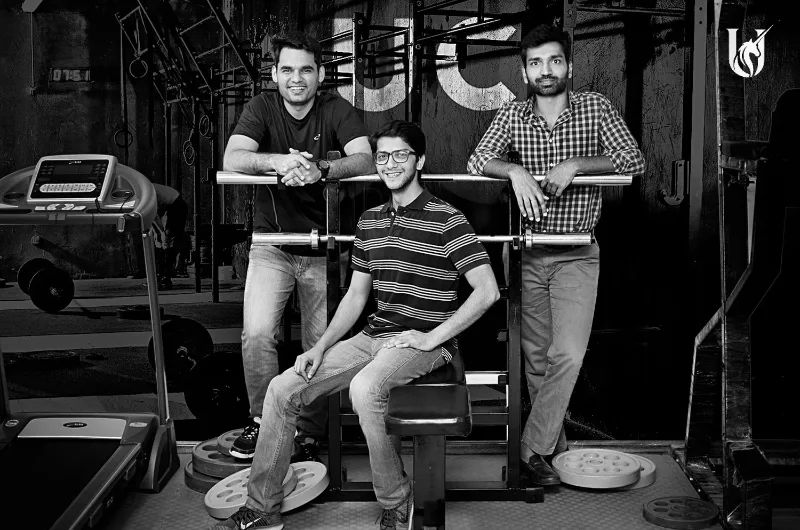
Urban Company was founded in 2014 by Abhiraj Singh Bhal, Varun Khaitan and Raghav Chandra. The company has expanded from a home-services marketplace into a broader platform covering cleaning, repairs, beauty services and home products.
Its Native brand sells products including water purifiers and smart locks, and the company has also received in-principle board approval to explore residential air conditioners as another category.
The proposed QIP provides additional capital to support these expansion plans, strengthen InstaHelp's supply network and potentially pursue acquisitions.
For investors, the central question is how quickly Urban Company can translate its spending into stronger customer retention, higher service density and better unit economics. Its core business is already generating positive adjusted EBITDA, but the scale and duration of investment in InstaHelp will remain important to the company's overall profitability.
Editorial notes
-
Fundraise status: The QIP opened on November 16 with a proposed size of up to Rs 2,500 crore. The Unicorn Magazine subsequently reported bids of approximately Rs 15,300 crore. Do not describe the amount as finally allotted until the company files the allotment outcome.
-
Rs 85 Cr allocation: multiple reports this amount as office rent, while BusinessToday describes it as training infrastructure. The precise classification should be checked against the complete preliminary placement document before publication.
-
Rs 1,025 Cr balance: Reported as intended for inorganic growth opportunities and general corporate purposes.
-
Financial metrics: The company reported an adjusted EBITDA loss of Rs 144 Cr, including Rs 174 Cr of investment in InstaHelp. This is a different measure from the reported consolidated net loss of Rs 182.5 Cr.
-
Competition: The 6.2 million InstaHelp orders and Snabbit's 6.45 million orders are company-reported figures. Avoid treating them as independently verified market-share data.
-
Founders: Abhiraj Singh Bhal, Varun Khaitan and Raghav Chandra founded Urban Company in 2014. Abhiraj Singh Bhal is its current Chairperson, Managing Director and CEO.