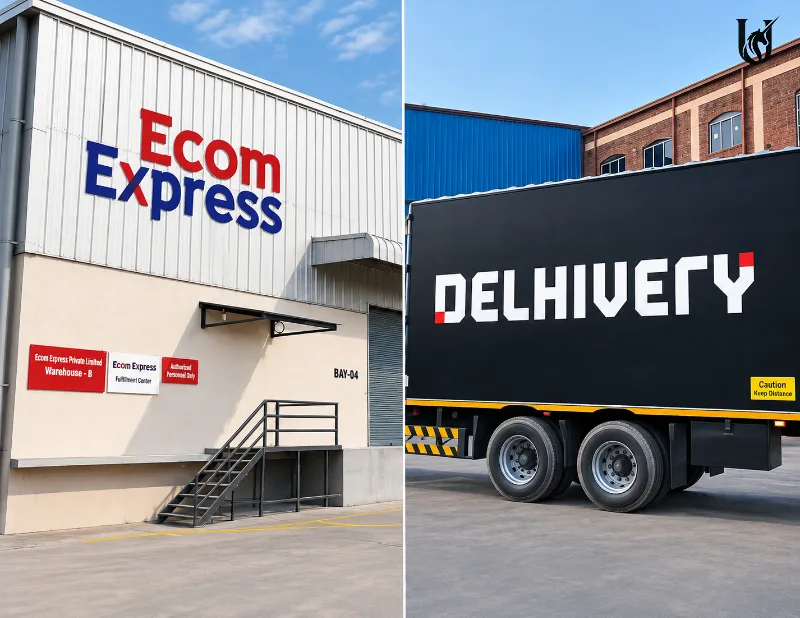
Delhivery has initiated arbitration proceedings against the former investors of Ecom Express, seeking Rs 51.88 crore in indemnity claims linked to its acquisition of the logistics company in July 2025.
In a regulatory filing dated November 27, 2026, Delhivery said it had submitted a notice of arbitration to the Singapore International Arbitration Centre (SIAC), naming British International Investment PLC, Eaglebay Investment Ltd and PG Esmeralda Pte Ltd as respondents. The arbitration will be seated in Singapore.
Eaglebay Investment is affiliated with US-based private equity firm Warburg Pincus, while PG Esmeralda is associated with Partners Group.
According to Delhivery, it identified certain losses after completing the acquisition and believes the former shareholders are contractually required to compensate it under the share purchase agreement (SPA). The company said it had provided supporting documents to the sellers but that they disputed its claims. Delhivery has now invoked the agreement's arbitration mechanism to recover the amount.
The company has not disclosed the specific nature of the losses or provided details of the sellers' objections. The Rs 51.88 crore claim excludes interest and arbitration costs, which will be calculated separately. Delhivery said the final financial impact cannot be determined until the dispute is adjudicated.
Delhivery's Rs 1,369 Cr Ecom Express acquisition
Delhivery announced its plan to acquire at least 99.4% of Ecom Express in April 2025, with an initial proposed purchase consideration of up to Rs 1,407 crore.
Following commercial negotiations, the agreement was revised in July 2025 to cover 99.87% of Ecom Express' fully diluted share capital. The acquisition was completed on July 18, 2025, for approximately Rs 1,369 crore, making Ecom Express a subsidiary of Delhivery.
The deal brought together two established players in India's e-commerce logistics market. Delhivery said the acquisition would strengthen its network, improve service capabilities and support investments in infrastructure, technology and automation.
Ecom Express had previously planned a public listing, filing draft papers for a ₹2,600 crore IPO in August 2024. Although it received regulatory approval, the company did not proceed with the offering.
Delhivery returns to profit in Q2 FY27
The arbitration filing comes as Delhivery reports improving financial performance following the integration of Ecom Express.
For the second quarter of FY27, the company reported consolidated revenue from services of ₹3,066 crore, up 19.8% YoY. Net profit stood at approximately ₹41 crore, compared with a net loss of ₹51 crore in the corresponding quarter last year.
Adjusted EBITDA increased 48% YoY to ₹123 crore, with its margin improving to 4%.
However, the reported profit comparison needs context. Delhivery said its net profit would have been ₹59 crore in Q2 FY26 and ₹62 crore in Q1 FY27 if the impact of the Ecom Express acquisition had been excluded. The company also reported no Ecom integration costs in Q2 FY27, compared with ₹90 crore in the year-ago quarter and ₹17 crore in Q1 FY27.
What the arbitration means for the acquisition
Founded in 2011 by Sahil Barua, Mohit Tandon, Bhavesh Manglani, Suraj Saharan and Kapil Bharati, Delhivery is one of India's leading integrated logistics and supply chain companies. Sahil Barua currently serves as its Managing Director and CEO.
The ₹51.88 crore claim represents a contractual dispute arising from the acquisition rather than a new operating expense or a fresh acquisition announcement. Its outcome could determine whether Delhivery recovers additional compensation from the former shareholders under the SPA.
For investors, the development brings attention to the indemnity protections negotiated in large acquisitions. Such provisions are designed to allocate responsibility for specified losses discovered after a transaction closes.
While the claim is relatively small compared with the ₹1,369 crore acquisition consideration, the dispute highlights the importance of post-deal due diligence, contractual warranties and risk allocation in large corporate transactions.