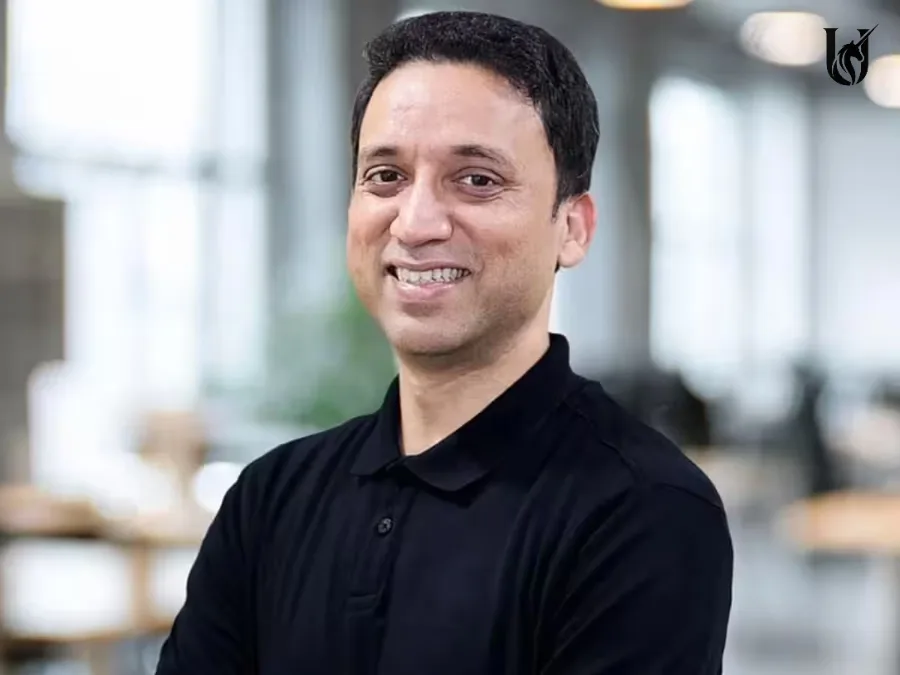
Uber has appointed former Zomato food delivery chief Rakesh Ranjan as President for India and South Asia, effective January 4, 2027. The appointment comes as the ride-hailing company looks to strengthen its leadership in one of its most important global markets, where competition, affordability and driver economics remain central to growth.
Ranjan will report to Dom Taylor, Uber's Regional General Manager for Asia Pacific. He joins the mobility platform from Allen Online, the digital arm of Allen Career Institute, where he currently serves as CEO.
The appointment follows a leadership vacancy created after Prabhjeet Singh left Uber in June 2026 to become Managing Director of OpenAI's India operations. Uber said its search for a successor lasted more than three months.
Ranjan joined Zomato in 2017 and spent approximately eight years at the company. During his tenure, he held leadership positions across Zomato Gold, sales and food delivery operations before becoming CEO of the company's food ordering and delivery business.
He stepped down from Zomato in April 2025 and subsequently joined Allen Online as its CEO in September 2025. At Allen, his mandate involved leading the digital education business of the Kota-based coaching institute.
His experience across food delivery and online education gives him exposure to consumer-facing businesses that depend on technology, operational execution, large partner networks and customer retention.
In his new role, Ranjan said his focus would be on improving everyday mobility through dependable rides, affordable options and better earning opportunities for drivers.
Uber's Asia Pacific leadership said his experience in running large consumer businesses in India was a key factor behind the appointment.
India's importance to Uber extends beyond its customer base. According to the company, India is its third-largest market globally by trips, after the United States and Brazil, and its second-largest market by the number of earners.
Uber operates in more than 200 cities across India, offering multiple mobility options, including bikes, autos, cars and metro services. More than two million monthly active drivers earn through its platform, according to company figures.
India is also home to Uber's largest technology centres outside the United States, located in Bengaluru and Hyderabad. These centres support the company's broader global technology and product operations.
The scale of the Indian business gives Ranjan a significant operational mandate. Uber must continue improving ride availability, pricing and reliability while ensuring that drivers find the platform economically attractive.
Uber's appointment comes amid intensifying competition in India's mobility market. Domestic platforms such as Rapido have expanded their presence across two-wheeler and other mobility categories, increasing pressure on established ride-hailing operators.
For Uber, growth will depend on serving different price segments while maintaining a reliable supply of drivers. Bike taxis, autos and other lower-cost options have broadened the addressable market, but they also require local execution and a careful balance between rider affordability and driver earnings.
Ranjan's experience scaling Zomato's food delivery operations could be relevant to these challenges. Food delivery and ride-hailing are different businesses, but both rely on managing large distributed partner networks, improving service quality and responding to changing consumer demand.
Ranjan is a professional executive, not a founder of either Uber or Zomato. Uber was co-founded by Garrett Camp and Travis Kalanick, while Zomato was founded by Deepinder Goyal and Pankaj Chaddah in 2008.
Uber entered India in 2013 and has since expanded from its original cab-booking model into a broader mobility platform. Zomato, meanwhile, grew from restaurant discovery into one of India's largest food delivery businesses.
Ranjan's appointment brings an experienced consumer internet operator into Uber's regional leadership at a time when the company's Indian business is competing across multiple mobility categories.
His performance will ultimately be measured not just by expansion, but by improvements in rider experience, driver earnings, service reliability and the company's ability to defend its position in a highly competitive market.