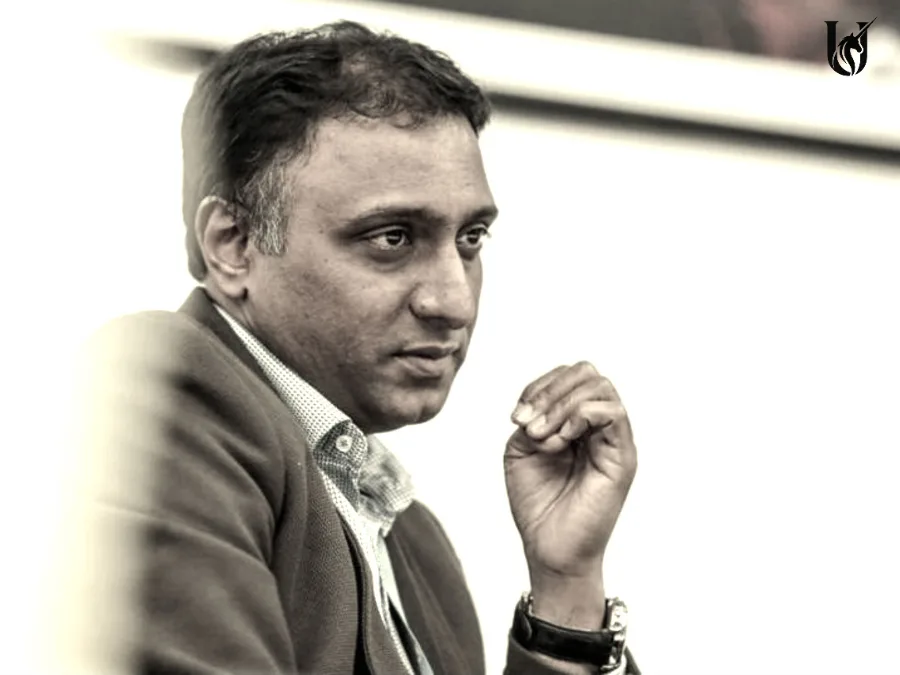
Walmart-owned Flipkart is preparing for a major leadership transition, with Group CEO Kalyan Krishnamurthy reportedly set to step down over the coming weeks after nearly a decade at the helm of the e-commerce company.
According to people familiar with the development cited in media reports, Flipkart has called an emergency town hall for employees amid speculation about Krishnamurthy's departure. The company had not officially confirmed the reported exit at the time of writing, and the reason for the proposed transition remains unclear.
If confirmed, the move would mark the end of a defining leadership chapter for one of India's largest e-commerce businesses. Krishnamurthy has led Flipkart through its transition to Walmart ownership, intensifying competition from Amazon and Meesho, and a series of strategic changes as the company prepares for a potential public listing.
Kalyan Krishnamurthy joined Flipkart in 2016 after serving as a managing director at Tiger Global Management, one of the company's early and largest investors.
He was appointed CEO of Flipkart in January 2017, replacing co-founder Binny Bansal, and became Group CEO in 2018 following Bansal's departure. Before joining Tiger Global, Krishnamurthy held finance roles at eBay and Procter & Gamble. He had also worked with Flipkart as interim CFO in 2013.
His appointment represented a significant shift in the company's leadership structure: operational control moved from its co-founders to a professional executive with deep investor and financial experience.
Krishnamurthy's tenure coincided with one of the biggest transactions in India's startup ecosystem. In 2018, Walmart acquired a controlling stake in Flipkart for approximately $16 billion, bringing the e-commerce company under the US retail giant's ownership.
Since then, Flipkart has expanded its business across categories and services, while navigating intense competition in online retail. Its portfolio includes businesses such as Myntra, Cleartrip, Ekart and super.money.
The company is also strengthening its quick-commerce offering, Flipkart Minutes, as it competes with Blinkit, Swiggy Instamart, Zepto and Amazon's rapid-delivery business.
The reported CEO transition comes amid a period of leadership churn and uncertainty over Flipkart's public-market plans.
Moneycontrol reported in October 2026 that at least 14 vice-presidents and senior vice-presidents had exited the company over roughly a year. Among the more recent departures were senior executives from its smartphone, product and technology, and corporate tax functions.
The company's IPO preparations have also faced questions over timing. Flipkart completed the transfer of its holding structure from Singapore to India in March 2026, a significant step towards a potential domestic listing. However, the timing and valuation of a public offering remain uncertain.
Employee stock options have become another point of concern. A report in the Financial Express said around 1,000 former employees had approached Walmart and Flipkart seeking treatment comparable to current employees in a potential ESOP buyback. The issue highlights the importance of liquidity for employees who hold stock options in privately held companies.
A leadership change at this stage would be significant for Flipkart, particularly as it balances growth investments with profitability and prepares for a possible stock-market debut.
The company faces pressure on multiple fronts: defending its position in e-commerce, scaling quick commerce, retaining senior leadership and demonstrating a clear path towards sustainable financial performance.
Krishnamurthy's successor will inherit a business with considerable market reach and the backing of Walmart, but also a demanding set of priorities. The next leadership team will need to maintain execution across the group's businesses while addressing investor expectations around profitability, governance and IPO readiness.
For India's startup ecosystem, the reported development is a reminder that the transition from founder-led growth to large-scale professional management is only one stage in a company's evolution. At a business as large as Flipkart, leadership continuity, employee confidence and long-term capital-market strategy are closely connected.
Until Flipkart or Walmart confirms the development, Krishnamurthy's departure should be treated as a reported transition rather than a completed exit.