The Young Heir Who Had Something to Prove
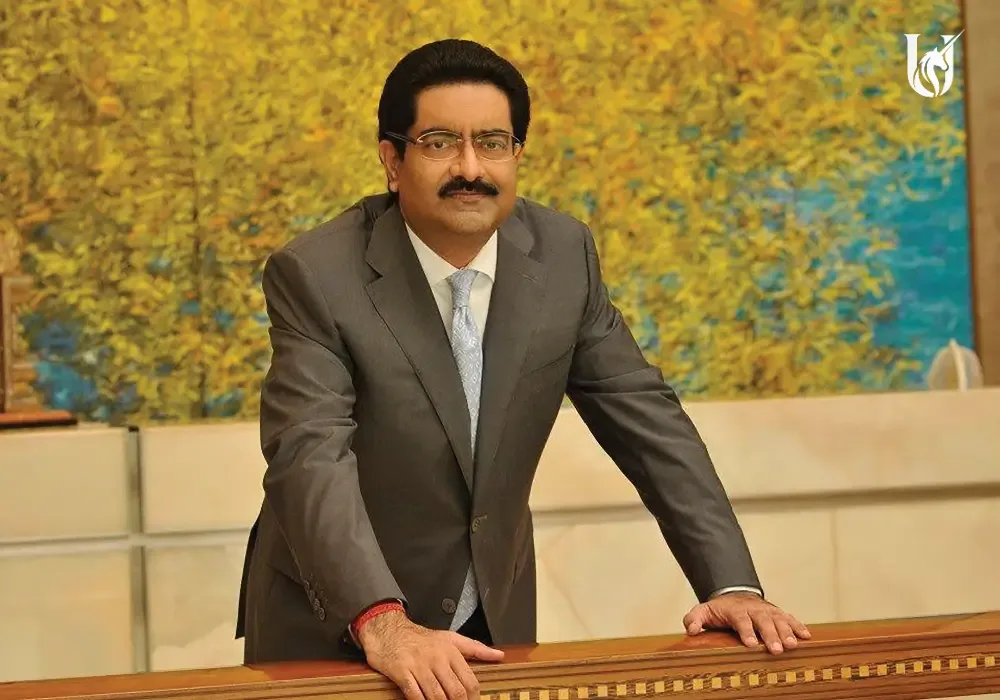
When Kumar Mangalam Birla became chairman of the Aditya Birla Group in 1995, he was only 28 years old. He had inherited a respected business legacy, but inheriting a company and building one are two very different things.
At that age, many people were still figuring out their careers, while Birla was suddenly responsible for a global business group. Instead of simply protecting what his family had built, he decided to take it into a new era.
Early Life in the Birla Family
Born on 14 June 1967 in Kolkata, Kumar Mangalam Birla grew up surrounded by business, education, and philanthropy.
He was the son of industrialist Aditya Vikram Birla and Rajashree Birla, and part of the influential Birla business family. From an early age, he saw that business was not only about making money but also about building institutions that could last for generations. That background quietly shaped the way he would eventually lead the group.
Education That Prepared Him for Business
Birla studied commerce at the University of Mumbai before becoming a Chartered Accountant from ICAI.
He later earned an MBA from London Business School, giving him both financial knowledge and international business exposure. The combination proved valuable when he eventually had to manage companies operating across different industries and countries. His education became one of the tools he used to bring a more professional and globally focused approach to the family business.
Taking Over at Just 28
In 1995, the unexpected death of his father, Aditya Vikram Birla, changed Kumar Mangalam Birla’s life overnight. At only 28, he took charge of a business empire that already had a strong international presence. There were doubts about whether such a young leader could handle such a large organisation. Birla answered those doubts not with words, but by steadily expanding, restructuring, and modernising the group.
A Legacy Was Not Enough
Birla understood that the biggest risk for a family business is becoming too comfortable with its past success.
He wanted the Aditya Birla Group to grow beyond the businesses it was already known for.
Under his leadership, the group entered and strengthened its position in sectors ranging from cement and metals to financial services, fashion, chemicals, and telecommunications.
The goal was simple: preserve the values of the legacy while changing the businesses for a new generation.
Turning the Group Into a Global Enterprise
Over the years, the Aditya Birla Group expanded into a multinational organisation with operations across 40+ countries.
Its businesses now reach industries including cement, aluminium, copper, chemicals, financial services, fashion, retail, textiles, carbon black, and telecom.
Flagship companies such as UltraTech Cement, Hindalco Industries, Novelis, Grasim Industries, and Aditya Birla Capital became important pillars of the group.
The family business was no longer simply an Indian legacy, it had become a global enterprise.
The Novelis Bet
One of Birla’s most important decisions came in 2007, when Hindalco acquired Novelis, a global leader in aluminium rolling and recycling.
It was a massive international deal and came with significant financial and execution risks.
The acquisition helped Hindalco build a much stronger global position and gave the group access to advanced manufacturing capabilities and international markets.
For Birla, it showed that an Indian company could make large global bets and compete at the highest level.
Building a Cement Powerhouse
Cement became another major part of Birla’s growth strategy. Through UltraTech Cement, the group built one of India’s largest cement businesses. The company expanded capacity, acquired businesses, and strengthened its presence across India's fast-growing construction market.
As infrastructure, housing, roads, and urban development grew, UltraTech became a key player in supplying the materials India needed.
It was another example of Birla turning a traditional business into a modern industrial giant.
Entering New Consumer Businesses
Birla also looked beyond heavy industries and moved deeper into businesses that touched everyday consumers. Through Aditya Birla Fashion and Retail, the group built a strong portfolio of brands including Louis Philippe, Van Heusen, Allen Solly, and Pantaloons.
This gave the group a direct connection with India's growing middle class and changing consumer habits.
The strategy showed that Birla was not interested in building only factories, he wanted businesses across the entire economic value chain.
The Telecom Gamble
Telecommunications was one of Birla’s most ambitious bets. Idea Cellular grew under the Aditya Birla Group and later became part of the landmark merger with Vodafone India.
The combination created Vodafone Idea, one of India's largest telecom operators.
The telecom sector later became extremely challenging because of intense competition, pricing pressure, and the huge investment required to build networks.
It remains one of the clearest examples of the opportunities and risks that come with operating in a fast-changing industry.
Financial Services Became a New Growth Engine
Another major area of expansion was financial services through Aditya Birla Capital.
The business operates across areas such as lending, insurance, investments, asset management, and wealth-related services. As millions of Indians entered formal financial markets, Birla saw an opportunity to build businesses around this long-term change. It became an important part of the group's strategy to participate in India's growing consumption and wealth creation story.
A Business Built for India’s Growth
Kumar Mangalam Birla has consistently looked at sectors that are closely connected to India's economic development.
Cement supports infrastructure, metals support manufacturing, financial services support investment, and retail reflects rising consumer demand. This connection between business growth and India's development has been central to his long-term strategy. Instead of chasing every new trend, the group has often focused on industries where it can build scale and lasting leadership.
Sustainability and Responsible Growth
For Birla, growth has increasingly come with a focus on sustainability and responsible business practices.
The group has invested in areas such as renewable energy, recycling, resource efficiency, healthcare, education, and community development. The idea is that a large company cannot think only about its profits while ignoring the communities and environment around it.
This approach has helped make sustainability a part of the group's broader business strategy.
Education and Giving Back
The Birla family has a long history of supporting education and social development, and Kumar Mangalam Birla has continued that tradition.
He serves as Chancellor of BITS Pilani, one of India's leading institutions for higher education and research.
Through the Aditya Birla Group's social initiatives, work continues across healthcare, education, rural development, women's empowerment, and livelihoods.
For Birla, building businesses and building opportunities for people are closely connected.
Leading Without the Spotlight
Unlike entrepreneurs who constantly seek attention, Kumar Mangalam Birla has generally maintained a quiet and measured public profile.
His leadership style is built around professional management, long-term thinking, disciplined execution, and strong governance.
He has allowed the performance of the businesses to speak louder than his personal image.
That understated approach has become one of the defining features of his leadership.
The Challenges Behind the Success
Building a global conglomerate is never a straight road. Birla has had to deal with economic cycles, global competition, regulatory changes, technology shifts, and difficult business decisions.
Some ventures delivered strong growth, while others faced much tougher market conditions.
The telecom business, in particular, demonstrated how quickly an entire industry can change.
Birla's ability to keep restructuring and adapting has been just as important as the group's expansion.
From a $2 Billion Group to a Global Giant
When Kumar Mangalam Birla took charge, the Aditya Birla Group was far smaller than it is today.
Over nearly three decades, the group's scale expanded dramatically through acquisitions, organic growth, international expansion, and entry into new industries.
The group today has businesses spread across 40+ countries, employing 180,000+ people globally, according to figures provided in the source material.
Its transformation stands as one of the most significant stories of India's family businesses going global.
Kumar Mangalam Birla’s Net Worth
Kumar Mangalam Birla's wealth is closely connected to his family's ownership and holdings across the Aditya Birla business ecosystem.
Available estimates place his net worth in the range of approximately $21 Bn - $24 bn, or around Rs 1.88 lakh Cr - Rs 2 lakh cr, although such estimates can change with market prices and valuation methods. The broader Birla family's business wealth is also substantial, reflecting decades of industrial and commercial growth.
But for Birla, the larger achievement has been the value created through institutions that continue to operate across generations.
Aditya Birla Group’s Business Valuation
The Aditya Birla Group represents a massive collection of listed and privately held businesses across multiple industries.
Based on the figures provided, the group's publicly traded companies have a combined market value of more than $110 Bn - $118 Bn, roughly Rs 9.3 lakh Cr - Rs 10 lakh Cr.
The broader Kumar Mangalam Birla family business valuation has also been estimated at around Rs 8.1 lakh crore in the Barclays-Hurun India richest business families ranking.
These numbers highlight how far the Birla business empire has travelled from its early roots.
The Birla Legacy Continues
The Birla business story spans generations, beginning with G.D. Birla, continuing through Aditya Vikram Birla, and now through Kumar Mangalam Birla. But each generation has faced a different India and a different business environment.
Kumar Mangalam Birla's contribution has been to take an established legacy and make it more global, diversified, and professionally managed. His challenge now is to ensure that the next generation can build on that foundation without becoming dependent on the past.
Lessons From Kumar Mangalam Birla
Birla's journey offers a few simple lessons for entrepreneurs. A legacy gives you a starting point, not a guarantee of success.
He showed that family businesses must keep changing if they want to survive across generations.
His global acquisitions also prove that calculated risks can create opportunities far beyond the home market. And perhaps most importantly, his career shows that long-term thinking and consistency can matter more than chasing quick success.
More Than a Business Empire
Kumar Mangalam Birla inherited a powerful name, but he did not simply inherit the company he leads today. He inherited responsibility and spent decades reshaping that responsibility into a global business institution. From taking charge at 28 to leading businesses across 40+ countries, his journey is one of transformation rather than preservation. The real success story is not just the size of the Aditya Birla Group, but how one generation turned a legacy into a platform for the next.