Urban Company has raised Rs 2,500 crore through QIP, attracting demand worth more than Rs 15,000 crore from domestic and international investors. The issue was subscribed over six times, highlighting strong institutional interest in the home services platform even as it steps up spending on its instant house-help business, InstaHelp.
The QIP opened on November 16 and closed on November 19, 2026. More than 60 investors submitted bids, while shares were ultimately allotted to 33 investors. Thirteen of the successful allottees were not shareholders of the company before the issue.
The Gurugram-based company allotted 16.02 crore equity shares at Rs 156 apiece, representing a 3.1% discount to the floor price of Rs 161.03. The allotment was approved by its Fund Raise Committee on November 19.
Mutual Funds Take More Than Half the Allocation
Mutual funds received more than 50% of the QIP allocation. Participating fund houses included SBI Mutual Fund, ICICI Prudential Mutual Fund, Mirae Asset Mutual Fund, Invesco Mutual Fund, WhiteOak Capital, Motilal Oswal Mutual Fund, Aditya Birla Sun Life Mutual Fund, Kotak Mutual Fund and Nippon India Mutual Fund, among others.
Domestic insurance companies HDFC Life, Bajaj Life Insurance and Edelweiss Life also participated.
Global institutional investors included Goldman Sachs Asset Management, Norges Bank Investment Management, Amundi, Pictet, Manulife, Dymon Asia and Millennium. Premji Invest was among the domestic institutional investors.
The breadth of participation, including investors who were not existing shareholders, gives the QIP a wider institutional base. Morgan Stanley India acted as the lead book runner, with Kotak Mahindra Capital and Emkay Global Financial Services supporting the issue.
Rs 600 Crore Earmarked for InstaHelp Expansion
A significant portion of the fresh capital will go towards strengthening InstaHelp, Urban Company's instant home-services business, which allows households to book professionals for cleaning, mopping, laundry and basic meal preparation.
According to the placement document, the company has earmarked Rs 600 Cr to build the service-professional ecosystem for InstaHelp. This includes minimum earnings guarantees, referral payouts, training and onboarding costs.
The planned deployment is spread across three financial years:
-
FY27: Rs 150 Cr
-
FY28: Rs 300 Cr
-
FY29: Rs 150 Cr
Urban Company has also allocated Rs 540 Cr for marketing and brand promotion, Rs 200 Cr for technology development and cloud infrastructure, Rs 85 Cr for office and training-centre rentals, and Rs 50 crore for research and development of its Native home-products business.
The remaining Rs 1,025 Cr is earmarked for potential acquisitions and general corporate purposes.
Native currently sells products such as water purifiers and smart locks. The company's board has also approved the addition of residential air conditioners to the portfolio.
Q2 FY27 Loss Widens as InstaHelp Investment Rises
The fundraise comes as Urban Company increases investment in its newer business while continuing to grow its core home-services operations.
For Q2 FY27, the company reported a consolidated net loss of Rs 182.5 crore, compared with Rs 59.3 Cr in the corresponding quarter last year. Revenue from operations increased 41.4% YoY to Rs 537.3 Cr from Rs 380 Cr, while total expenses rose 61.5% to Rs 745.7 Cr.
InstaHelp accounted for a substantial part of the investment. The company reported an adjusted EBITDA loss of ₹174 crore in the vertical during the quarter, as it expanded service availability, acquired customers and entered new neighbourhoods.
However, the core business excluding InstaHelp remained profitable at the adjusted EBITDA level, generating Rs 30 crore in Q2 FY27, up 213% YoY according to the company's earnings release.
Management has indicated that InstaHelp is targeting adjusted EBITDA breakeven by Q3 FY28, while the broader company aims to achieve Rs 1,000 crore in adjusted EBITDA by FY31.
Founders and the Road Ahead
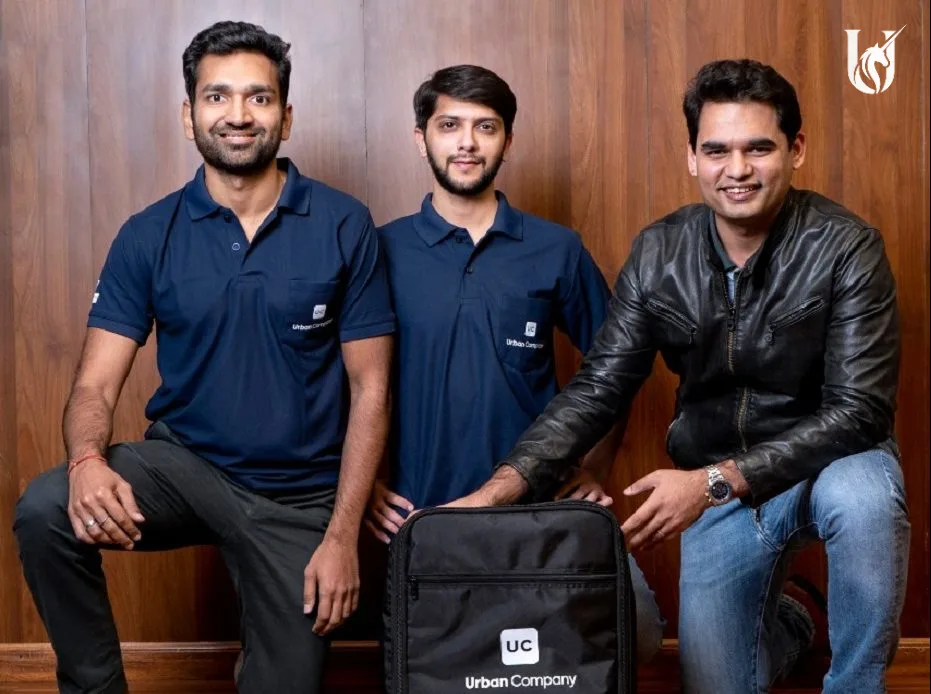
Urban Company was founded in 2014 by Abhiraj Singh Bhal, Varun Khaitan and Raghav Chandra. The company connects households with service professionals across categories including cleaning, repairs, beauty and wellness.
The QIP gives the company additional financial flexibility to expand its service network, invest in technology, strengthen InstaHelp and pursue acquisitions.
The strong institutional demand is a positive signal for the company, but the next test will be execution. Urban Company must convert the fresh capital into sustainable growth while managing the cost of building service-professional supply and acquiring customers in an increasingly competitive instant home-services market.