
B2B fintech startup Vegapay is set to raise Rs 38.4 crore (approximately $4 million) in a Series A funding round led by global investment firm Prosus, with participation from existing investors Elevation Capital, Vertex Ventures and Eximius Ventures.
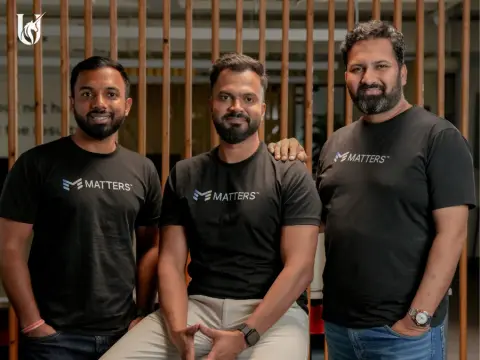
Founded in 2022 by Gaurav Mittal, Himanshu Agrawal, Puneet Sharma and Abhinav Garg, the Mumbai-based startup is building technology infrastructure that helps banks, non-banking financial companies (NBFCs) and other financial institutions launch and manage digital lending and card products.
According to documents reviewed by The Unicorn Magazine, Vegapay’s board has approved the issuance of 18,090 compulsory convertible preference shares (CCPS) at Rs 21,221.92 apiece to raise the proposed amount. The transaction is subject to completion and should not yet be treated as a fully closed funding round.
Prosus to contribute Rs 28.8 crore
Prosus, through its investment arm MIH Investments One B.V., will lead the proposed round with an investment of Rs 28.80 crore.
The remaining investment is expected to come from existing backers:
-
Elevation Capital: Rs 6.04 crore
-
Vertex Ventures: Rs 2.30 crore
-
Eximius Ventures: Rs 1.25 crore
Together, the proposed investments total approximately Rs 38.39 crore, which is being reported as Rs 38.4 crore.
Entrackr estimates that the round could value Vegapay at around Rs 380 crore, compared with approximately Rs 216 crore in its previous pre-Series A round. This would represent an estimated 1.76 fold increase in valuation in about four months. The valuation is a reported estimate, not a company confirmed figure.
Vegapay had raised Rs 37.9 crore (around $4 million) in a pre-Series A round in July 2026, led by Vertex Ventures with an investment of Rs 28.42 crore.
Elevation Capital invested Rs 7.58 crore, while Eximius Ventures contributed Rs 1.90 crore.
The latest proposed investment follows earlier reports in August 2026 that Vegapay was in discussions to raise $15-20 million from Prosus and other investors at a potential valuation of $80-100 million. Those figures related to funding discussions at the time and should not be confused with the estimated valuation attached to the current proposed share issuance.
Vegapay provides a technology stack for digital lending and card management. Its platform enables financial institutions to develop and operate customised credit products without having to build the entire technology infrastructure themselves.
Its offerings cover credit, debit and prepaid card programmes, credit lines on UPI, loan origination, loan management and collections. The company also provides back-office and programme management solutions.
The business addresses a technology requirement for banks and NBFCs seeking to introduce new credit products, improve lending operations and integrate digital financial services. As financial institutions expand their product offerings, specialised infrastructure providers can play an important role in reducing the time and complexity involved in launching those services.
Vegapay’s operating revenue increased to Rs 8.74 crore in FY26 from Rs 3.10 crore in FY25, representing approximately 2.8 times growth.
However, the company continued to report losses. Its loss widened to Rs 18.73 crore in FY26 from ₹18 crore in the previous financial year.
The financial performance highlights both the opportunity and the challenge facing the startup. Revenue growth suggests increasing business activity, but the continued losses indicate that scaling its platform, engineering capabilities and enterprise operations will require sustained investment.
Prosus’ proposed investment adds to investor interest in the technology infrastructure supporting India's financial services industry. While consumer-facing fintech platforms compete for users, companies such as Vegapay operate behind the scenes, supplying the systems that financial institutions use to build and manage products.
For Vegapay, the next phase will involve converting its growing investor backing and enterprise proposition into stronger revenue, wider institutional adoption and a more sustainable financial position.
The proposed Series A round is an important milestone for the four-founder team. But its longer-term progress will depend on how effectively it can scale deployments, deepen relationships with financial institutions and improve operating economics.