Namma Yatri, the Bengaluru-based mobility platform competing with established ride-hailing players, reported an 89.4% YoY increase in operating revenue to ₹37.5 crore in FY26, compared with ₹19.8 crore in FY25. Its net loss narrowed 14.8% to ₹43.8 crore from ₹51.4 crore a year earlier, according to consolidated financial statements filed with the RoC.
The results point to improving revenue momentum and tighter expense growth. However, the company continues to spend substantially more than it earns from operations, underlining the challenge of building a profitable business in India's competitive ride-hailing market.
Total income rises to Rs 39.5 crore
In addition to operating revenue, Namma Yatri reported around ₹2 crore in gains from the sale of investments. This took its total income to ₹39.5 crore in FY26, up from ₹23.5 crore in the previous financial year.
The company's total expenditure increased 11.2% to ₹83.3 crore from ₹74.9 crore in FY25, considerably slower than the growth in operating revenue.
Employee benefits remained the largest expense category, rising 12.7% to ₹34.5 crore and accounting for around 41% of total expenditure. Advertising and promotional expenses grew 38% to ₹16.7 crore during the year, reflecting the spending required to build platform visibility and attract users in a crowded market.
Other expenses included technology, legal costs, field operations, telecalling, recruitment and travel.
Despite the increase in these costs, the slower pace of overall expenditure growth helped Namma Yatri reduce its annual net loss by nearly ₹7.6 crore.
Zero-commission model sets Namma Yatri apart
Launched in Bengaluru in 2022, Namma Yatri initially focused on auto-rickshaw bookings and positioned itself differently from conventional ride-hailing platforms.
The company follows a zero-commission approach under which drivers retain the fare paid by passengers. Instead of taking a percentage of each ride, the platform generates revenue through subscription fees and per-trip charges.
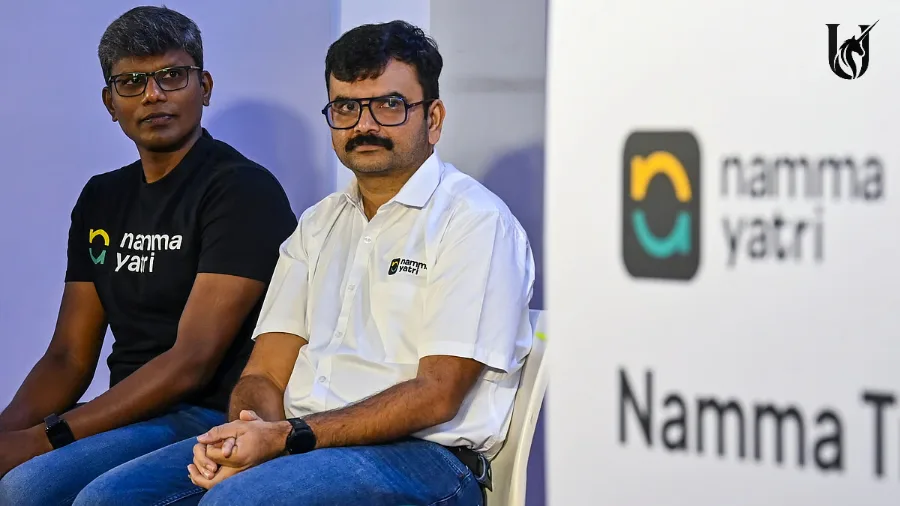
Namma Yatri operates under Moving Tech Innovations Private Limited. Its founders include Magizhan Selvan, Co-founder and CEO, and Shan M S, Co-founder and COO. The company emerged from the open-mobility initiative developed around the Beckn network, with the aim of creating a more accessible platform for drivers and commuters.
The model offers drivers an alternative to commission-based platforms, but it also places the responsibility on the company to generate sufficient revenue through platform usage and subscriptions.
Revenue growth is not yet translating into profitability
Namma Yatri's FY26 numbers show a meaningful improvement in the relationship between revenue and expenditure. For every ₹1 earned in operating revenue, the company spent approximately ₹2.22. This indicates that the business still has a substantial gap to close before it can reach operating profitability.
The competitive environment adds to that challenge. Rapido has expanded its presence across auto-rickshaw and cab services, while Uber and Ola remain established players in the market. Attracting drivers through a zero-commission proposition is only one part of the equation; the platform must also build repeat passenger demand and improve revenue generation per ride.
For Namma Yatri, the next phase of growth will depend on whether it can scale its driver and customer network without allowing employee, marketing and operational costs to rise at the same pace.
FY26 marks a strong year for revenue growth and a modest improvement in losses. But the larger test remains converting that growth into a sustainable, profitable mobility business.