Warp Sciences, a new AI and robotics startup co-founded by former OpenAI executive Kevin Weil and Indian-origin AI leader Manohar Paluri, has raised $215 million in funding led by Lightspeed Venture Partners, with participation from Premji Invest and several other investors.
Announced on October 22, 2026, the funding will support the company’s plan to combine artificial intelligence, robotics and laboratory science to help biotechnology and pharmaceutical companies develop new medicines faster. The company emerged from stealth with a business model focused on providing research infrastructure rather than developing its own drugs.
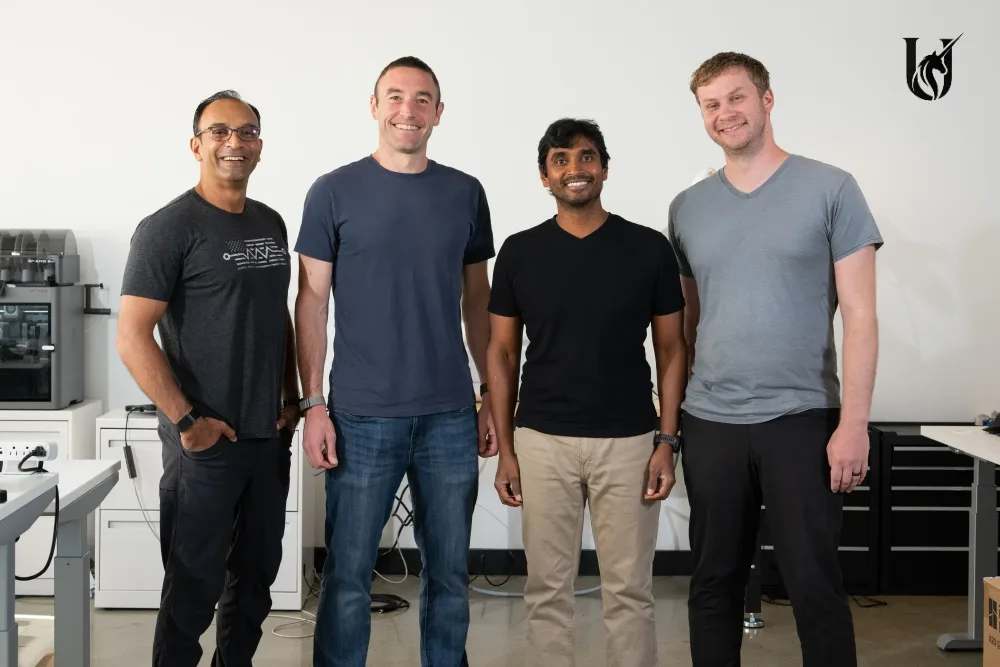
The founding team also includes DJ Patil, the first US Chief Data Scientist, and Solomon “Sol” Reisberg, a former Terremoto Biosciences executive. The combination brings together experience in AI product development, robotics, data science and medicinal chemistry.
Who Invested in Warp Sciences?
Lightspeed led the Series A round. Other participating investors include Premji Invest, Mayfield, IVP, Lux Capital and Menlo Ventures, alongside several additional venture firms and individual technology leaders.
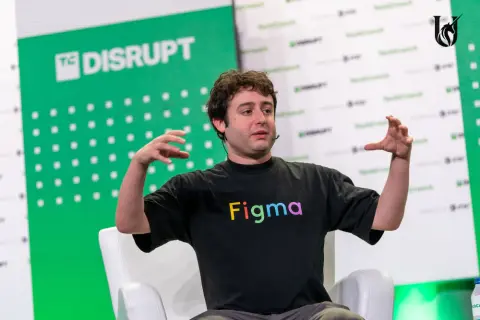
The funding also attracted prominent founders and executives from the technology industry, including Coinbase CEO Brian Armstrong, Instagram co-founder Mike Krieger, Figma CEO Dylan Field and Databricks co-founder Ion Stoica. Several former OpenAI colleagues of Weil also participated.
The size of the round signals investor interest in AI systems that move beyond generating digital outputs and into physical scientific work. Warp has not publicly disclosed customer-specific revenue or operating milestones in the announcement.
What Does Warp Sciences Do?
Warp Sciences is building a US-based contract research organisation (CRO) that makes and tests molecules for biotech and pharmaceutical companies. Its approach combines experienced chemists, AI systems and robotics to speed up early-stage drug discovery.
In conventional drug research, scientists often need to create and test many variations of a molecule before identifying candidates worth pursuing. This process, known as lead optimisation, can involve repeated laboratory experiments and substantial time.
Warp aims to integrate AI-designed experiments with robotic execution, using the results, including unsuccessful experiments, to improve future research. Its initial focus is small-molecule drug discovery, and it plans to work directly with experienced chemists and customers as it gradually automates laboratory workflows.
Importantly, Warp says its biotech and pharmaceutical customers will choose the molecules they want to pursue and retain control of their drug programmes. The startup is building research infrastructure, not its own proprietary drug pipeline.
Manohar Paluri Brings Meta AI and Robotics Experience
Manohar Paluri, Warp Sciences’ co-founder and chief technology officer, spent 14 years at Meta. He was a founding member of Facebook AI Research (FAIR), contributed to work on Meta’s Llama models and most recently served as a VP at Meta Superintelligence Labs. He also has a background in robotic mapping and perception.
Kevin Weil, who serves as CEO, previously led AI-for-science efforts at OpenAI and was the company’s chief product officer. DJ Patil is the chief operating officer, while Reisberg brings drug-discovery and medicinal-chemistry expertise from Terremoto Biosciences and other research organisations.
TechCrunch and Bloomberg have reported a post-money valuation of approximately $865 million for Warp Sciences following the funding round. The company’s funding announcement confirms the $215 million raise, but does not state that valuation in its published release.
Why AI-Powered Drug Discovery Is Attracting Investors
AI has made rapid progress in analysing scientific information and proposing potential molecules, but predictions still need to be tested in physical laboratories. That gap between computational design and experimental evidence is the problem Warp Sciences is targeting.
By combining automated experiments with data collected under consistent laboratory protocols, the company hopes to build a system in which each experiment improves the quality of future decisions. Its business will depend on delivering useful research services to paying customers while steadily improving laboratory automation.
The broader sector is also attracting major technology players. OpenAI and Anthropic have expanded their work on AI tools for life sciences, while Google DeepMind spin-off Isomorphic Labs is pursuing AI-driven drug discovery. These efforts differ in their business models, but all reflect growing interest in applying AI to scientific research.
For Indian technology and biotech observers, Paluri’s role is particularly notable: an Indian-origin AI leader is helping build a US-based company at the intersection of AI, robotics and drug development. The larger test for Warp will be whether its laboratory systems can deliver reliable experimental results, shorten research cycles and become commercially valuable to drug developers.