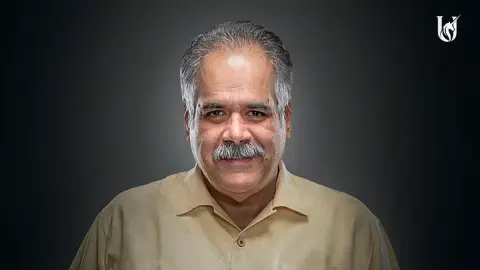

The 21-Year-Old Who Had to Come Home
In 1966, Azim Premji was studying engineering at Stanford when news of his father’s sudden death changed everything. At just 21, he left his studies in the US and returned to India to take charge of the family business. The company, Western Indian Vegetable Products, was known for cooking oil and soap, not technology. Premji had inherited a business, but he was about to build something far bigger.
From Cooking Oil to a Bigger Vision
Premji did not simply continue what his father had built. He began experimenting with new products, taking the company into areas such as bakery fats, soaps, toiletries, lighting products and hydraulic equipment. This willingness to move beyond the company’s original business became one of his defining qualities. He understood that survival in business often depends on knowing when to change direction.
The Opportunity Hidden in India’s IT Market
The biggest turning point came in the late 1970s. Changes in India’s foreign investment rules contributed to IBM leaving the country, creating a major gap in the local computer market. Premji saw an opportunity where many others saw uncertainty. He decided that his company should enter the technology business and began building a team around computers and engineering.
The Birth of Wipro Technology
The company increasingly moved toward technology and adopted the name Wipro, a shorter form of Western Indian Products. In 1980, Wipro Products Limited was established as part of this new direction. Premji partnered with international technology companies and invested in computer manufacturing. What had once been a cooking-oil company was slowly beginning to look like a technology business.
Building India’s Early Computers
Wipro did not want to simply sell imported technology. It wanted to build technology in India. In 1981, the company developed the Wipro Series 86 minicomputer based on Intel’s 8086 processor. Within a few years, Wipro had installed hundreds of these systems and continued developing more advanced machines. These early experiments helped create the technical foundation for its future in IT services.
Realising Hardware Was Not Enough
The computer industry was changing quickly, and Premji understood that hardware alone would not give Wipro a lasting advantage. Competition was increasing as more Indian companies partnered with global technology firms. Instead of fighting to remain in a shrinking space, Premji shifted Wipro toward software and IT services. It was another difficult decision, but it became one of the most important decisions in the company’s history.
Taking Wipro Global
During the 1990s, Wipro began building its reputation as a global technology services company. It developed offshore research and development centres and worked with major international clients, including companies such as General Electric, Intel and Sun Microsystems. Wipro’s focus on engineering, quality and reliability helped it win customers outside India. Slowly, an Indian company was becoming a global technology brand.
Surviving the Dot-Com Crash
The technology boom of the late 1990s created huge opportunities, but it also brought a major test. When the dot-com bubble burst around 2000, many technology companies struggled. Wipro survived the downturn by maintaining a strong focus on long-term clients and technology services. Its listing on Nasdaq also gave the company greater visibility among international investors.
From Indian Company to Global IT Giant
Wipro continued expanding through international operations, new technology capabilities and acquisitions. It strengthened its presence across consulting, cloud, engineering, cybersecurity and digital services. Global acquisitions such as Designit and Appirio added new capabilities to the business. The company gradually moved far beyond its original identity as an Indian IT outsourcing firm.
The Culture of Quality
Premji believed that growth without quality would not last. Wipro became known for its strong focus on processes, quality standards and disciplined execution. The company invested heavily in training and research while encouraging employees to keep learning. This culture helped Wipro compete with much larger global technology companies.
A Leader Who Valued Simplicity
Even after becoming one of India’s richest businessmen, Premji developed a reputation for being private, disciplined and understated. He was known for focusing more on the work than the spotlight surrounding it. His leadership style was built around values, accountability and long-term thinking. For many entrepreneurs, his life became an example of how success does not have to change the way you carry yourself.
Giving Away More Than Money
For Premji, wealth eventually became a responsibility rather than just a personal achievement. Through the Azim Premji Foundation, he committed a large part of his fortune to education and social development. His philanthropy has supported teachers, schools and communities across India. His decision to give away a major share of his wealth made him one of the country’s most prominent philanthropists.
The Azim Premji Foundation
The foundation focuses strongly on improving education and supporting a more equal society. Its work includes teacher education, school development and initiatives aimed at underserved communities. Rather than treating charity as a side activity, Premji built philanthropy into his long-term legacy. His approach reflects a simple belief: business can create wealth, but wealth can also create opportunity for others.
Wipro’s Scale Today
Wipro has grown into a global IT services company with operations across dozens of countries and a workforce of more than 230,000 people, according to the figures provided. The company now works across technology consulting, cloud, engineering, cybersecurity, AI and digital transformation. Its journey from cooking oils to global technology services remains one of India’s most remarkable corporate transformations.
A Fortune That Wasn’t the Final Goal
Premji was once among the world’s wealthiest people, with his fortune rising sharply as Wipro’s value increased. But unlike many billionaire stories, his personal wealth was not the final chapter. He transferred a substantial portion of his economic interest toward philanthropic work. His story therefore became less about how much he accumulated and more about how much he chose to give back.
Awards and Recognition
Premji’s contribution to Indian business and society has earned him some of the country’s highest honours, including the Padma Bhushan and Padma Vibhushan. He has also received global recognition for his philanthropy and business leadership. But perhaps his strongest recognition is the transformation of Wipro itself. Few Indian entrepreneurs have taken a traditional family business and turned it into a globally recognised technology company.
The Vision That Changed Wipro
Premji’s biggest strength was his ability to look beyond what the company was doing today. Cooking oil was the business he inherited, but technology was the opportunity he saw. Hardware was an early step, but software became the bigger opportunity. That habit of constantly asking “what comes next?” helped Wipro survive multiple changes in the technology industry.
Lessons From Azim Premji
Premji’s journey teaches entrepreneurs that adaptability can be more powerful than inheritance. He did not remain attached to the business model he inherited simply because it was familiar. He took risks, invested in people and moved toward industries with long-term potential. His story also shows that ethical leadership, patience and discipline can create a legacy that lasts far beyond financial success.
A Legacy Beyond Rs 3 Lakh Crore
Azim Premji did not simply build a valuable company; he changed the direction of an entire business. He took a modest cooking oil operation and helped turn it into one of India’s best-known technology companies. Wipro’s transformation made him a billionaire, but his philanthropy gave his success a different meaning. His journey proves that the greatest measure of success may not be what you build for yourself, but what you leave behind for others.
Azim Premji’s Net Worth & Wipro’s Valuation
Azim Premji has an estimated net worth of around $8.2 billion, making him one of India’s most respected billionaire entrepreneurs. His wealth is closely linked to his holdings in Wipro and other investments.
Azim Premji Net Worth: Approximately $8.2 billion
Approx. Indian Value: Rs 1.45 lakh crore Rs 1.90 lakh crore, depending on exchange rates and valuation methods
Wipro Market Capitalization: Approximately Rs 1.75 lakh crore