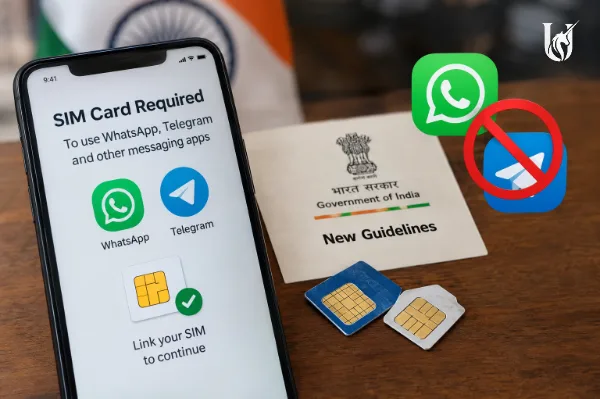
WhatsApp, Telegram and other messaging apps in India are facing new SIM-binding requirements from January 1, 2027, following directions from the Department of Telecommunications (DoT). The platforms must ensure that accounts remain linked to the active SIM associated with the registered mobile number, with the compliance deadline set for December 31, 2026.
The change does not mean that all WhatsApp or Telegram accounts will automatically stop working on January 1. The actual impact will depend on how platforms implement the requirements and how they verify SIM availability.
Why Is the Government Introducing SIM Binding?
The DoT issued the directions under the Telecom Cyber Security Rules, 2024, to address the misuse of Indian mobile numbers in cybercrime. The government says fraudsters have been able to register messaging accounts using Indian numbers and continue operating them even after removing the SIM card or moving the account's activity to another location.
The policy aims to make it harder to use Indian mobile numbers for phishing, impersonation, digital arrest scams and other forms of online fraud. The Ministry of Communications reported that cyber-fraud losses exceeded ₹22,800 crore in 2024.
Which Messaging Apps Are Covered?
The DoT's directions cover major app-based communication services, including:
-
WhatsApp
-
Telegram
-
Signal
-
Snapchat
-
Arattai
-
ShareChat
-
Josh
-
JioChat
These platforms are required to maintain a continuous link between the app and the active SIM associated with the registered number. The government's original announcement explains the scope and purpose of the directions.
How Could the Rule Affect Users?
The requirement could affect people who use messaging apps on Wi-Fi-only devices, remove their registered SIM from their primary phone, or frequently switch devices and SIM cards.
Users who travel abroad should also understand the distinction between removing a SIM and using a registered SIM while roaming. The original DoT announcement states that roaming users are not affected where the SIM remains present in the handset.
The precise effect on linked devices, tablets and other configurations will depend on how each platform implements the rule. Users should watch for official guidance from their messaging apps rather than assume their accounts will be disabled automatically.
What About WhatsApp Web and Desktop Apps?
The original directions proposed logging out web sessions at least once every six hours, with users able to reconnect through QR-code linking. However, the government later revised this requirement to a risk-based approach, with no fixed six-hour logout period specified in its parliamentary response.
This means users should not assume that WhatsApp Web or other linked sessions will necessarily log out every six hours under the revised policy. Ministry of Communications report on the government's response to Parliament</a> explains the revised timeline and web-session requirement.
What Should Users Do Before January 2027?
For now, users can take a few sensible precautions:
-
Keep the mobile number linked to each messaging account active.
-
Avoid deactivating or surrendering a registered number without first checking account recovery options.
-
Watch for official updates from WhatsApp, Telegram and other affected platforms.
-
Be cautious about messages claiming that users must pay a fee or install an unofficial app to comply with SIM binding.
The policy is intended to improve traceability and reduce the misuse of Indian mobile numbers. Its practical impact will depend on platform implementation, device compatibility and the way SIM verification is carried out.
Source: - pib.gov