Hyderabad-based spacetech startup Cosmoserve Space has raised $6 million in a seed funding round and inaugurated Base 1, a facility designed to develop and test technologies for removing space debris and servicing satellites in orbit. The latest investment takes the company's total reported funding to more than $9 million.
The round was led by Japan-based Rebright Partners, with participation from Indian investors Aranya Holdings and Naandi Ventures. Existing investors AUM Ventures and Shakti VC also participated.
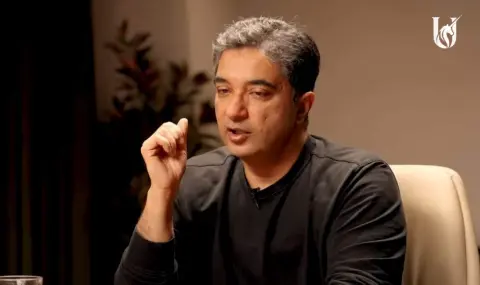
Founded in 2025 by Chiranjeevi Phanindra, a former ISRO scientist, Cosmoserve is developing autonomous robotic spacecraft to capture defunct satellites and orbital debris. The fresh capital will support Base 1, technology demonstrations and two upcoming missions.
Base 1 to develop India's private orbital servicing capabilities
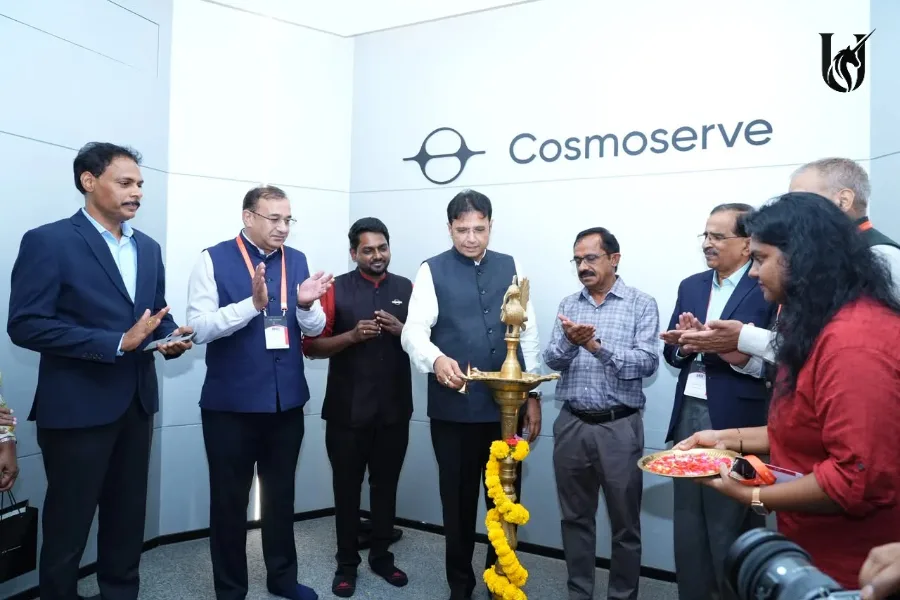
Inaugurated in Hyderabad on November 5, Base 1 is designed to bring several stages of spacecraft servicing development under one roof.
The approximately 14,800-square-foot facility houses four key infrastructure units:
-
Orbital Rendezvous and Capture Lab: Simulates spacecraft approach and capture operations.
-
Space Robotics Innovation Lab: Develops robotic systems for capturing and servicing satellites.
-
ISO Class 8 clean room: Supports satellite integration.
-
Mission Simulation and Control Centre: Handles mission planning, simulation and operational control.
Cosmoserve describes Base 1 as India's first private facility of its kind and the sixth globally equipped with the relevant space-environment and microgravity simulation capabilities.
Beyond debris removal, the facility will support technologies for in-orbit repairs, refuelling and satellite servicing.
Cosmoserve's first space mission and next milestones
In July 2026, Cosmoserve flew its first payload, Mission Embrace, aboard Skyroot Aerospace's Vikram-1 rocket.
The mission tested a soft-robotic capture mechanism intended to demonstrate how a spacecraft could securely engage with an object in orbit. However, the robotic petals did not deploy as planned because the restraint cables failed to release. Founder Chiranjeevi Phanindra said the mission still validated several systems and generated important flight data for further development.
The company is now preparing another technology demonstration by mid-2027, followed by a full-scale debris-capture demonstration. Its first commercial mission is targeted for early 2028, with commercial operations expected to begin by mid-2028.
These are company timelines and remain subject to successful technology validation and mission execution.
A dual-spacecraft model to reduce servicing costs
Cosmoserve is developing a proprietary Dual Spacecraft Architecture to make orbital servicing more economical.
Under the proposed model, a larger Orbital Service Station will act as an in-space logistics hub, carrying fuel, equipment and spare parts. A smaller Autonomous Service Vehicle will travel between satellites to capture, inspect, repair or remove them from orbit.
The company believes the architecture could allow two spacecraft to service as many as 100 satellites.
Phanindra has said the approach could bring servicing costs down from approximately $10 million to below $1 million per satellite. This is a projected cost target, not a commercially demonstrated result.
Space debris creates a growing commercial challenge
The demand for orbital servicing is linked to the rising congestion around Earth. According to the European Space Agency's 2026 space environment statistics, approximately 28,570 satellites have been placed into orbit since the beginning of the space age. Around 19,610 remain in space, including both operational and non-operational objects.
The ESA also estimates that Earth orbit contains approximately 1.5 million debris objects measuring between 1 cm and 10 cm, and 230 million fragments between 1 mm and 1 cm.
Even small fragments can damage spacecraft because of their high orbital velocities. The agency has highlighted active debris removal as an important requirement for long-term space sustainability.
Cosmoserve currently sources close to 60% of its mission components locally and aims to increase domestic manufacturing through Base 1.
For India's growing private space industry, the startup's opportunity lies in developing capabilities beyond satellite launches and manufacturing. However, converting laboratory infrastructure and early flight demonstrations into reliable, repeatable commercial services will be the real test of its business model.