The Idea That Started With a Question
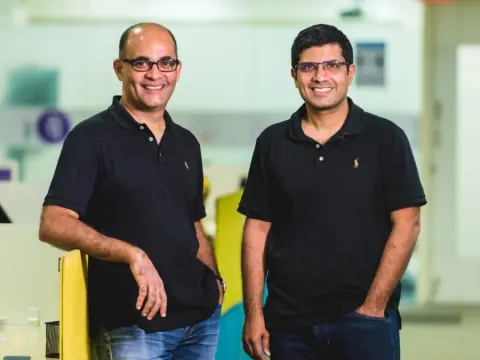
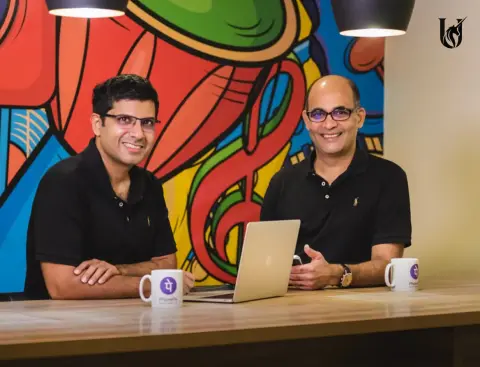
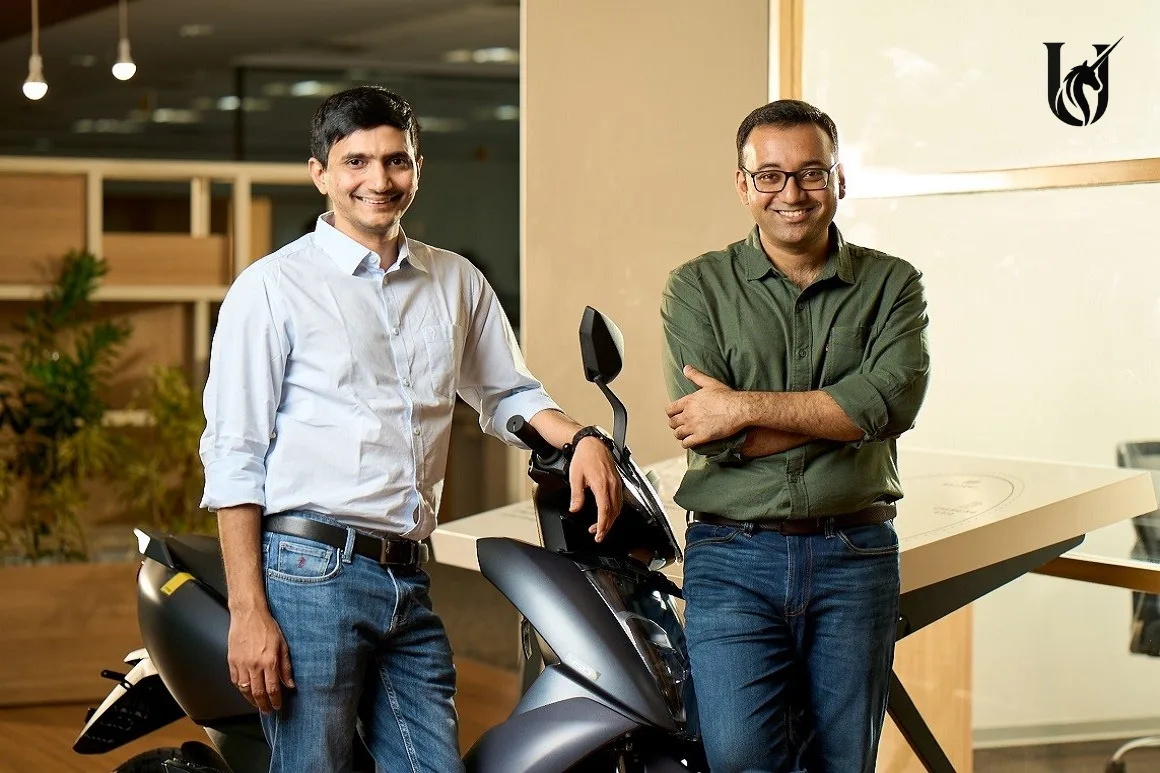
In 2013, when electric scooters were still considered a compromise rather than a dream, Tarun Mehta and Swapnil Jain decided to challenge that thinking. Both IIT Madras graduates believed India did not need another ordinary scooter, it needed a completely new way to move. They wanted to build an electric vehicle that could match the performance, intelligence and everyday practicality Indian riders expected. The idea sounded ambitious in a market dominated by petrol two-wheelers and established automotive giants. But the founders were willing to start where most people would hesitate: from the ground up, with technology, prototypes and plenty of uncertainty.
That decision became the first chapter of Ather Energy, a company that would eventually help redefine India's electric two-wheeler market.
Tarun Mehta & Swapnil Jain: The Founders Who Chose the Hard Road
Tarun Mehta and Swapnil Jain were not traditional automobile entrepreneurs; both came from IIT Madras with backgrounds in engineering design and a fascination for technology. Tarun had briefly worked at Ashok Leyland, while Swapnil had experience through internships at General Motors and BHEL. Instead of following a conventional corporate career, the two friends chose to return to their passion for building something of their own. For the first few months, they practically lived around the IIT Madras research environment, experimenting with ideas and learning what it would take to build an EV. Their mentor and professor R. Krishnakumar gave them the confidence to leave their jobs and seriously explore the idea. What began as two engineers experimenting with electric mobility slowly turned into a company with a much bigger ambition.
The Real Challenge: India Wasn’t Ready for Their Dream
Starting an EV company in 2013 meant solving problems that the market had barely begun discussing. Battery technology was expensive, charging infrastructure was almost absent and consumers worried about range, reliability and battery life. The founders also had to compete against petrol scooters that had decades of manufacturing experience and enormous consumer trust behind them. Simply making an electric scooter was not enough, they needed to convince Indians that an EV could actually be better. That meant developing the battery, motor, software and overall riding experience with Indian roads and customers in mind. Ather's biggest challenge was therefore not manufacturing a scooter; it was convincing people to imagine mobility differently.
The First Breakthrough: Flipkart’s Founders Take the Bet
In the early days, Ather needed more than an idea, it needed someone willing to believe in that idea before the market did. That opportunity arrived in December 2014 when Flipkart founders Sachin Bansal and Binny Bansal invested $1 Mn as seed capital. The funding gave Ather the breathing room to move from experimentation towards serious product development. Instead of rushing to launch a cheap EV, the company continued working on a premium electric scooter built around technology and performance. The founders were effectively betting that consumers would pay for a better experience rather than simply a lower price. That conviction would later become one of the defining characteristics of the Ather brand.
Ather 450: Turning an EV Into a Technology Product
When Ather finally introduced its first production scooter, the company wanted people to see more than an electric motor and battery. The Ather 450 combined performance with a smart dashboard, connected technology, navigation and a riding experience designed to feel fundamentally different. The company treated software almost like a core automotive component, allowing features and improvements to evolve through updates. This positioned Ather not merely as an EV manufacturer but as a technology company building vehicles. The strategy was risky because it demanded higher investment, deeper engineering and patience in a price-sensitive market. But it created something more valuable than an early sales spike, a distinctive identity that competitors could not easily copy.
When Ather Realised the Scooter Was Only Half the Product
Ather soon discovered another problem: even a great electric scooter would struggle if customers had nowhere convenient to charge it. Instead of waiting for India's charging infrastructure to develop, the company began building its own network called Ather Grid. Charging points were strategically placed to make electric commuting easier and reduce the fear of running out of power. This changed Ather's proposition from simply selling a vehicle to building an ecosystem around electric mobility. The same philosophy extended to its Experience Centers, where customers could understand the technology, take test rides and experience the product before buying. Ather was no longer selling just a scooter, it was selling confidence in an electric lifestyle.
The Ather 450x: From Premium Experiment to Serious EV Brand
The launch of the Ather 450x in 2020 marked an important step in the company's evolution. It offered stronger performance, smarter features and a more refined experience aimed at consumers who wanted technology without compromising on everyday usability. By then, Ather had already established itself as one of the most credible premium electric two-wheeler brands in India. The company continued improving its products through customer feedback, software updates and engineering iterations. Instead of treating a scooter as a finished product at the moment of purchase, Ather treated it as something that could keep getting better. That technology-first mindset helped the brand build a loyal community of early adopters.
The Factory That Made Scale Possible
For years, Ather's biggest limitation was not demand, it was the ability to manufacture enough scooters at the required quality. In December 2019, the company signed an agreement with the Tamil Nadu government to establish a large manufacturing facility in Hosur. The planned 400,000 sqft facility represented a major transition from startup experimentation to industrial-scale production. Designed initially for around 100,000 units annually and with the potential to scale much further, it gave Ather a foundation for national expansion. Manufacturing at scale also meant learning how to manage supply chains, batteries, components and quality control at a completely different level. For Ather, the factory was not just infrastructure, it was the bridge between a promising startup and a mass-market EV company.
Hero MotoCorp: The Partnership That Changed the Scale
As India's electric mobility opportunity expanded, Ather attracted the attention of one of the country's largest two-wheeler manufacturers, Hero MotoCorp. The partnership brought significant capital, manufacturing expertise and strategic credibility to Ather's journey. Hero eventually became one of Ather's largest shareholders, reinforcing the belief that electric mobility would become central to India's two-wheeler future. Ather continued to retain its technology-led identity while using strategic capital to accelerate manufacturing, retail and product expansion. The relationship showed how a young technology company and an established automotive giant could work together without losing their individual strengths. For Ather, the partnership became an important catalyst on the road from niche EV maker to mainstream mobility player.
From a Few Early Riders to a National EV Network
Ather's growth was built gradually, but the numbers began telling a different story as electric mobility gained momentum in India. The company expanded its Experience Centers, service network and charging infrastructure across multiple cities. Its customer base grew from tens of thousands of scooters on the road to a much larger national installed base. Ather Grid also expanded significantly, supporting riders beyond their homes and making inter-city and urban EV usage more practical.
By 2025, the company had deployed more than 1,500 charging points across 100 + cities, according to the figures provided. The transformation was clear: what once looked like a niche premium EV brand was becoming part of India's mainstream mobility conversation.
The Unicorn Moment: Ather Crosses the $1 Billion Mark
For more than a decade, Ather had invested heavily in technology, manufacturing, infrastructure and customer experience while operating in a fiercely competitive market. Then came a defining milestone, the company crossed the $1 Bn valuation threshold and entered India's unicorn club. The achievement was significant because Ather had taken a different route from many high-growth startups, prioritising engineering and product development over simply chasing volume. Its valuation reflected growing confidence in the long-term potential of electric two-wheelers and Ather's position within that transition. The company had moved from an experimental project inside the IIT ecosystem to a billion-dollar mobility business. For the founders, the unicorn label was less a destination than proof that their original bet was finally becoming a large scale reality.
The IPO: When the Startup Became a Public Company
Ather's public market journey added another dramatic chapter to the story of the two IIT graduates who once spent months experimenting inside college labs. Its IPO debut in 2025 gave public investors an opportunity to participate in India's growing electric mobility story. The company entered the market with a valuation in the billion-dollar range, marking another major transition in its journey.
Going public also brought a new level of scrutiny around revenue, profitability, margins, production and long-term growth. The startup now had to prove that an innovative EV brand could become a financially sustainable automotive business. The IPO was therefore not the end of Ather's journey, it was the beginning of a much bigger accountability.
The Numbers Behind Ather’s Growth
Ather's financial trajectory shows how quickly the business has expanded as India's EV adoption accelerated. Revenue from operations reached approximately Rs 1,216.9 Cr in Q1 FY2027, representing an 89% YoY increase. Deliveries climbed to 83,173 scooters, up approximately 80.5% compared with the same period a year earlier.
The company also reported a sharp improvement in profitability, with its net loss narrowing to Rs 51.1 crore from Rs 178.2 crore in Q1 FY2026. Most importantly, EBITDA turned positive at around Rs 9 Cr, compared with a Rs 106 crore loss previously. The numbers suggest that Ather is gradually moving from a growth at any cost phase toward a more disciplined path to profitability.
Rs 2,500 Cr War Chest: Preparing for the Next Race
Ather has continued strengthening its financial position as competition in India's EV market becomes increasingly intense. The company completed a combined capital raise of around Rs 2,500 Cr through a QIP and preferential issue, according to the supplied information. The fundraising included participation from institutional investors, Hero MotoCorp, the India-Japan Fund and Ather's own co-founders. Such capital gives the company greater room to invest in manufacturing, product development, technology, charging infrastructure and market expansion.
It also reflects the scale of investment required to compete in India's rapidly evolving two-wheeler industry. The next challenge is no longer proving that Ather can build an EV, it is proving that it can build one of India's largest EV businesses sustainably.
Hero MotoCorp Doubles Down With Rs 1,758 Crore Investment
On August 28, 2026, Hero MotoCorp further increased its exposure to Ather by acquiring 1.18 crore shares for Rs 1,758 crore from GIC. The transaction was executed at Rs 1,480 per share, taking Hero MotoCorp's fully diluted stake in Ather to approximately 32.8%, based on the supplied figures. The deal is significant because it strengthens the strategic relationship between one of India's largest traditional two-wheeler companies and a leading EV challenger.
For Ather, it also provides another strong signal of institutional confidence in its long-term growth prospects. The transaction comes as the company continues investing in production capacity, new products and broader market penetration. What began with two engineers challenging the petrol-scooter status quo is now backed by one of India's biggest automotive players.
Ather’s Revenue Journey: From Experiment to Scale
The company's annual turnover illustrates the speed at which Ather has moved from a niche technology startup towards a larger automotive business. Revenue stood at approximately Rs 1,553.80 cr in FY24, before rising to around Rs 2,255 Cr in FY25.
In FY26, turnover climbed sharply to approximately Rs 3,671.76 Cr, reflecting the growing demand for Ather's electric scooters. That growth has come while the company continues to invest heavily in manufacturing, research, charging infrastructure and market expansion. The challenge now is to convert rising revenue into consistent profitability while maintaining product quality and brand strength.
For Ather, the next phase will be measured not only by how many scooters it sells, but by how efficiently it can scale.
Konarc: Ather Wants the Next EV Buyer Too
Ather's journey began with premium electric scooters, but the company is now looking beyond the early-adopter segment. The launch of the Konarc, with pricing starting at Rs 99,999, signals an attempt to bring Ather's technology and design philosophy to a wider consumer base. The move is strategically important because India's two-wheeler market is enormous, and mass adoption will require products at more accessible price points. It also places Ather in a more direct battle for customers who previously considered EVs mainly on affordability.
The challenge will be balancing lower prices with the engineering, reliability and experience that made the Ather brand distinctive. If successful, Konarc could become an important bridge between Ather's premium past and its mass-market future.
The Bigger Vision: More Than an Electric Scooter
Ather's founders have never described their ambition as simply replacing petrol scooters with electric ones. Their larger vision has been to create a connected mobility ecosystem where hardware, software, charging and customer experience work together. From Ather Grid to over-the-air updates and Experience Centers, the company has consistently tried to control more parts of the ownership journey. This approach makes the scooter only one piece of a much larger technology platform.
As India's EV adoption accelerates, that ecosystem could become one of Ather's strongest long-term advantages. The company is ultimately betting that the future of mobility will be not only electric, but intelligent and connected.
Ather Energy Valuation & Founder Wealth
Ather crossed the unicorn threshold with a valuation above $1 billion, while the supplied 2026 figures indicate an implied equity valuation of roughly Rs 60,000 crore around recent capital-market and strategic transactions. Its market capitalisation has also been reported in the approximate Rs 57,000 - Rs 64,000 Cr range following strong post-results trading, based on the information provided.
The personal net worth of Tarun Mehta and Swapnil Jain is not reliably established from the supplied information and should not be presented as a definitive figure. Their financial interests are closely linked to their equity holdings, whose value can change with Ather's public-market performance and subsequent transactions. What can be measured more confidently is the extraordinary enterprise they have created from an early-stage engineering experiment. The real wealth of their journey is therefore not just financial, it is the technology, brand and ecosystem they have built around electric mobility.
The Five Lessons Hidden Inside Ather’s Journey
Ather's first lesson is simple: build for the problem, not for the trend, the founders entered EVs when the category was still uncertain. The second is that a great product sometimes needs an ecosystem around it, which is why Ather built charging infrastructure instead of waiting for someone else. The third is patience: meaningful hardware innovation takes years, and Ather spent a decade refining technology before reaching mass scale. The fourth is to listen and iterate, using customer feedback and software updates to keep improving the ownership experience. And the fifth is to choose strategic partners carefully, because the right capital and industry relationships can accelerate growth without replacing the founder's vision. Ather's journey proves that disruption is rarely one dramatic moment, it is thousands of difficult decisions made consistently over time.
The Real Ather Story
The most interesting part of Ather's story is not that two IIT graduates built an electric scooter, it is that they refused to build an ordinary one. They started when India's EV ecosystem was tiny, faced scepticism, spent years solving battery and software problems, and built infrastructure that barely existed. They turned a scooter into a connected product, a charging network into an ecosystem and a startup into a publicly traded company.
Today, Ather is competing in one of India's most important mobility transformations, with billions of rupees in revenue and a rapidly expanding market opportunity ahead. Yet the original question remains at the heart of the company: What should the future of Indian mobility feel like?
For Tarun Mehta and Swapnil Jain, the answer has always been the same, electric, intelligent, connected, and built for India.