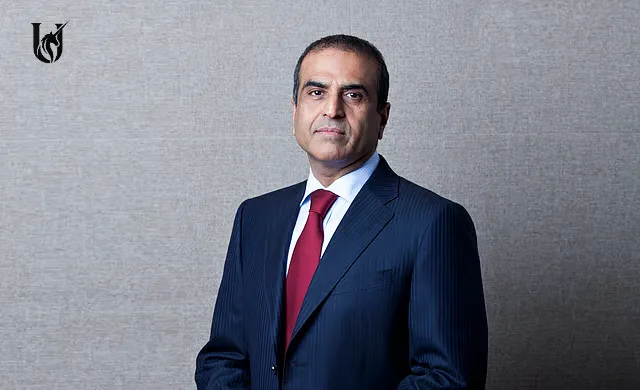
Sunil Bharti Mittal Biography: The Man Who Connected a Billion Dreams
Some entrepreneurs inherit businesses. Others build them from scratch. Sunil Bharti Mittal belongs to the rare category of visionaries who transformed a small manufacturing business into one of the world's largest telecommunications empires.
Starting with just Rs 20,000 borrowed from his father in 1976, Mittal built Bharti Enterprises, the parent company of Bharti Airtel, one of the world's leading telecom operators serving hundreds of millions of customers across Asia and Africa.
His journey wasn't driven by luck. It was built on spotting opportunities before others, embracing technology early, adapting to changing markets, and making bold decisions when everyone else hesitated.
Today, with a net worth exceeding $30 billion, Sunil Bharti Mittal is recognized as one of India's most influential entrepreneurs and business leaders. Yet his story began in the industrial city of Ludhiana with a simple dream: to build something of his own.
Early Life and Education
Sunil Bharti Mittal was born on October 23, 1957, in Ludhiana, Punjab, into an Agarwal-Khatri family. His father, Sat Paul Mittal, was a respected Member of Parliament in the Rajya Sabha, while his mother, Lalita Mittal, instilled discipline, humility, and strong family values.
Although politics surrounded his childhood, Sunil was never interested in entering public life. Instead, he showed an entrepreneurial mindset from an early age. His education took him across some of India's most prestigious institutions:
- Wynberg Allen School, Mussoorie
- The Scindia School, Gwalior
- Arya College, Ludhiana
- Bachelor's degree from Panjab University, Chandigarh (1976)
- Later attended executive programs at Harvard University
Unlike many business leaders, Mittal wasn't fascinated by textbooks. He was fascinated by business opportunities.
The Journey of an Entrepreneur
The Rs 20,000 Beginning (1976)
At just 18 years old, Sunil borrowed Rs 20,000 from his father. Instead of joining the family business or entering politics, he started manufacturing bicycle crankshafts in Ludhiana. India's bicycle industry was booming, and the young entrepreneur supplied local manufacturers. The business wasn't glamorous. There were no venture capitalists. No startup ecosystem. No technology. Just manufacturing, negotiations, and relentless hard work. Yet this small venture taught him one invaluable lesson:
Every successful business begins by solving a practical problem.
Moving Beyond Manufacturing
After finding moderate success, Mittal wanted something bigger. He believed India's economy was changing and new opportunities would emerge through international trade. In 1980, together with his brothers Rajan Mittal and Rakesh Bharti Mittal, he founded Bharti Overseas Trading Company. The company began importing products, including portable electric generators from Japan. The business grew rapidly.
But success didn't last long.
The Setback That Changed Everything
In 1983, the Indian government banned the import of portable generators. For most entrepreneurs, this would've been devastating. Mittal saw it differently. Instead of mourning what he lost, he searched for the next opportunity. This ability to pivot would later define his entire career.
Discovering the Future: Push-Button Phones
In 1982, during a trade exhibition in Taiwan, Mittal noticed something almost no one in India had seen before:
Push-button telephones.
At that time, India still relied on rotary dial phones. Mittal immediately understood the future. He decided India deserved modern telecommunications. Returning home, he established Bharti Telecom Limited and partnered with Germany's Siemens to manufacture electronic telephones. The phones were sold under the now-famous Beetel brand.
Soon, the company expanded into:
- Fax machines
- Cordless phones
- Answering machines
This was Mittal's first major technological success. But his biggest opportunity was still ahead.
Entering the Telecom Revolution
Betting Everything on Mobile Phones. In 1992, India liberalized its telecom sector. The government invited companies to bid for mobile licenses. Most established industrial houses entered the race. Mittal competed against giants like Tata and Birla. Despite being comparatively smaller, Bharti won the Delhi telecom license.
It became one of the defining moments in Indian business history.
Birth of Airtel
In 1995, Bharti officially launched Airtel. At a time when mobile phones were considered luxury products, Mittal believed every Indian would one day own one. His prediction seemed unrealistic. Mobile handsets were expensive. Call rates were among the highest in the world. Very few believed telecom could become a mass-market business. Mittal believed otherwise. History proved him right.
The Outsourcing Revolution
Perhaps Mittal's greatest innovation wasn't technology. It was business strategy. Instead of owning every telecom tower, maintaining every network, and running all IT infrastructure internally, Airtel outsourced large portions of its operations.
Companies like:
- Ericsson
- Nokia
- IBM
managed different aspects of Airtel's infrastructure. This asset-light model dramatically reduced costs. The savings allowed Airtel to expand faster than competitors. It became one of the most studied business models globally. Today, business schools around the world teach Airtel's outsourcing strategy as a landmark case study.
Making Telecom Affordable
Mittal believed communication should not remain a luxury.
Under his leadership, Airtel continuously reduced call rates. He introduced innovative pricing models. The company also launched IndiaOne, making long-distance communication significantly more affordable. Later, Airtel abolished national roaming charges, another industry-changing move. Millions of Indians experienced affordable mobile communication because of these decisions.
Global Expansion
Mittal never viewed Airtel as an Indian company alone. He wanted a global telecom business. In 2008, Bharti attempted a $45 billion merger with South Africa's MTN Group. Although negotiations failed, Mittal remained determined. In 2010, Bharti acquired the African operations of Zain Telecom for $10.7 billion. At the time, it was the largest overseas acquisition by an Indian telecom company. The acquisition expanded Airtel's presence across numerous African countries, transforming Bharti into a global telecommunications player.
Facing Industry Challenges
No entrepreneurial journey is smooth.
Airtel faced:
- Aggressive competition
- Price wars
- Regulatory uncertainty
- Massive infrastructure investments
- The arrival of new disruptive competitors
Rather than retreat, Mittal doubled down on network quality, digital services, and long-term investments. His philosophy remained consistent:
Focus on customers, innovate continuously, and think beyond quarterly profits.
Beyond Telecom: Building Bharti Enterprises
Today, Bharti Enterprises operates across multiple industries.
Its businesses include:
- Telecommunications
- Digital infrastructure
- Satellite communications
- Real estate
- Enterprise solutions
- Data centers
- Technology
- Education
Bharti also became a major investor in OneWeb, helping build satellite internet connectivity globally.
Philanthropy and Education
Success, according to Mittal, carries responsibility. Through the Bharti Foundation, he has invested heavily in education. The Foundation operates hundreds of schools across rural India, providing quality education to thousands of children. Bharti has also supported higher education through major contributions to institutions such as IIT Delhi. His philanthropy focuses on creating long-term impact rather than one-time charity.
Personal Life
Behind one of India's biggest business empires is a deeply family-oriented individual. Sunil Bharti Mittal is married to Nyna Mittal.
They have three children:
- Kavin Bharti Mittal
- Sharvin Bharti Mittal
- Eiesha Mittal
His brothers, Rajan Mittal and Rakesh Bharti Mittal, have also played significant roles within Bharti Enterprises. Despite his global stature, Mittal is known for maintaining a relatively private lifestyle. Away from boardrooms, he enjoys Formula 1, follows global technology trends, and has a fondness for Italian cuisine. Those who have worked with him often describe him as calm, disciplined, and remarkably forward-thinking.
Leadership Philosophy
Sunil Bharti Mittal's leadership is built around several enduring principles:
- Anticipate change before others do.
- Turn setbacks into opportunities.
- Scale through partnerships rather than owning everything.
- Invest for the long term.
- Build businesses that solve real problems.
- Empower talented teams and trust experts.
- Stay humble regardless of success.
His willingness to rethink conventional business models has helped Bharti remain competitive through multiple waves of technological change.
Awards and Recognition
Over the years, Mittal has received numerous national and international honors, including:
- Padma Bhushan (2007) – India's third-highest civilian award.
- GSM Association Chairman's Award (2008).
- Asia Businessman of the Year (2006).
- Business Leader of the Year.
- Telecom Person of the Year.
- CEO of the Year (multiple recognitions).
- Philanthropist of the Year (2010).
- INSEAD Business Leader Award (2011).
- Honorary Doctorates from Amity University, Shri Mata Vaishno Devi University, and ESCP Business School.
- Economic Times Business Leader of the Year (2022).
- Honorary Knight Commander of the Order of the British Empire (KBE) (2024), recognizing his contributions to global business and philanthropy.
Legacy
Sunil Bharti Mittal didn't simply build a telecom company.
He transformed the way India communicates. From a bicycle parts workshop in Ludhiana to a multinational enterprise spanning continents, his journey demonstrates the power of vision, adaptability, and perseverance. His greatest achievement isn't measured only by revenues, subscribers, or net worth. It lies in connecting hundreds of millions of people, accelerating India's digital transformation, and proving that world-class companies can be built from humble beginnings. For aspiring entrepreneurs, his story offers timeless lessons: start small, stay curious, embrace change, and never stop thinking ahead. Sunil Bharti Mittal's life is more than the story of a businessman; it is the story of an entrepreneur who reshaped an industry, inspired a generation, and helped connect the world.