Introduction
Some entrepreneurs create products. Others create brands. But only a handful build something so iconic that its name becomes part of everyday language.
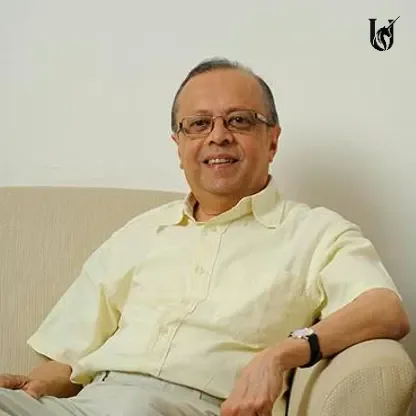
Balvant Parekh was one of those rare visionaries. Long before startups, venture capital, and billion-dollar valuations became common, he built one of India's most trusted companies by solving a problem that everyone had accepted as normal. He introduced a cleaner, stronger, and more reliable adhesive at a time when carpenters relied on messy animal-fat glue. The result was Fevicol, a product that would go on to become synonymous with strength, trust, and durability. What makes his story extraordinary isn't just that he built Pidilite Industries, now valued at around Rs 1.45 lakh cr. It's that the man behind it once earned Rs 50 a month as a peon and lived with his wife in a factory warehouse because they couldn't afford a home. His journey is a timeless reminder that greatness often begins with humble beginnings, relentless perseverance, and the courage to solve problems others ignore.
Early Life: Growing Up During India's Freedom Movement
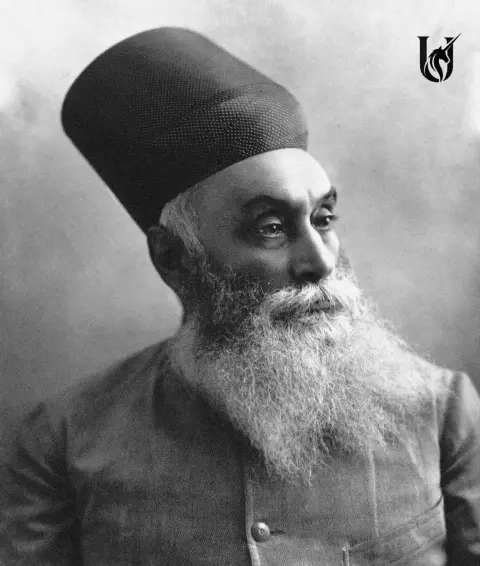
Balvant Parekh was born in 1925 in Mahuva, a small town in Gujarat's Bhavnagar district. His childhood coincided with India's struggle for independence, and like many young Indians of his generation, he was deeply inspired by Mahatma Gandhi's vision. While studying at Government Law College, Mumbai, Balvant left his education midway to participate in the Quit India Movement. The freedom struggle meant more to him than earning a degree. After actively participating in social work and the independence movement, he eventually returned to Mumbai and completed his law studies. Yet, despite qualifying as a lawyer, he made an unusual decision. He never practiced law. The profession, in his view, demanded compromises he wasn't willing to make. Instead, he decided to pursue business.
Life's Toughest Phase
Dreams alone don't pay bills. Like countless young migrants in Mumbai, Balvant struggled to survive. He worked at a dyeing and printing press before taking up a job as a peon at a timber merchant's office, earning only Rs 50 a month. Money was so scarce that he and his wife, Kantaben, lived inside the warehouse of the very business where he worked. It was a difficult period filled with uncertainty. But unlike many who would have accepted their circumstances, Balvant quietly continued learning. Every job became an opportunity to understand business, markets, and customers.
He believed that temporary hardship was the price of long-term success.
Learning Before Building
Balvant's entrepreneurial journey didn't begin with Fevicol. It began with trading. Over the years, he experimented with importing products such as:
- Bicycles
- Areca nuts
- Paper dyes
- Industrial chemicals
Some ventures succeeded. Others failed. Each experience added another lesson.
Later, while working with Fedco, an international trading company representing the German chemical giant Hoechst in India, he gained valuable exposure to industrial chemicals and manufacturing. This period transformed his understanding of business. More importantly, it introduced him to the world of adhesives.
Finding the Opportunity Nobody Else Saw
While interacting with furniture makers and carpenters, Balvant noticed something most businesses had ignored. Indian carpenters relied on a traditional adhesive known as Saresh, made from boiled animal fat.
The glue had numerous problems:
- It produced a foul smell.
- It required heating before use.
- It spoiled quickly.
- It was messy to handle.
- It lacked consistency.
Most people considered these inconveniences unavoidable. Balvant didn't. He saw an opportunity to replace an outdated product with something simpler, cleaner, and more effective. That single observation would change Indian manufacturing forever.
The Birth of Fevicol
In 1954, Balvant and his brother Sushil Parekh started Parekh Dyechem Industries, manufacturing pigment emulsions and chemicals for the textile industry. A few years later, they took a much bolder step. In 1959, they launched Pidilite Industries and introduced India's first ready-to-use synthetic white adhesive.
They named it Fevicol.
Unlike traditional glue, Fevicol required no preparation. It was easy to use. It dried faster. It created stronger bonds. Most importantly, it made carpenters' work easier. Balvant wasn't just selling glue. He was improving the way people worked.
Winning the Trust of Carpenters
Most companies focused on retailers. Balvant focused on the people who actually used the product. Instead of waiting for customers to discover Fevicol in shops, he personally reached out to carpenters across India. His team distributed free samples, demonstrated the product, and educated craftsmen on its advantages. To strengthen relationships further, he introduced the Fevicol Champions Club, creating a community around professional carpenters. This grassroots strategy built trust long before traditional advertising took over. Within two decades, Fevicol had captured nearly 70% of India's adhesive market.
The professionals who depended on quality had already made their choice.
Building an Iconic Brand
As Fevicol became increasingly popular, Pidilite invested in memorable advertising.
The company's iconic elephant logo, developed with Ogilvy & Mather, symbolized unmatched strength and durability. Then came the legendary campaigns that entered popular culture. Advertisements carrying the message "Fevicol ka mazboot jod hai, tootega nahi" transformed a simple adhesive into one of India's most recognizable consumer brands. People no longer asked for white glue. They simply asked for Fevicol.
The product had become a household name.
Expanding Beyond Adhesives
Balvant never limited Pidilite to a single product. Over the years, the company expanded into several trusted brands, including:
- Fevikwik
- M-Seal
- Dr. Fixit
- Industrial adhesives
- Waterproofing solutions
- Construction chemicals
- Art and craft products
By continuously innovating, Pidilite evolved into one of India's largest specialty chemicals companies. Its products became essential across homes, construction sites, schools, factories, and industries.
Global Expansion
Under Balvant Parekh's leadership, Pidilite steadily expanded beyond India.
By 2006, the company had established its presence in more than 70 countries, taking Indian innovation to international markets. Its focus remained unchanged: Build products that solve real problems while maintaining uncompromising quality. That philosophy earned the trust of millions of consumers worldwide.
Leadership Philosophy
Balvant Parekh believed business wasn't about chasing trends. It was about understanding people. His entrepreneurial principles were remarkably simple:
- Solve practical problems.
- Build trust before building profits.
- Focus on product quality.
- Stay close to customers.
- Think long term.
- Never stop learning.
He also believed that brands aren't built through advertising alone. They are built through consistent performance over decades.
Legacy
Balvant Parekh passed away in 2013, but his vision continues to shape one of India's most admired companies.
Today, Pidilite Industries is valued at approximately Rs 1.45 lakh Cr, with products sold across dozens of countries and trusted by millions of consumers. Yet perhaps his greatest legacy isn't the company's valuation.
It is the mindset he left behind.
He showed that world-changing businesses don't always begin with massive investments or revolutionary inventions. Sometimes, they begin by observing a small everyday problem that everyone else has chosen to ignore. A young man who once earned Rs 50 a month as a peon, slept in a warehouse because he couldn't afford a house, and refused to give up on his dreams went on to build one of India's most iconic brands. His journey reminds every aspiring entrepreneur that success is rarely about where you start. It is about how determined you are to keep moving forward, how deeply you understand your customers, and how committed you remain to solving real problems. Balvant Parekh didn't just build Fevicol. He built a legacy that continues to hold together homes, industries, and generations, just like the strong bond his iconic adhesive promises.