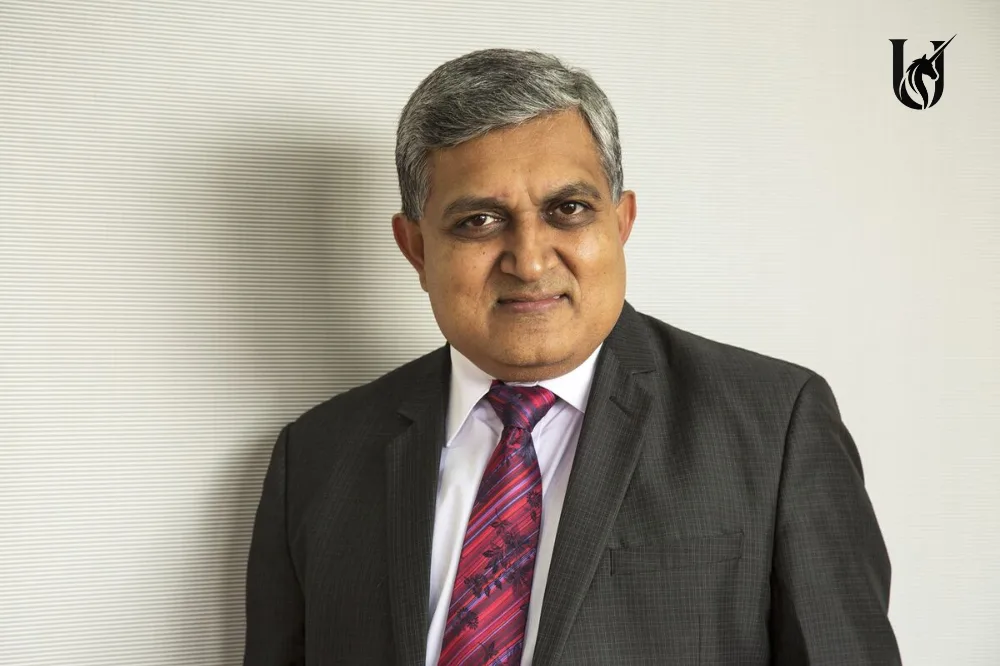
Every billionaire has a beginning.
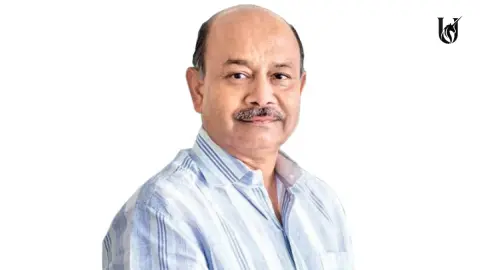
Some inherit businesses, while others inherit struggles. Hitesh Chimanlal Doshi belonged to the latter. Long before Waaree became India's largest solar module manufacturer, he was a young college student trying to pay his hostel fees by trading industrial equipment. With just ₹5,000 borrowed from a relative, he started a small business that would eventually evolve into one of India's biggest renewable energy companies.
His journey wasn't built on overnight success or venture capital funding. It was built through decades of calculated risks, relentless hard work, and the ability to spot opportunities long before the rest of the market recognized them.
Today, Waaree is a global renewable energy brand with operations across dozens of countries, while the Doshi family has joined the ranks of India's wealthiest business families. Yet behind every milestone lies a story of resilience, humility, and an entrepreneur who refused to stop dreaming.
Founder's Vision: Building More Than a Business
Hitesh Doshi never entered business simply to make money.
Growing up in a small village in Maharashtra, he experienced firsthand what it meant to live with limited opportunities. His village lacked many basic facilities, and continuing education required long bicycle rides to neighbouring towns. These early hardships shaped his mindset and convinced him that success would only come through self-reliance.
When he moved to Mumbai for higher studies, he wasn't searching for a corporate job. Instead, he wanted to build something of his own. His vision was simple but ambitious, to create a business that solved industrial problems while continuously adapting to future technologies.
Years later, that same mindset helped him recognize the enormous potential of renewable energy long before solar power became mainstream in India.
As Doshi often says, "If we are right, the opportunities are much higher than anybody can dream of."
That belief became the foundation of Waaree's remarkable journey.
Company Background: The Birth of Waaree
The story of Waaree began long before solar energy entered India's mainstream conversation.
In 1985, while pursuing a commerce degree at Shri Chinai College of Commerce and Economics in Mumbai, Hitesh Doshi borrowed Rs 5,000 from a relative to start trading pressure gauges, industrial instruments, and hardware equipment. The small profits from the business were enough to pay his college fees and hostel expenses.
Instead of depending on a salary after graduation, Doshi continued building his business.
In 1989, he officially established Waaree Instruments, marking the beginning of his entrepreneurial journey. Initially, the company manufactured measuring instruments, thermometers, pressure gauges, and industrial valves.
The company steadily expanded into engineering equipment and industrial manufacturing. However, the defining moment came in 2007, when Doshi visited an international trade exhibition in Germany. Witnessing rapid advancements in solar technology completely changed his perspective.
He realized renewable energy wasn't just another business opportunity, it was the future.
Inspired by what he saw, he made one of the boldest decisions of his career. He shifted Waaree's focus from conventional industrial products to solar energy manufacturing.
The company was named Waaree, inspired by the Wari temple in his native village, a reminder that no matter how far success takes you, your roots should always remain close.
Challenges: Building a Business Without Shortcuts
Like every successful entrepreneur, Hitesh Doshi's journey was filled with uncertainty.
Starting with almost no capital meant every business decision carried financial risk. During his college years, balancing studies and entrepreneurship was itself a challenge. Every rupee mattered, and every customer was important.
The early manufacturing business also demanded investments that were difficult for a first-generation entrepreneur to arrange. Doshi relied on bank loans, reinvested profits, and cautious financial management instead of external investors.
The biggest challenge, however, came when he entered solar manufacturing.
Back in 2007, renewable energy was still an emerging sector in India. Customer awareness was limited, demand was uncertain, and most businesses were hesitant to invest in solar technology.
Instead of waiting for the Indian market to mature, Waaree began exporting solar modules to international markets, particularly Europe and later the United States. This strategic move allowed the company to build manufacturing capabilities while preparing for India's renewable energy revolution.
His willingness to think years ahead of the market became Waaree's greatest competitive advantage.
Growth Journey: Turning Opportunity Into Leadership
Waaree's transformation from an industrial equipment manufacturer to a renewable energy leader did not happen overnight.
The company consistently reinvested its profits into expanding manufacturing capacity, improving technology, and strengthening product quality.
One of the biggest milestones came in 2011 when Waaree sold part of its traditional industrial equipment manufacturing business. The proceeds were strategically invested into scaling the solar business.
Instead of diversifying into unrelated sectors, Doshi remained focused on renewable energy.
Over the following decade, Waaree rapidly expanded its solar module manufacturing capabilities, established research and development facilities, and strengthened its global supply chain.
As India's renewable energy policies became more supportive, Waaree emerged as one of the country's strongest domestic manufacturers.
Today, the company has an installed solar module manufacturing capacity of 12 GW, making it India's largest solar module manufacturer and one of the largest exporters of solar products globally.
Expansion Strategy: Thinking Global Before It Became Fashionable
Hitesh Doshi understood early that competing only in India would limit Waaree's growth.
Instead, he built an international business.
The company expanded exports to the United States, Europe, Japan, and several other global markets. Strong overseas demand, particularly from the US, accelerated Waaree's growth in recent years.
Waaree also pursued strategic acquisitions and international collaborations.
Its acquisition of Italian engineering company Cesare Bonetti expanded its industrial capabilities, while partnerships with global technology firms strengthened manufacturing standards.
Today, Waaree operates across more than 65 countries, with manufacturing facilities, offices, and distribution networks spanning multiple continents.
Following its successful IPO, the company also announced plans to establish a 6 GW solar manufacturing facility in Odisha, further strengthening India's domestic clean-energy ecosystem.
Rather than following the market, Waaree has consistently invested ahead of demand.
Achievements: Building India's Renewable Energy Champion
Under Hitesh Doshi's leadership, Waaree has become one of India's biggest renewable energy success stories.
The company now manufactures solar modules, EPC solutions, energy storage systems, inverters, and other renewable energy products serving customers across residential, commercial, industrial, and utility-scale projects.
Waaree's public listing became one of India's biggest wealth-creation stories.
Following its IPO, the company's shares surged significantly on listing, instantly creating billions of dollars in shareholder value and placing the Doshi family among India's wealthiest business families.
Beyond commercial success, Doshi has actively contributed to education and community development through philanthropic initiatives, reinforcing his belief that businesses should create value beyond profits.
Waaree Valuation and Hitesh Doshi Net Worth
Waaree Energies has emerged as one of India's most valuable renewable energy companies.
Following its blockbuster public listing, the Doshi family's wealth crossed ₹48,000 crore, with an estimated net worth exceeding $5 billion, according to global wealth estimates.
The company's IPO became one of India's major capital market success stories, reflecting strong investor confidence in both Waaree's business model and India's clean energy future.
The IPO proceeds are being invested into expanding manufacturing infrastructure, including the construction of a 6 GW solar cell manufacturing plant in Odisha, positioning Waaree for long-term growth.
Leadership Philosophy: Stay Hungry, Stay Curious
Hitesh Doshi believes success belongs to people who never stop learning.
Throughout his entrepreneurial journey, he has often emphasized the importance of remaining "hungry and foolish", constantly exploring new opportunities instead of becoming comfortable with past achievements.
His career reflects this philosophy perfectly.
He moved from trading to manufacturing, from engineering products to renewable energy, from domestic operations to global exports, all because he never allowed success to become a reason to stop evolving.
His leadership demonstrates that adaptability is one of the most valuable assets an entrepreneur can possess.
Key Lessons Every Entrepreneur Can Learn
The journey of Hitesh Doshi offers powerful lessons for anyone dreaming of building a business.
Start with what you have. A Rs 5,000 loan became the foundation of a multi-billion-dollar enterprise because action mattered more than resources.
Think beyond today's market. Waaree entered solar energy when most businesses ignored the industry. Long-term thinking created long-term success.
Reinvest in growth. Instead of spending profits, Doshi consistently invested them back into manufacturing, technology, and expansion.
Stay resilient through uncertainty. Every stage of Waaree's journey required difficult decisions, financial discipline, and patience.
Finally, never stop evolving. The businesses that survive for decades are those willing to reinvent themselves before change becomes unavoidable.
Conclusion: From a Small Village to India's Solar Powerhouse
The success story of Hitesh Chimanlal Doshi is far more than a tale of wealth creation. It is the story of a young man who refused to let his background define his future.
From cycling to school in rural Maharashtra and borrowing Rs 5,000 to support his education, to building India's largest solar module manufacturing company, every chapter of his journey reflects perseverance, vision, and disciplined execution.
Today, Waaree stands at the forefront of India's renewable energy revolution, helping power homes, industries, and a cleaner future. But perhaps its greatest contribution is the inspiration it offers to aspiring entrepreneurs.
Hitesh Doshi proved that businesses are not built by waiting for perfect opportunities, they are built by recognizing opportunities before the rest of the world does.
His journey reminds every entrepreneur that humble beginnings never limit extraordinary dreams.