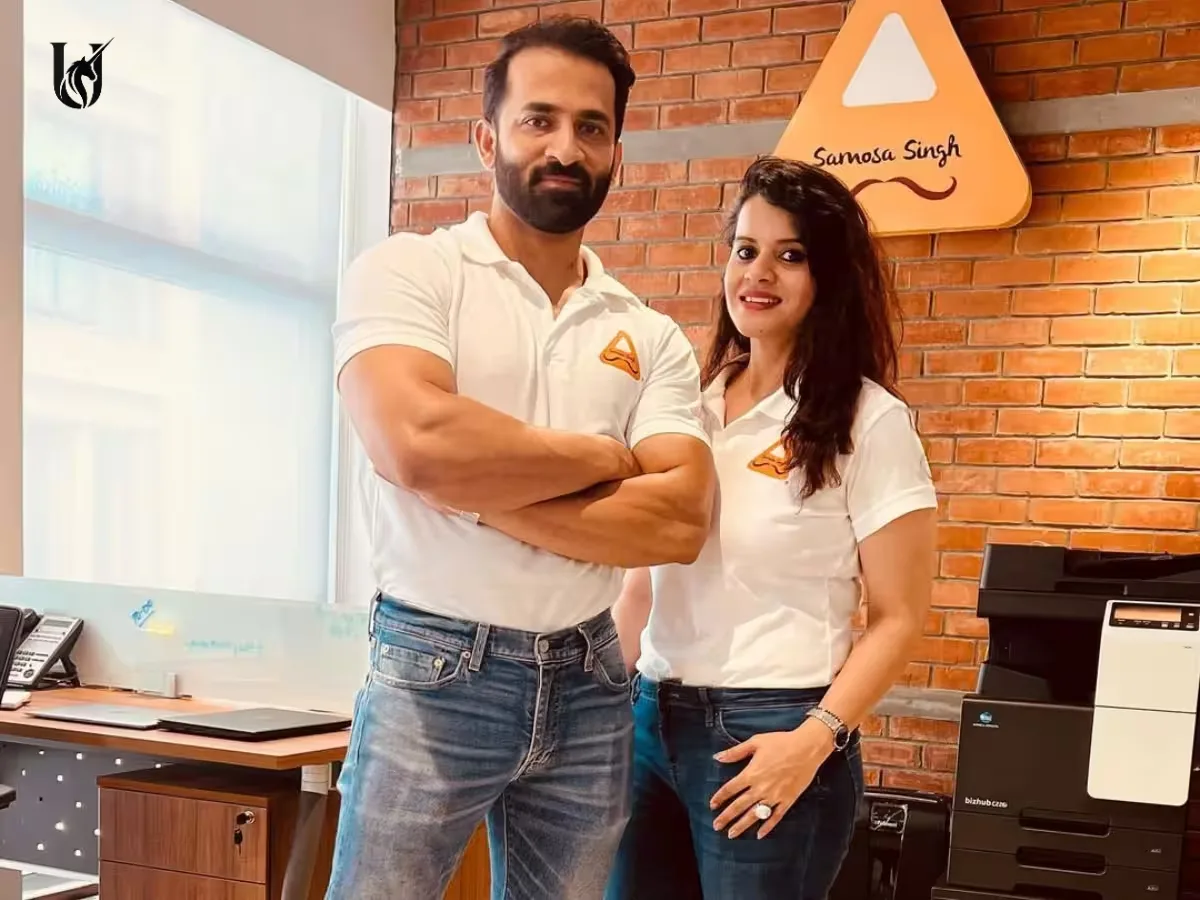
Some entrepreneurs discover opportunities in cutting-edge technology. Others find them in everyday life. For Nidhi Singh and Shikhar Veer Singh, the million-dollar idea came from one of India's oldest and most loved street foods, the humble samosa. While most people saw it as just another evening snack, the Bengaluru-based couple saw an untapped business opportunity that could redefine India's organized food industry.
Before becoming entrepreneurs, Nidhi and Shikhar had built successful careers as scientific researchers in the biotechnology sector. Nidhi spent nearly a decade working in healthcare, while Shikhar worked in biotechnology research. They had stable jobs, attractive salaries and promising careers ahead of them. From the outside, life looked secure. But both shared a common passion—they loved solving problems and believed innovation wasn't limited to laboratories. They wanted to build something of their own that could create a real impact.
Their entrepreneurial journey began with a simple observation in 2015. During a visit to a food court, they noticed that while brands like pizzas and burgers had become household names across India, one of the country's most popular snacks, the samosa, was still dominated by small local shops. Despite millions of samosas being sold every day, there were hardly any organized brands offering consistent quality, hygiene and customer experience. Instead of dismissing the idea, they asked themselves a simple question: If burgers and pizzas could become national brands, why not samosas?
That single question changed their lives.
Unlike many aspiring entrepreneurs who continue planning for years, Shikhar believed that a backup plan often becomes an excuse not to take risks. He resigned from his well-paying job in 2015, despite friends and family advising against it. A year later, Nidhi followed, leaving behind a successful corporate career. To fund their dream, the couple made difficult financial sacrifices, even selling their own home to invest in the business they believed in. In 2016, they officially launched Samosa Singh with one clear mission, to transform India's favourite street snack into a trusted national brand built on quality, consistency and innovation.
The journey, however, was far from easy. Their first kitchen measured just 300 square feet, and they started operations with only one cook. Every day, they handled everything themselves, from sourcing ingredients and experimenting with recipes to delivering orders and managing operations. While many believed making samosas was a simple business, the founders quickly realized that creating a scalable food brand was much more complicated. Every region in India had its own version of a perfect samosa, making standardization one of their biggest challenges.
Rather than relying on traditional cooking methods, the biotech scientists approached food like researchers. They studied the science behind dough, texture and cooking techniques to solve one of the biggest customer complaints, soggy samosas. Using their scientific knowledge, they developed a unique process that altered the gluten structure of the dough, allowing the samosas to remain crispy for up to six hours after preparation. This breakthrough became one of Samosa Singh's biggest competitive advantages, especially in the fast-growing food delivery market.
Consistency soon became the brand's identity. Nidhi often explained that people don't return to global pizza or burger chains because they serve the world's best food, they return because the taste remains the same every single time. Samosa Singh adopted the same philosophy. Whether a customer ordered in Bengaluru or Hyderabad, the experience had to be identical. Instead of competing with every local samosa vendor, they focused on building trust through standardized recipes, premium ingredients and reliable quality.
As customer demand grew, the company began experimenting with innovative flavours alongside the traditional aloo samosa. Products like Manchurian Samosa, Cheese Chilli Samosa, Veggie Spice Samosa and several other varieties attracted younger consumers while preserving the authentic essence of the snack. The brand gradually expanded beyond households to corporate cafeterias, cafés, restaurants and even Air India, proving that India's most traditional snack could successfully enter modern retail channels.
From a single small kitchen in Bengaluru, Samosa Singh steadily expanded across multiple cities, including Bengaluru, Hyderabad, Chennai, Mysuru and Visakhapatnam. Today, the company sells more than 50,000 samosas every day, supported by a growing network of outlets and cloud kitchens. What began as a bold experiment by two scientists has now evolved into one of India's most recognized organized snack brands, generating an estimated annual turnover of Rs 45-50 crore.
Looking back, Nidhi and Shikhar often say that their biotechnology background never went to waste. They simply applied scientific thinking to a different laboratory, the kitchen. Where others saw recipes, they saw processes. Where others accepted traditional methods, they searched for innovation. Their ability to combine science with entrepreneurship became the foundation of Samosa Singh's success.
Their story is a powerful reminder that extraordinary businesses don't always start with extraordinary ideas. Sometimes, they begin by looking at an everyday product through a completely different lens. Nidhi Singh and Shikhar Veer Singh didn't invent the samosa, they reinvented the way it could be made, delivered and experienced. Their journey proves that with courage, innovation and relentless execution, even India's oldest street food can become a modern business success story worth crores.