Introduction: The Leader Who Chose Legacy Over Wealth
Some entrepreneurs build successful companies. A few build global brands. But only a handful build institutions that continue to inspire generations long after they are gone.
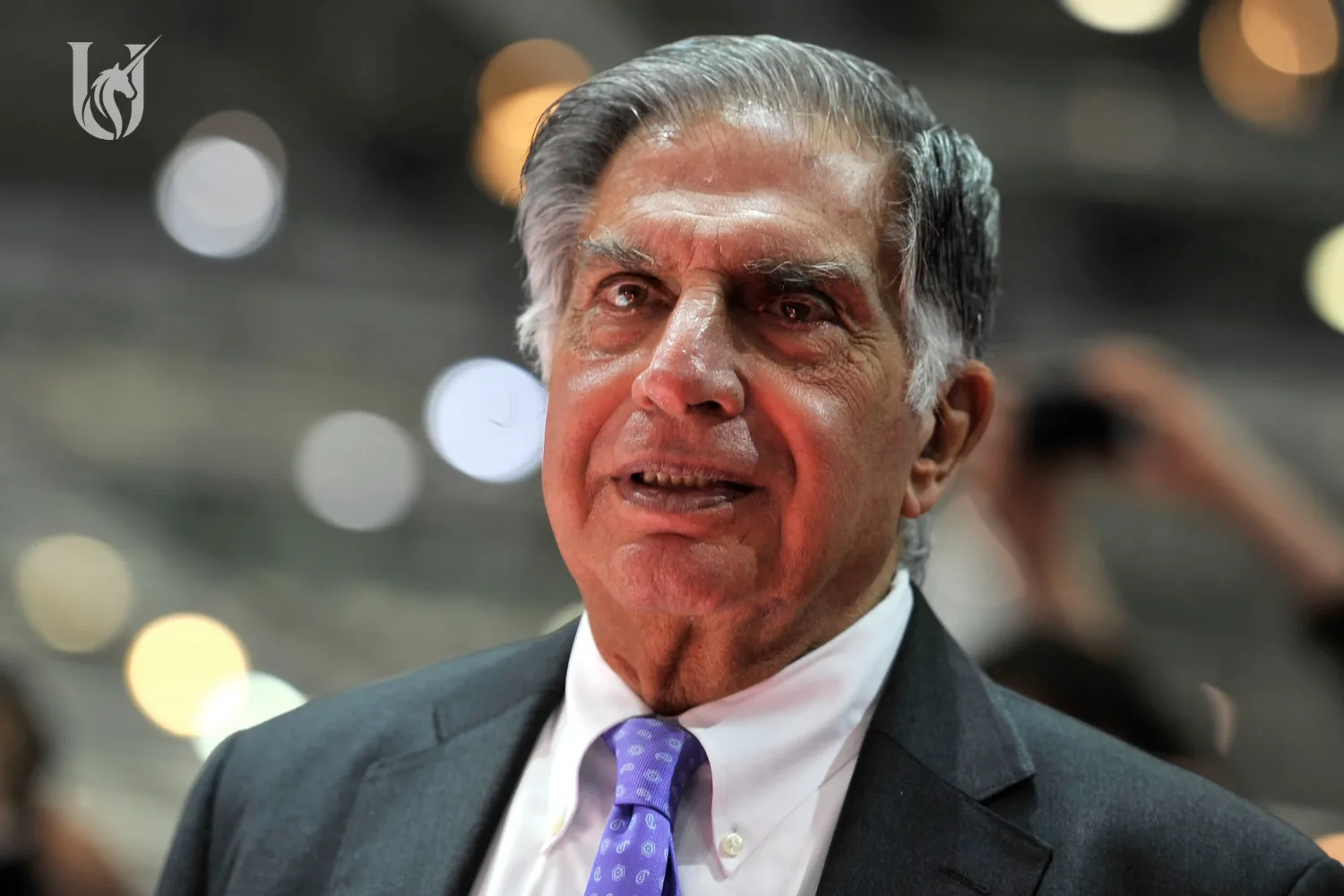
Ratan Naval Tata belonged to that rare league.
For over two decades, he led the Tata Group through one of the most transformational periods in Indian corporate history. When he became Chairman of Tata Sons in 1991, India had just opened its economy to the world. Liberalisation had created enormous opportunities, but it also brought fierce global competition. Many questioned whether a century-old Indian conglomerate could survive this new era.
Ratan Tata didn't just prove the sceptics wrong, he completely redefined what an Indian business could achieve.
Under his leadership, the Tata Group expanded from a respected Indian business house into a global enterprise operating across more than 100 countries. Landmark acquisitions such as Tetley Tea, Corus Steel, Jaguar Land Rover, and Daewoo Commercial Vehicles transformed Tata into a multinational powerhouse, while his unwavering commitment to ethics and philanthropy earned him admiration far beyond the business world.
Yet, despite leading an empire worth trillions, Ratan Tata remained remarkably humble. He believed that the true purpose of business was not simply to generate profits but to improve people's lives.
His journey is not just the story of an industrialist. It is the story of a leader who proved that compassion and capitalism can coexist.
Early Life: A Childhood That Shaped His Character
Ratan Tata was born on 28 December 1937 in Bombay (now Mumbai) into one of India's most respected business families. Although he belonged to the Tata family, his childhood was far from easy.
When he was just ten years old, his parents separated. Along with his younger brother Jimmy, he was raised by his grandmother, Lady Navajbai Tata, whose discipline, compassion, and strong values deeply influenced his personality.
Those early experiences taught him resilience, humility, and empathy, qualities that later became the defining characteristics of his leadership.
Unlike many heirs to business empires, Ratan Tata never relied on privilege alone. He believed respect had to be earned through hard work.
Education: Building a Global Perspective
After studying at Campion School and Cathedral & John Connon School in Mumbai, Ratan Tata completed his schooling at Bishop Cotton School in Shimla before moving to the United States.
He graduated from Cornell University with a degree in Architecture and Structural Engineering, where he developed a passion for design, innovation, and problem-solving. Years later, he completed the prestigious Advanced Management Program at Harvard Business School, adding global management expertise to his technical background.
His international education exposed him to new ideas and modern business practices, but his heart remained firmly rooted in India.
When he received an attractive job offer from IBM, he declined it and returned home to join the Tata Group, a decision that would change Indian business history.
Starting from the Shop Floor
In 1962, Ratan Tata joined Tata Steel, not as an executive, but as a trainee.
He worked on the factory floor alongside workers, handling limestone, operating machinery, and understanding the realities of manufacturing firsthand.
Rather than sitting in air-conditioned boardrooms, he chose to learn the business from the ground up.
These early experiences gave him something many corporate leaders never develop: genuine respect for employees at every level of an organisation.
It also shaped his leadership philosophy, great businesses are built by people, not just strategies.
Early Setbacks That Tested His Leadership
Leadership did not come easily.
In the 1970s, Ratan Tata was given responsibility for Empress Mills, a struggling textile company within the Tata Group.
He prepared an ambitious turnaround plan and requested investment to modernise the business. Unfortunately, the proposal was rejected.
Without adequate support, the mill eventually shut down.
For many, it would have been a career-defining failure.
For Ratan Tata, it became one of life's greatest lessons.
He realised that bold ideas require both conviction and patience.
Years later, he often described failure as one of the greatest teachers in business.
Taking Charge During India's Economic Transformation
Everything changed in 1991.
J.R.D. Tata stepped down after leading the group for over five decades, and Ratan Tata became Chairman of Tata Sons.
The timing could not have been more challenging.
India had just opened its economy, multinational corporations were entering the market, and competition was intensifying across every industry.
Many Tata companies operated independently with little coordination, making the group fragmented and difficult to manage.
Ratan Tata knew the organisation needed transformation.
He introduced a unified brand identity, streamlined businesses, encouraged collaboration across companies, and focused on long-term innovation rather than short-term profits.
It was the beginning of a new era.
Taking Tata Global
Perhaps Ratan Tata's greatest achievement was transforming the Tata Group into an international business powerhouse.
Rather than limiting growth to India, he believed Indian companies could compete with the world's biggest corporations.
His vision led to a series of bold global acquisitions.
In 2000, Tata Tea acquired Tetley for £271 million, making Tata one of the world's largest tea companies.
In 2007, Tata Steel purchased Corus for approximately £6.2 billion, becoming one of the world's leading steel producers.
In 2008, Tata Motors acquired Jaguar Land Rover from Ford for US$2.3 billion.
At the time, critics questioned whether an Indian company could successfully manage iconic British luxury brands.
Within a decade, Jaguar Land Rover became one of Tata Motors' most valuable businesses, proving the acquisition to be a remarkable strategic success.
These deals fundamentally changed how the world viewed Indian companies.
The Dream of an Affordable Car
Ratan Tata's vision wasn't limited to billion-dollar acquisitions.
One rainy evening, he noticed an entire family riding precariously on a scooter, a father driving, his wife sitting behind, and two children squeezed between them.
That image stayed with him.
He wondered why ordinary Indian families couldn't own a safe, affordable car.
The answer became the Tata Nano, launched in 2008 as the world's most affordable car.
Although the Nano did not become the commercial success many expected, its purpose reflected Ratan Tata's philosophy: innovation should improve lives, not simply maximise profits.
For him, the attempt mattered as much as the outcome.
Leading with Compassion
Ratan Tata believed business existed to serve society.
His response during the 26/11 Mumbai terrorist attacks demonstrated this philosophy.
Rather than focusing only on rebuilding the Taj Mahal Palace Hotel, he personally ensured that employees, victims, their families, and even nearby street vendors received financial and emotional support.
His compassion during one of India's darkest moments earned him immense respect.
Employees didn't just see him as a chairman.
They saw him as family.
Philanthropy: Wealth With Purpose
Unlike many billionaires, Ratan Tata never viewed wealth as personal success.
Through the Tata Trusts, which collectively own approximately 66% of Tata Sons, the majority of dividends generated by the Tata Group are channelled into philanthropic initiatives.
Under his guidance, the trusts funded education, healthcare, scientific research, rural development, cancer care, clean water projects, and entrepreneurship.
Major contributions include scholarships at Cornell University, support for Harvard Business School, research funding at Carnegie Mellon University, grants to IIT Bombay, the Indian Institute of Science, and the establishment of the MIT Tata Center for Technology and Design.
His belief was simple:
Businesses flourish only when society prospers.
Supporting India's Startup Revolution
Even after retiring as Chairman in 2012, Ratan Tata remained deeply engaged with India's entrepreneurial ecosystem.
He personally invested in dozens of startups, including Ola, Paytm, Urban Company, Lenskart, Cure.fit, Upstox, CarDekho, and several others.
Unlike traditional investors, he often mentored founders personally.
His investments reflected confidence in India's next generation of innovators.
Recognition Across the World
Ratan Tata received numerous honours throughout his lifetime.
Among India's highest civilian awards, he was honoured with the Padma Bhushan (2000) and Padma Vibhushan (2008).
Internationally, he received honorary doctorates from leading universities, the Commander of the Legion of Honour from France, and the Honorary Knight Grand Cross (GBE) from the United Kingdom.
Yet he remained remarkably indifferent to awards.
He believed lasting respect came from actions, not titles.
Net Worth and the Legacy Beyond Wealth
At the time of his passing in October 2024, Ratan Tata's personal net worth was estimated at over US$1 billion (approximately Rs 8,250 crore). Yet unlike most billionaires, personal wealth never defined his legacy.
Because the majority ownership of Tata Sons is held by charitable trusts, much of the wealth created by the Tata Group continues to fund education, healthcare, scientific research, rural development, and community welfare across India.
His greatest contribution wasn't becoming wealthy, it was ensuring that wealth created opportunities for millions of others.
Lessons Every Entrepreneur Can Learn from Ratan Tata
Ratan Tata's life offers timeless lessons for founders, business leaders, and dreamers:
- Lead with integrity, even when it is difficult.
- Build businesses that solve real problems for society.
- Never allow failure to define your future.
- Think globally while staying rooted in your values.
- Success means little unless it creates opportunities for others.
- Stay humble, no matter how successful you become.
- Innovation should improve lives, not just profits.
- A leader's greatest responsibility is to earn trust, not demand it.
Conclusion: The Gentleman Who Redefined Leadership
Ratan Tata's journey was never about creating the biggest company or becoming the richest businessman.
It was about proving that ethical leadership, compassion, innovation, and courage can coexist in business.
From working on the shop floor at Tata Steel to leading one of the world's most respected business groups, he demonstrated that greatness is built through character as much as capability.
His influence extends far beyond balance sheets and boardrooms. It lives on in every Tata company, every young entrepreneur he encouraged, every student educated through Tata scholarships, every patient treated in Tata-funded hospitals, and every Indian who believes business can be a force for good.
Ratan Tata may no longer be with us, but the values he lived by continue to inspire millions around the world.
His legacy isn't measured by the companies he built.
It is measured by the lives he touched, the trust he earned, and the future he helped shape.