Bengaluru-based biotechnology startup Venomics AI has raised $2.7 million (approximately Rs 24 crore) in a pre-seed funding round co-led by Speciale Invest and South Park Commons, with participation from Operators Studio. The startup plans to use the fresh capital to expand its AI-powered venom-based drug discovery platform and strengthen its research capabilities.
The funding will support the expansion of its Venom Atlas dataset, additional artificial intelligence (AI) infrastructure and laboratory screening capacity. The company also plans to hire professionals across venom biology, computational science and drug discovery.
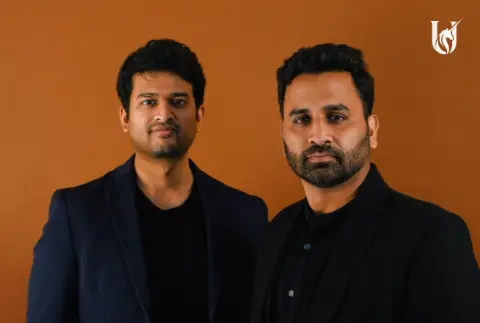
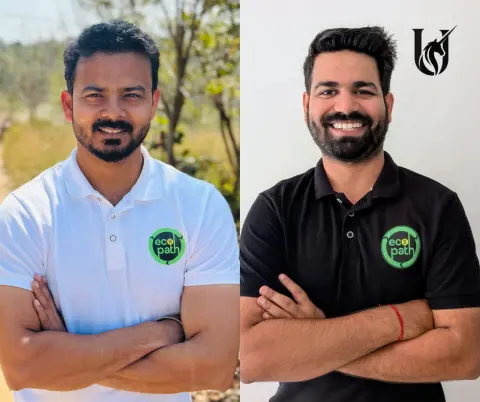
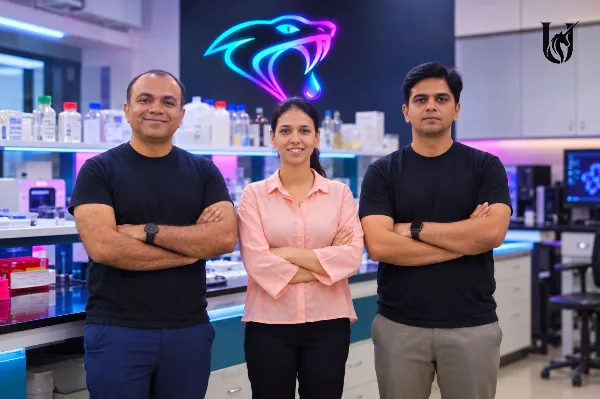
Founded by Professor Kartik Sunagar and Dr Vinay Prabhu, Venomics AI is a biotechnology venture originating from the Indian Institute of Science (IISc), Bengaluru. The company combines molecular sequencing, computational biology, AI and experimental testing to identify promising therapeutic molecules from animal venoms.
Venomics AI's Approach To Drug Discovery
The startup is developing the Venom Atlas, a data-driven discovery platform designed to map venom-derived peptides and proteins and study their potential biological applications.
Its approach combines molecular sequencing and structural analysis with AI models that help identify and prioritise promising molecular candidates. These predictions are then tested through laboratory screening to evaluate their biological activity.
The experimental findings are subsequently fed back into the AI models, helping improve candidate selection and guide further molecular research.
Unlike conventional drug discovery approaches that often begin by screening large libraries of synthetic compounds, Venomics AI is exploring molecules that have evolved naturally to interact with specific biological targets.
Venoms contain complex mixtures of bioactive peptides and proteins that can influence processes such as nerve signalling, pain perception and cardiovascular activity. Some venom-derived compounds have already inspired approved medicines, demonstrating the potential of this area of research.
Founders Combine IISc Research And AI Expertise
Venomics AI brings together two complementary areas of expertise through its founders.
Kartik Sunagar is a professor at the Indian Institute of Science and leads its Evolutionary Venomics Lab. His research focuses on venom evolution, toxinology and developing therapeutic applications from venom-derived molecules.
Vinay Prabhu, the company's co-founder and CTO, brings expertise in machine learning, computational biology and large-scale AI systems. He holds a PhD in Electrical and Computer Engineering from Carnegie Mellon University and a master's degree from IIT Madras.
The combination of scientific research and computational expertise forms the foundation of the company's venom-to-therapeutics discovery model.
Building India's Deeptech Drug Discovery Ecosystem
Venomics AI has also joined the NVIDIA Inception programme and was selected among the top five finalists for the 2026 Indo-Boston Biotech Bridge Award, organised by Nucleate India and the Association of Biotechnology Led Enterprises (ABLE), with LabCentral.
The startup's approach reflects a broader opportunity for Indian biotechnology companies to translate academic research and specialised biological datasets into commercial drug discovery platforms.
Another company working in the broader venom research space is C-CAMP-incubated Snaayu Lifesciences, which is exploring analgesic compounds derived from cone snail venom.
Meanwhile, Bengaluru-based Peptris Technologies raised Rs 70 crore in a Series A funding round in February 2026, co-led by IAN Alpha Fund and Speciale Invest, to advance its AI-powered drug discovery programmes.
For Venomics AI, the immediate challenge will be translating its growing molecular database and laboratory findings into validated therapeutic candidates. While venom-derived molecules offer an interesting starting point for drug discovery, demonstrating safety, efficacy and clinical potential remains a lengthy and capital-intensive process.
The latest funding gives the IISc-originated startup additional resources to build its discovery platform and move its research towards potential therapeutic applications.