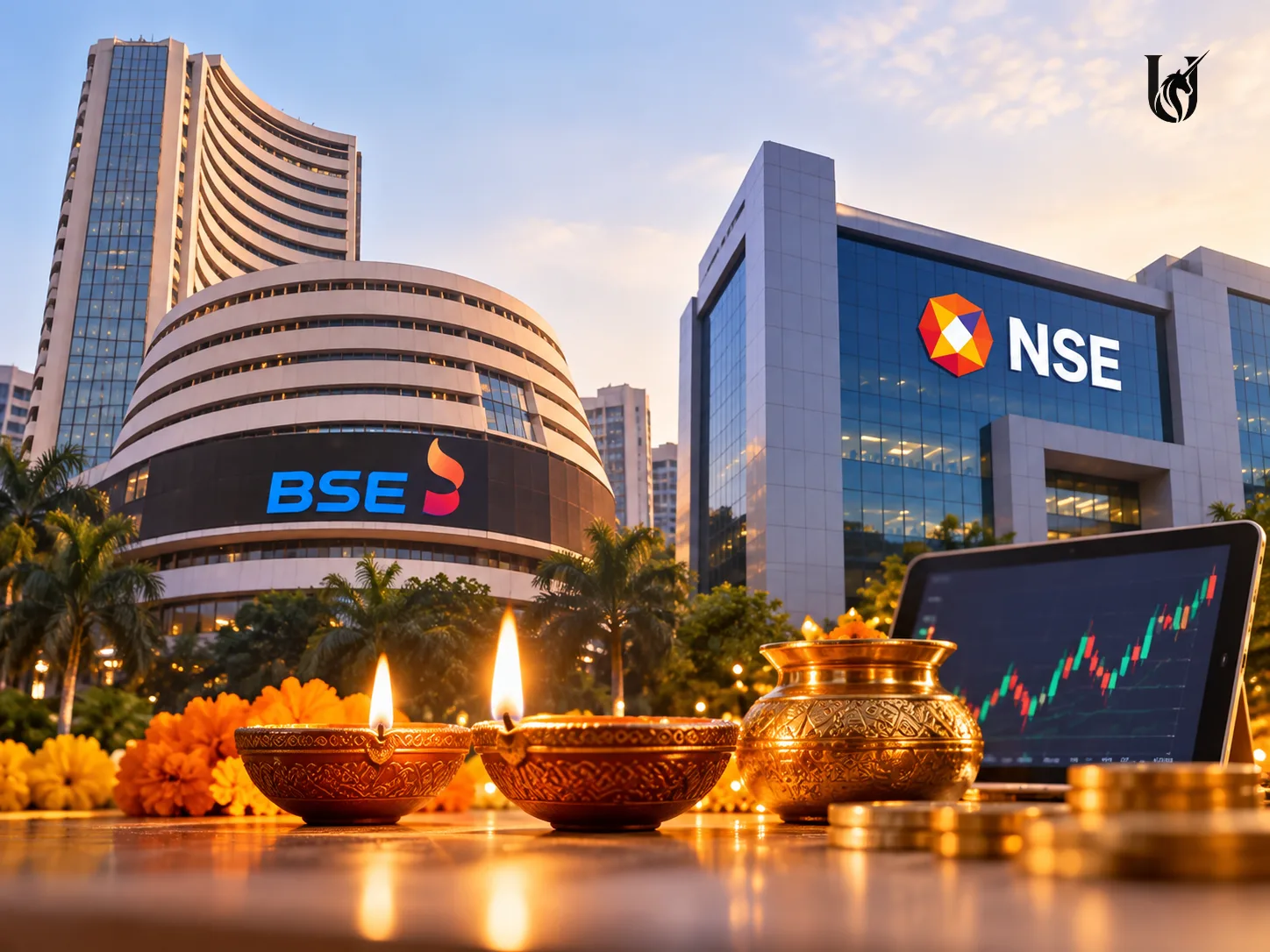
The Bombay Stock Exchange (BSE) and the National Stock Exchange (NSE) are set to hold their 2026 Muhurat Trading session on Sunday, November 8, from 2:20 PM to 3:30 PM, according to the exchange circulars described in the announcement.
The 70 minute special trading window will coincide with Diwali Laxmi Pujan, an auspicious occasion when investors traditionally make symbolic stock market investments. The session will include separate arrangements for block deals, pre-open trading, initial public offerings (IPOs), relisted shares and securities covered by the closing auction process.
The timing continues the recent shift towards daytime Muhurat Trading. In 2025, the special session was also held in the afternoon, from 1:45 PM to 2:45 PM.
For investors, the important point is that Muhurat Trading is a real trading session: orders can result in actual purchases and sales, with applicable settlement obligations.
Muhurat Trading 2026: Complete Schedule
The main continuous trading session will run for 70 minutes. Other market operations will take place in separate windows before and after the main session.
|
Trading activity |
Timings on November 8 |
|---|---|
|
Block deal session |
1:50 PM-2:05 PM |
|
Regular pre-open session |
2:05 PM-2:20 PM |
|
Main continuous trading |
2:20 PM-3:30 PM |
|
IPO and relisted securities: special pre-open |
2:05 PM-2:50 PM |
|
Trading in IPO and relisted securities |
3:05 PM-3:30 PM |
|
Closing auction order entry |
3:20 PM-3:30 PM |
|
NSE transition period for closing-auction securities |
3:35 PM-3:50 PM |
|
NSE post-close session |
3:50 PM-4:00 PM |
|
Trade modification deadline at NSE |
4:15 PM |
The exchanges have also specified a call auction for illiquid securities, with the NSE permitting order entry from 2:25 PM to 3:10 PM. The closing auction process and timings differ for eligible securities, so investors should check the relevant exchange circulars for the detailed rules.
Why Muhurat Trading Matters to Investors
Muhurat Trading is a longstanding Diwali market tradition associated with the beginning of a new Samvat, or Hindu financial year. Many investors use the occasion to make small, symbolic purchases as a gesture of prosperity.
The session also has practical implications. Trades executed during the special window carry settlement obligations, just like regular market transactions. Investors should therefore check their available funds, order details and applicable charges before placing trades.
The move to daytime trading also responds to a practical concern raised by brokers: allowing market participants to complete trading earlier in the day can make it easier for employees to celebrate Diwali with their families.
The Unicorn Magazine:- Editing by Aaradhya