The Boy Who Wanted IIT, But Found His Own Route
Peyush Bansal grew up in Delhi with an ambition that sounded familiar; he wanted to study at IIT and build a strong career in technology. IIT did not work out, but that setback did not stop him from moving forward. He eventually went to Canada and completed his engineering degree in Electrical Engineering from McGill University. That decision took him far from home, but it also gave him the confidence to think beyond the traditional career path.
Microsoft Gave Him a Job. India Gave Him a Reason to Return.
After graduating, Bansal joined Microsoft in the US as a programme manager. It was the kind of job many young engineers would consider a dream start. But after spending about a year there, he realised that a comfortable career was not what he wanted. He returned to India in 2007, without having a clear business empire in mind. He simply knew that he wanted to build something of his own.
His First Startup Was Not Lenskart
Back in India, Bansal started SearchMyCampus, an online platform designed to help college students find accommodation, jobs, books, transport and other everyday services. The idea gave him his first real taste of entrepreneurship. It also taught him a lesson that would become important later, having a good idea is not enough; you have to understand the customer, operations and the small problems that appear after a business goes live.
IIM Bangalore Changed the Way He Looked at Business
While working on his startup journey, Bansal pursued management education at IIM Bangalore. The combination of an engineering background, early startup experience and management training gave him a different way of looking at consumer problems. Instead of simply asking what product could be sold online, he started looking for industries where technology could remove old frustrations.
Then He Looked at Something Nobody Was Fixing
The opportunity he found was eyewear. Millions of Indians needed glasses, yet buying them was still largely dependent on neighbourhood optical stores. Prices were often unclear, choices were limited and the buying experience had not changed much with the rise of e-commerce. Bansal saw an industry where the customer need was huge but the experience was still largely offline.
The US Experiment Came Before Lenskart
Before bringing the idea to India, Bansal tested an online eyewear model in the US through Flyrr. The business initially attracted customers, but problems with suppliers, fulfilment and customer service began exposing weaknesses in the model. Instead of treating those problems as the end of the idea, Bansal looked at what they were teaching him. If he wanted to build eyewear online, he would need much tighter control over the customer experience.
2010: Lenskart Was Born
That learning became the foundation for Lenskart, launched in 2010 by Bansal along with Amit Chaudhary and Sumeet Kapahi. The early company focused on contact lenses before expanding into prescription glasses and sunglasses. The timing was risky. Indian consumers were comfortable buying books and electronics online, but eyewear was different. People wanted to touch the frame, try it on and make sure it looked right.
The First Challenge Was Not Selling Glasses. It Was Building Trust.
Bansal knew customers needed a reason to take the risk. Lenskart experimented with a customer-friendly return policy and built support systems around online purchases. The company also invested in technology and eventually connected its online experience with physical stores. The goal was simple: make customers feel that buying eyewear online was not a gamble.
Lenskart Turned “I Want to Try It” Into Technology
Eyewear has one problem that many online products do not, it sits directly on your face. A customer wants to know how a frame looks before paying for it. Lenskart responded by using tools such as virtual try-on, digital eye-care services and technology-led store experiences. Technology was not added simply because it sounded modern; it was used to solve a real reason customers hesitated to buy online.
The Bigger Idea Was Never Just an Online Store
As Lenskart grew, Bansal realised that an online-only model would not be enough for India. Customers still wanted physical eye tests, personal advice and the ability to touch and try frames. So Lenskart began building an omnichannel business, combining digital convenience with physical stores. That decision helped turn Lenskart from an e-commerce startup into a full eyewear retail company.
From One Website to Thousands of Stores
The physical expansion became one of Lenskart’s biggest growth engines. The company moved into cities and smaller markets, creating a network where customers could walk in for eye tests, try frames and buy products while remaining connected to Lenskart’s digital ecosystem. By the time it entered the public markets, Lenskart had grown to thousands of stores across India and international markets.
The Funding That Helped Lenskart Think Bigger
Lenskart attracted some of the biggest names in global and Indian investing, including SoftBank, Kedaara Capital, Premji Invest, Temasek, ADIA and other institutional investors. Across its funding history and IPO, the company raised more than $1.6 billion according to CB Insights. The capital helped Lenskart expand its store network, technology, manufacturing capabilities and international operations.
But Money Alone Was Never the Strategy
The company’s growth was not simply a story of raising more capital and opening more stores. Lenskart spent years building control over the eyewear supply chain, product design, technology and customer experience. That vertical approach helped it move faster and create products at different price points. The company increasingly behaved less like an online marketplace and more like a complete eyewear ecosystem.
The Revenue Story Started Catching Up
Lenskart’s financial journey eventually became as important as its expansion story. Revenue grew from about Rs 4,010 crore in FY23 to Rs 5,427 crore in FY24 and around Rs 6,652 crore in FY25, according to IPO-era financial disclosures. More importantly, FY25 marked a major turning point because the company reported about Rs 297 crore in net profit after being loss-making in the previous year.
FY25 Was the Year Lenskart Proved Its Model
The shift into profitability mattered because Lenskart was no longer being valued only on future growth. It had begun showing that a large physical retail network, technology platform and international business could work together financially. The company’s FY25 revenue rose about 23% year on year to ₹6,653 crore, while profitability improved sharply.
Then Came the Biggest Test: The IPO
In 2025, Lenskart moved from the private startup world to the public market. Its IPO was priced at Rs 382-Rs 402 per share and raised roughly Rs 7,278 crore, including a Rs 2,150 crore fresh issue. At the upper end, the IPO valued Lenskart at nearly Rs 70,000 crore.
The Market Did Not Welcome It Immediately
Lenskart’s stock-market debut was far from a perfect celebration. Shares opened below the Rs 402 IPO price on November 10, 2025, and at one point fell about 11%. Investors were debating whether the company’s valuation was too high compared with its current earnings. But the stock later recovered, showing how quickly public-market sentiment can change.
From Startup Valuation to a Public Company
Despite the debate around its pricing, Lenskart entered public markets with a valuation of roughly $7.7 billion at listing. Since then, the company’s market value has moved higher. In August 2026, Lenskart’s market capitalisation reached around $11 billion as its shares approached Rs 627, helping push Peyush Bansal into the billionaire club.
Peyush Bansal’s Billion-Dollar Journey
Forbes currently estimates Peyush Bansal’s real-time net worth at about $1.2 billion. His wealth is closely tied to his stake in Lenskart and the value created through the company’s public listing and subsequent share-price performance. This is a long way from the young entrepreneur who once walked away from a Microsoft career because he wanted to build something of his own.
A Founder Who Bought More of His Own Company
There was another important moment before the IPO. In 2025, Bansal bought additional Lenskart shares from existing investors at a valuation of around $1 billion, increasing his ownership ahead of the public listing. Regulatory filings showed that he increased his stake by roughly 2.5 percentage points through the transaction.
Shark Tank Changed His Public Image
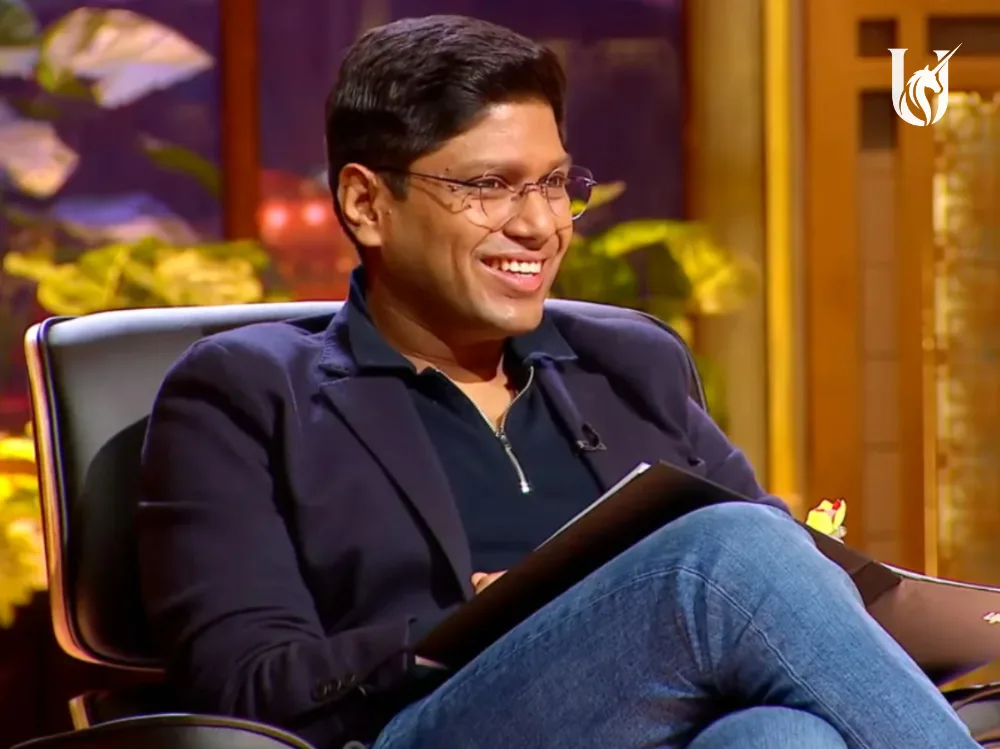
Lenskart made Bansal a well-known entrepreneur, but Shark Tank India made him a household name. As one of the original sharks, he became known for asking founders questions about customers, numbers and the real reason their business should exist. His television presence also made his own entrepreneurial journey relatable to a much wider audience.
But Peyush’s Biggest Bet Was Still Lenskart
While television brought him fame, Lenskart remained the centre of his business career. His investment philosophy has often focused on founders, products and customer problems rather than simply chasing fashionable sectors. His public persona may be associated with Shark Tank, but the larger story is the company he spent more than a decade building.
The Vision Was Bigger Than Selling Spectacles
Bansal’s ambition has always gone beyond putting more frames on shelves. The broader idea is to make eye care easier to access while making eyewear affordable, stylish and convenient. Lenskart has therefore built around product design, manufacturing, technology, eye testing, stores and digital services instead of treating spectacles as just another retail product.
Lenskart Went Beyond India
The company’s international growth became another major chapter. Through its own expansion and acquisitions, including the Owndays business in Japan and other Asian markets, Lenskart moved from being an Indian eyewear startup to a global player. Forbes currently says the company has a presence across 157 Indian cities and 15 other countries.
What Made Lenskart Different?
The biggest difference was that Lenskart did not try to force Indian customers to choose between online and offline shopping. It connected the two. A customer could discover a frame online, visit a store, get an eye test, try different designs and continue the relationship through the app. That combination turned convenience into a habit.
The Real Breakthrough Was Understanding the Customer
Peyush Bansal did not invent spectacles. He did not invent e-commerce either. What he understood was that buying eyewear had too much friction. Customers wanted choice, trust, affordability and a chance to try before deciding. Lenskart built its business around removing those barriers one by one.
The Failures That Built the Founder
SearchMyCampus did not become a major business. Flyrr exposed problems that Bansal had not anticipated. Even Lenskart faced early doubts about whether Indians would buy eyewear online. But each setback added another piece to the eventual model. Instead of hiding those failures, Bansal used them as information.
The Biggest Lesson: Do Not Fall in Love With Your First Idea
Peyush Bansal’s journey shows that entrepreneurship is rarely one perfect idea followed by instant success. His first venture taught him about customers. His second taught him about operations. Lenskart brought those lessons together. The founder kept changing the model until the business matched what customers actually wanted.
Build for the Customer, Not for the Valuation
One of Bansal’s most revealing comments came before Lenskart’s IPO, when he said that his job was to serve customers rather than decide the market price of the company. His focus, he said, was on delivering good-quality spectacles at the lowest possible price.
That mindset explains a lot about Lenskart’s journey.
From a Microsoft Desk to the Top of Indian Retail
Peyush Bansal could have stayed in the US, continued his technology career and built a comfortable life. Instead, he came back to India without a guaranteed business plan. He tried, failed, learnt, tried again and eventually found an industry that most technology companies had overlooked.
Today, Lenskart is a publicly listed global eyewear company, and Bansal is a billionaire entrepreneur.
The Story Is Not Really About Spectacles
It is about seeing an ordinary problem differently.
Millions of people needed glasses. Millions more wanted better-looking eyewear. But the experience of buying them had remained largely unchanged. Bansal saw that gap and spent years building the technology, stores, supply chain and brand needed to close it.
The boy who did not make it to IIT did not let that become the definition of his story.
He found another route.
And that route eventually led from Microsoft to Lenskart, from a first failed startup to a global eyewear business, and from a young entrepreneur with an uncertain future to a billionaire founder.
Key Numbers Behind the Lenskart Story
- Founded: 2010
- FY25 Revenue: Rs 6,652-Rs 6,653 crore
- FY25 Net Profit: About Rs 297 crore
- IPO Size: Rs 7,278 crore
- IPO Valuation: About Rs 70,000 crore
- IPO Listing: November 10, 2025
- Current Estimated Peyush Bansal Net Worth: About $1.2 billion
- Recent Lenskart Market Value: Around $11 billion
- Funding Raised: More than $1.6 billion across funding and IPO records
- Global Presence: 157 Indian cities + 15 other countries, according to Forbes.