Mumbai-based AI infrastructure startup Neysa has deployed 8,192 AMD Instinct MI350X GPUs in Mumbai, expanding India's dedicated computing capacity for artificial intelligence training, generative AI, and large-scale inference workloads.
The deployment, announced on November 18, 2026, is already operational, with global customers having contracted the computing capacity for their AI deployments in India, the company said.
The infrastructure is powered by AMD Instinct MI350X accelerators, AMD EPYC processors and the AMD ROCm open software ecosystem. It has been deployed on Neysa's Tytan platform, which provides dedicated bare-metal infrastructure for organisations running demanding AI workloads.
The development comes as demand for high-performance computing infrastructure increases, with enterprises and AI developers seeking reliable access to GPUs for training and operating increasingly complex AI models.
Neysa's 8,192-GPU Cluster: What the Deployment Offers
The new GPU cluster is designed to support several computing-intensive applications, including:
-
Large language model training: Providing computing power to train large AI models using extensive datasets.
-
Fine-tuning: Helping developers adapt existing AI models for specific industries and business applications.
-
Generative AI: Supporting applications that generate text, images and other forms of digital content.
-
High-throughput inference: Enabling AI models to process large volumes of user requests and generate responses.
The deployment was brought online in a single phase in Mumbai, according to the company.
The use of AMD's MI350X accelerators alongside EPYC processors and ROCm software also expands the range of hardware and software configurations available to customers operating through Neysa.
How Neysa Tytan Is Different From Traditional Cloud Infrastructure
The new deployment is available through Neysa Tytan, the company's dedicated bare-metal AI infrastructure platform.
Unlike conventional shared cloud environments, bare-metal infrastructure gives customers dedicated access to physical computing hardware, allowing greater control over how their AI workloads are configured and operated.
Neysa offers three deployment configurations:
-
Bare metal: Direct access to dedicated computing hardware.
-
Bare metal with Slurm: Infrastructure managed through Slurm for scheduling and coordinating computing workloads.
-
Bare metal with Kubernetes: Infrastructure configured to run and manage containerised applications.
Customers can also choose their preferred accelerator architecture, network design, storage platform and deployment model.
This approach forms part of Neysa's silicon-agnostic strategy, under which the company aims to support different chip architectures rather than depend on a single GPU ecosystem.
For AI developers and enterprises, this flexibility can be important when selecting infrastructure based on performance requirements, software compatibility, operating costs and workload characteristics.
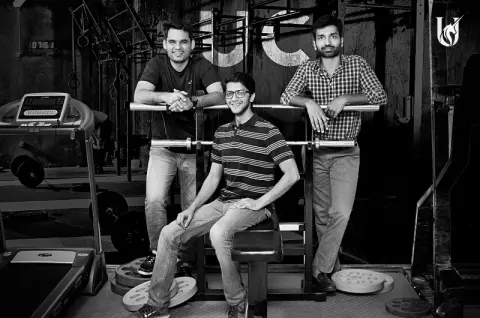
Sharad Sanghi and Anindya Das Founded Neysa in 2023
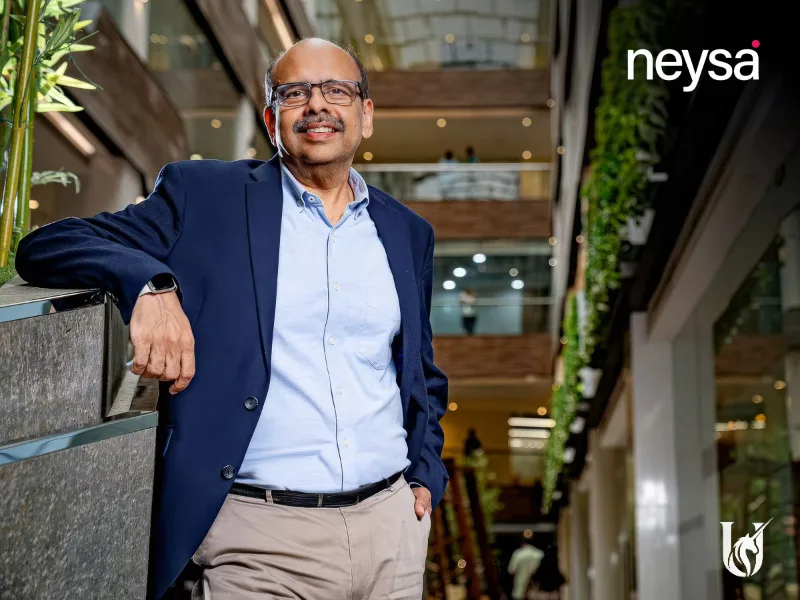
Neysa was founded in 2023 by Sharad Sanghi and Anindya Das, two technology entrepreneurs with experience in India's data centre and infrastructure industry.
Sharad Sanghi serves as Co-founder and CEO, while Anindya Das is Co-founder and CTO.
Before establishing Neysa, Sanghi founded Netmagic, one of India's early data centre companies, which was acquired by NTT in 2012. He subsequently led NTT's data centre business in India.
Anindya Das brings more than two decades of experience in infrastructure, networking and storage technologies.
The founders are building Neysa around the growing demand for dedicated AI infrastructure, helping enterprises and AI developers train, deploy and operate models without having to independently manage complex computing systems.
The company is backed by Blackstone, alongside other institutional investors.
Global Customers Have Already Contracted the GPU Capacity
One of the notable aspects of the announcement is that the newly deployed capacity is not simply planned infrastructure awaiting customers.
Neysa said global customers have already contracted the cluster's computing capacity to support large-scale AI deployments in India.
However, the company has not publicly disclosed the identities of these customers, the contract values or the utilisation rate of the 8,192 GPUs.
The development suggests that demand for AI infrastructure is increasingly extending beyond access to individual GPUs. Organisations running large AI workloads also require predictable computing availability, dedicated hardware, infrastructure reliability and operational support.
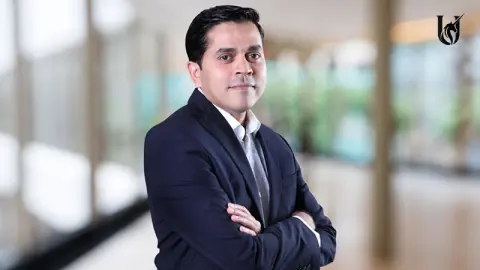
Commenting on the deployment, Sharad Sanghi said the focus of large AI deployments was shifting from the number of available GPUs towards the ability to deploy infrastructure at scale and operate it reliably.
AMD's India Managing Director for Sales, Vinay Sinha, said the collaboration would expand access to advanced AI computing infrastructure and provide organisations with greater flexibility in building and scaling AI systems.
Why Neysa's AMD Deployment Matters for India's AI Ecosystem
India's AI ambitions depend not only on developing applications and models but also on building the computing infrastructure required to train and operate them.
Large GPU clusters are essential for organisations developing foundation models, enterprise AI applications, generative AI platforms and high-performance computing solutions.
Neysa's latest deployment adds another major infrastructure option to India's AI ecosystem while expanding the availability of AMD-powered computing alongside existing accelerator platforms.
The company's silicon-agnostic strategy is also significant. Greater hardware choice can give AI developers more flexibility in selecting infrastructure according to their workloads, software requirements and deployment economics.
For Indian AI startups, enterprises and research organisations, the availability of dedicated GPU infrastructure within the country could support larger deployments while reducing dependence on computing capacity hosted exclusively overseas.
With 8,192 AMD GPUs now operational in Mumbai and global customers already committed to the capacity, Neysa is positioning itself as a significant infrastructure provider in India's expanding AI computing market.