India's private space sector is gaining another opportunity to develop homegrown technology for government applications, with the Indian National Space Promotion and Authorisation Centre (IN-SPACe) selecting three Indian companies to build high-resolution 3D maps of the country's cities using satellite imagery.
The selected companies - Space Pixxel Technologies, KaleidEO Space Systems and Azista Industries- will collectively receive Rs 1.46 Cr in seed funding under IN-SPACe's Seed Fund Scheme for Use Case Demonstration by Non-Government Entities.
Announced on November 17, 2026, the initiative aims to develop an indigenous satellite-based system capable of reconstructing India's urban settlements in three dimensions. The project will initially cover Bengaluru and Shimla, two cities with significantly different geographical and urban characteristics.
The initiative addresses NITI Aayog's requirement for more accurate and detailed geospatial information to support urban planning, infrastructure development, disaster risk assessment and population estimation.
Meet the Three Indian Space Companies Selected by IN-SPACe
The three companies bring expertise in satellite technology, Earth observation and aerospace engineering.
1. SpacePixxel Technologies
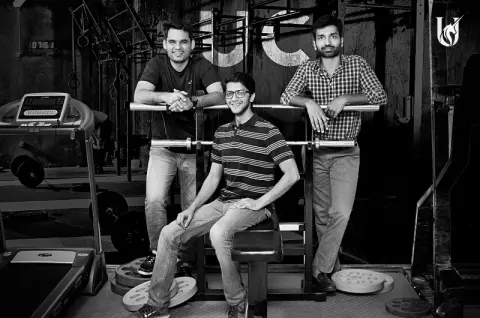
SpacePixxel Technologies is associated with the leadership of Awais Ahmed Nadeem Alduri, its founder and CEO. The company works on satellite technology and advanced space-based imaging capabilities.
2. KaleidEO Space Systems
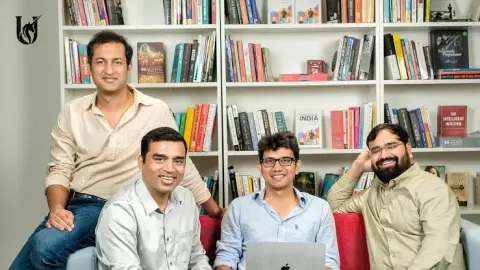
KaleidEO was founded by Arpan Sahoo and Akash Yalagach. The company focuses on developing high-resolution optical Earth observation payloads and satellite-based imaging technologies. It is part of the SatSure ecosystem.
3. Azista Industries
Hyderabad-based Azista Industries is led by founder-promoter M. Srinivas Reddy. The company operates across multiple manufacturing and engineering segments, including aerospace engineering.
The three companies will work on developing indigenous solutions using Indian satellite data. The Rs 1.46 crore allocation is collective funding; individual company-wise allocations have not been disclosed.
How Will Satellite Data Help Reconstruct Indian Cities in 3D?
The project will use Earth observation data and monocular imagery to generate detailed representations of India's built environment.
Unlike conventional two-dimensional maps, which primarily show the horizontal spread of buildings and infrastructure, the proposed system will also capture the vertical dimensions of urban settlements.
The companies will develop three major geospatial outputs:
-
Built-up surface and building type: Identifying the geographical footprint and classification of constructed areas.
-
Building height: Estimating the vertical dimensions of buildings.
-
Built-up volume: Measuring the overall built-up volume of urban structures.
These datasets will help government agencies understand how cities are expanding, where construction is becoming denser and how urban infrastructure is changing over time.
The pilot projects will compare settlement patterns across two different time periods, allowing authorities to examine changes in urban growth and building density.
Why Bengaluru and Shimla Were Selected
The initial demonstrations will cover Bengaluru and Shimla, representing two distinct urban environments.
Bengaluru provides the opportunity to examine a large metropolitan region experiencing substantial urban development, while Shimla offers a different geographical setting as a hill city.
Comparing the two locations will help evaluate how satellite-based reconstruction techniques perform across different settlement patterns and terrain conditions.
The resulting data could support infrastructure planning, disaster preparedness, population assessment and more informed decisions around urban development.
IN-SPACe Opens Opportunities for India's Private Space Industry
According to IN-SPACe Director of Technical Directorate Rajeev Jyoti, the selection process received 26 proposals, of which 13 were shortlisted and three ultimately selected for funding.
The projects will be monitored by a Project Facilitation and Monitoring Committee comprising representatives from user departments and the Indian Space Research Organisation (ISRO).
Importantly, successful pilot demonstrations could open the possibility of further work orders from government user agencies, creating commercial opportunities for the selected companies.
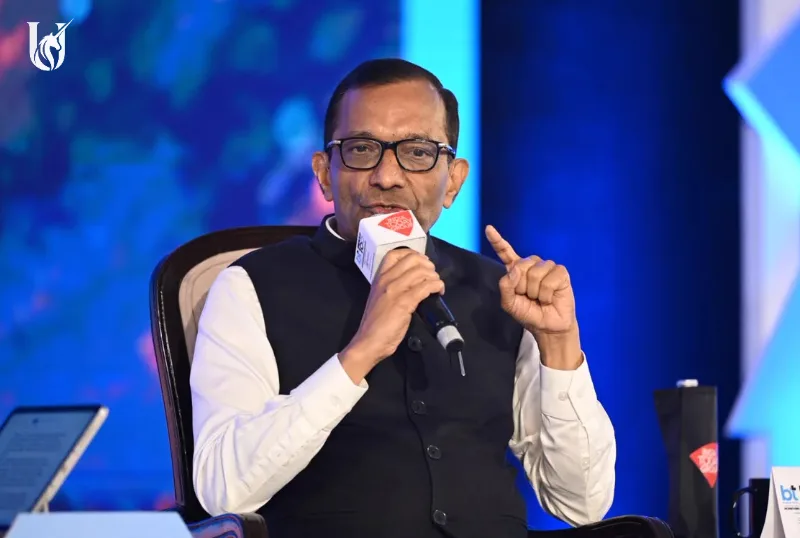
IN-SPACe Chairman Dr Pawan Goenka said India's cities were expanding both horizontally and vertically, while gaps in accurate built-environment data continued to create challenges for effective urban planning.
He said the initiative brings together Indian satellite data, indigenous technology and clearly defined government requirements, giving domestic companies an opportunity to develop solutions for real-world urban challenges.
What This Means for India's Space-Tech Startups
The significance of this initiative extends beyond the Rs 1.46 Cr seed funding.
It highlights a growing opportunity for Indian space companies to move beyond developing satellites and imaging hardware towards building commercially useful applications from space-generated data.
For startups working in geospatial intelligence, Earth observation, artificial intelligence and satellite analytics, government-defined requirements can provide an entry point into real-world deployments.
The potential for follow-on government work orders also makes the programme relevant from a business perspective. Successful demonstrations could help companies establish technology credibility and build a pathway towards larger commercial applications.
For India's private space ecosystem, the next opportunity may lie not just in reaching space, but in converting satellite data into actionable intelligence for cities, businesses and government institutions.