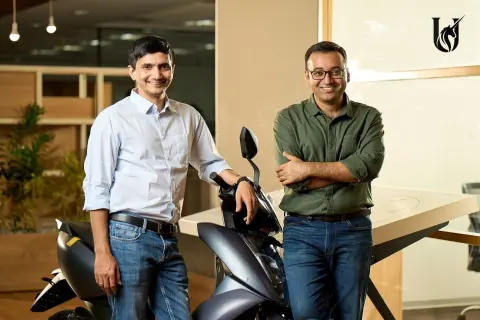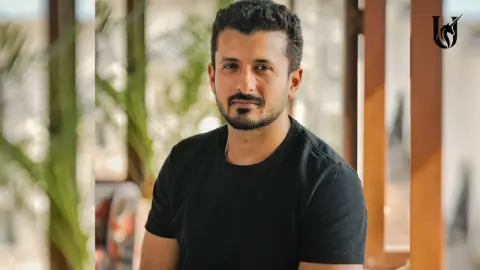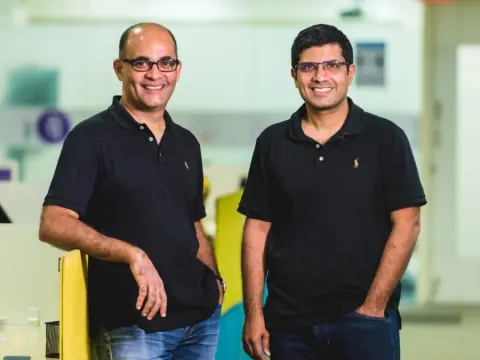

Bengaluru-based space technology startup Pixxel, co-founded by Awais Ahmed and Kshitij Khandelwal, has established a US subsidiary, Pixxel Federal, to pursue business with American government agencies across defence, intelligence and other public-sector markets.
Announced on October 29, the move expands Pixxel’s presence in the United States as it looks beyond satellite imagery towards Earth-intelligence software, advanced sensing technologies and satellite systems. The subsidiary will build on the company’s existing engagements with NASA and the US National Reconnaissance Office (NRO).
Pixxel has appointed Allyson Jenkins, formerly its VP for public sector, as CEO of Pixxel Federal. Jenkins has 18 years of experience in national security and geospatial intelligence, including nine years at the National Geospatial-Intelligence Agency.
Pixxel Federal Targets US Government Demand
The new subsidiary will pursue contracts with US federal agencies and establish an office in the Washington, DC, metropolitan area to work more closely with government customers and partners.
Pixxel has already secured a place in NASA’s Commercial SmallSat Data Acquisition programme, which enables the agency to obtain Earth-observation data from commercial satellite operators. In May 2026, it also received a Strategic Commercial Enhancements contract from the NRO to demonstrate the capabilities of commercial hyperspectral imagery for intelligence applications.
Pixxel Federal’s board will include retired US Army Lieutenant General Ray Palumbo, former Northrop Grumman chief strategy and technology officer Patrick M. Antkowiak, and former senior intelligence executive Frank X. Avila, who held leadership positions at the CIA and NGA.
The appointments bring experience in defence, aerospace and intelligence as Pixxel seeks to deepen its engagement with US government customers.
Hyperspectral Imaging Offers More Than Conventional Satellite Images
Pixxel’s core technology is hyperspectral imaging, which captures reflected light across numerous wavelengths rather than relying only on conventional visible-light imagery.
These additional spectral details can help analysts identify materials and assess conditions that may not be apparent in standard satellite photographs. Potential applications include mineral exploration, agricultural monitoring, environmental analysis and intelligence gathering.
The company operates six Firefly hyperspectral satellites and has developed Aurora, an Earth-intelligence software platform designed to turn satellite observations into actionable insights. Its broader portfolio also includes satellite design and manufacturing capabilities.
By bringing data, software and satellite systems closer together, Pixxel is positioning itself as more than a satellite-image provider.
$100 Million Series C Supports Global Expansion
The US expansion follows Pixxel’s $100 million Series C funding round, announced in September 2026 and co-led by Temasek and Seraphim. The round brought the company’s total funding to $195 million.
The capital is intended to support new sensing technologies, the next-generation Honeybee satellite constellation, further development of Aurora and expanded satellite manufacturing in India and the United States. The first Honeybee satellite is expected to launch in 2027, according to the company.
For Awais Ahmed and Kshitij Khandelwal, Pixxel Federal adds a dedicated route into a strategically important government market. The opportunity extends beyond selling imagery: government customers may also need analytics, sensing capabilities and satellite systems tailored to specific missions.
However, establishing a US subsidiary does not guarantee federal contracts. Pixxel’s progress will depend on winning additional awards, meeting government requirements and demonstrating that its technology can deliver reliable intelligence at operational scale.
The move reflects Pixxel’s wider ambition to build a global space-infrastructure business, with Indian engineering and manufacturing supporting customers across commercial, civil and national-security markets.