The Karnataka government has selected eight startups for technology projects worth nearly Rs 1.99 Cr under its Government First Initiative, giving young companies an opportunity to deploy their products directly within government departments and address real-world public service challenges.
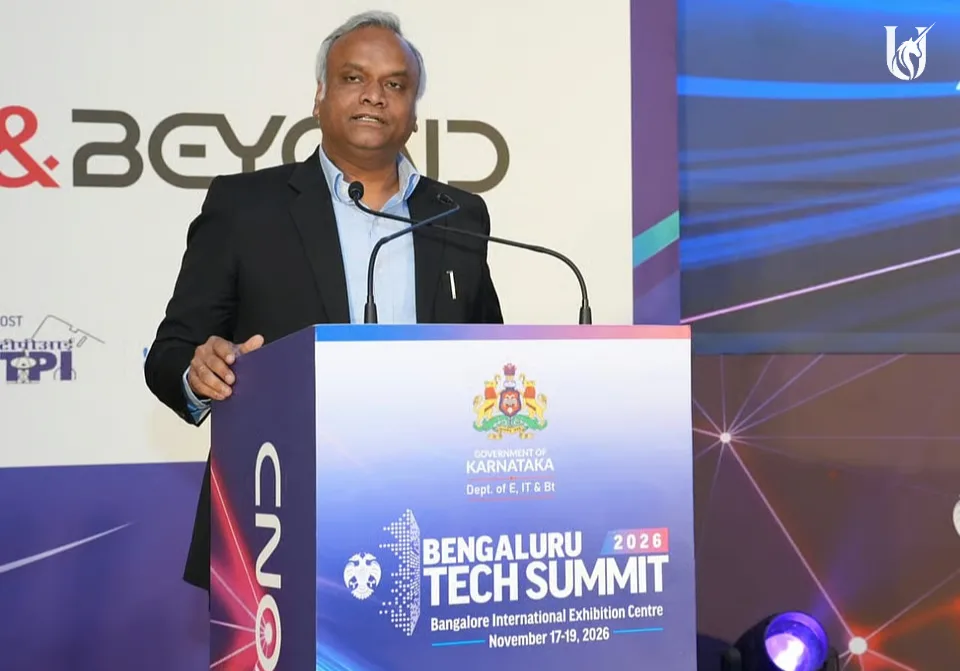
Announced on November 18, 2026, during the 29th Bengaluru Tech Summit, the first cohort includes four startups working with the Praja Seva Department and four selected by the Bangalore Water Supply and Sewerage Board (BWSSB).
The Department of Electronics, Information Technology and Biotechnology (IT&BT) has structured the programme to make government departments early customers for startups. Each selected company will receive a project opportunity worth up to Rs 25 lakh to pilot and validate its technology in collaboration with the respective department.
The Praja Seva Department has committed projects worth Rs 99.78 lakh, while BWSSB's projects are valued at Rs 1 crore. The combined commitment stands at Rs 1.99 crore, inclusive of GST.
Meet the 8 Startups Selected Under Karnataka's Government First Initiative
The selected companies will work on challenges ranging from AI-powered citizen services to intelligent water infrastructure management.
1. Startups selected under the Praja Seva Department
The department received 76 applications across four problem statements. Four companies were selected to improve government administration and citizen service delivery.
-
SanMejora: Selected to develop an AI-enabled grievance management and redressal system that can help government departments handle citizen complaints more efficiently. Public corporate records identify Santhosh Narayan Navale as a director of SanMejora Private Limited; his founder designation requires confirmation.
-
VTT AI Private Limited: Will develop an AI-powered unified citizen call centre to improve communication between citizens and government departments. Its public-facing AI platform is Vidman AI.
-
Datafrontier Innovations Private Limited: Selected to develop an AI-enabled e-Office and unified officer workflow solution. The company's publicly identified leadership includes Veenadhari Pola and Madhusudhan.
-
Nife Apps Labs Pvt Ltd: Will focus on improving the uptime and availability of citizen-facing government IT services. Public company information identifies Nida Sahar as its founder.
2. Startups selected under Bangalore Water Supply and Sewerage Board
BWSSB received 74 applications across five challenge areas, covering water loss reduction, wastewater reuse, asset management, GIS-based operational intelligence and digital twin technology.
The four selected startups are:
-
Smart Terra: Selected for the urban water management challenge. The company develops AI-powered analytics that help water utilities identify leaks, monitor distribution networks and reduce non-revenue water. Its founders are Gokul Krishna Govindu, Giridharan Sengaiah and Navaneethan Santhanam.
-
UniaX Technologies Pvt Ltd: Selected for intelligent asset management. The Bengaluru-based company develops industrial IoT monitoring solutions covering water, energy, environmental monitoring and operational efficiency. Its founder details require further confirmation.
-
Krishi Hrudya Private Limited: Selected for GIS-enabled revenue and operational intelligence. The company works on technology-led agricultural and resource-management solutions. Its publicly identified founding team includes P. R. Seshagiri Rao and Ranjitha Pawar.
-
Calypsion Innovations LLP: Selected to develop a digital twin solution for integrated water management. The company works on industrial IoT, connected devices and operational analytics. Its founders are Jaisantosh Dharampure and Roopa Devi.
Each BWSSB-selected startup has a project allocation of Rs 25 lakh, taking the department's total project commitment to Rs 1 crore, inclusive of GST.
How Karnataka's Government First Initiative Works
Unlike conventional startup support programmes that primarily provide financial assistance or incubation, the Government First Initiative focuses on creating direct commercial opportunities.
Selected startups get an opportunity to work with government departments, test their products in operational environments and demonstrate measurable results.
The selection process involved five stages:
-
Application submission.
-
Eligibility screening.
-
Evaluation by a selection committee.
-
Discussions with officials from the respective departments.
-
Final budget discussions.
Applications for the first cohort were invited between October 8 and October 23, 2026.
The programme also provides access to anonymised departmental data and a regulatory sandbox environment, allowing startups to test and validate their solutions under real-world conditions.
Subject to technical evaluation and programme guidelines, selected startups can receive direct work orders of up to Rs 25 lakh.
Priyank Kharge Targets 100 Startups Under Government First
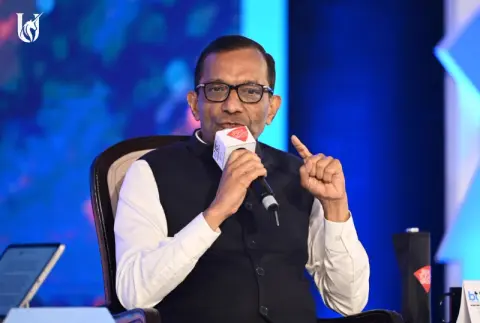
Speaking at the announcement, Karnataka IT and BT Minister Priyank Kharge said the initiative was designed to establish government as the first customer for startups through a formal state-level policy.
He explained that while individual departments had previously experimented with startup solutions, the new framework institutionalises the approach.
The state aims to engage 100 startups under the first cohort across different government departments.
Applications have also been invited to address challenges identified by the Home Department, including urban mobility, synthetic drug detection and cybersecurity.
Karnataka is additionally planning a reverse-challenge mechanism through which startups and global capability centres can identify public-sector problems and propose technology solutions in areas such as life sciences, agriculture and marine biotechnology.
Why Government Procurement Matters for Indian Startups
One of the biggest challenges for early-stage technology companies is securing their first institutional customer.
Even when startups develop promising products, government departments and large organisations often require proof of reliability, operational performance and scalability before adopting them.
Karnataka's Government First Initiative attempts to address this gap by connecting startups directly with departments that have identified specific technology requirements.
For participating companies, successful deployments could provide three important advantages: an initial government customer, operational validation and a potential pathway towards larger procurement opportunities.
The programme also creates an opportunity for the government to evaluate homegrown technology before considering wider adoption.
For India's startup ecosystem, the model highlights an important shift in public-sector innovation support: moving beyond funding technology development towards creating actual demand for products built by startups.
The next measure of success will be whether these eight companies can demonstrate measurable improvements in citizen services, administrative efficiency and Bengaluru's water management systems.