Humanoid robots could move beyond factories and commercial spaces into everyday households sooner than expected, according to Xpeng, the Chinese electric vehicle manufacturer expanding into artificial intelligence and robotics.
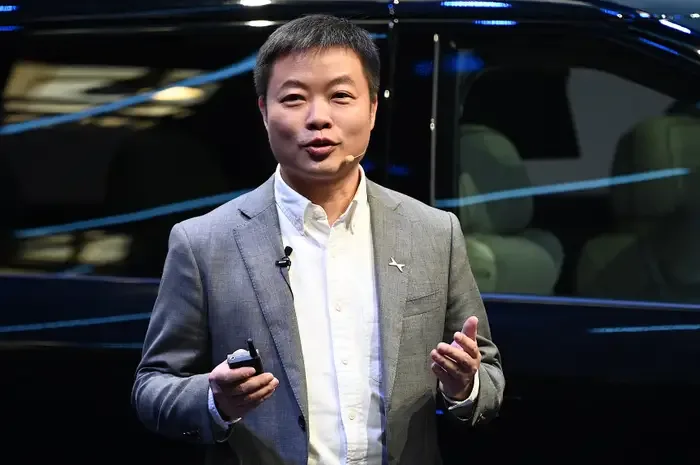
Brian Gu, co-president of Xpeng, said that the company could begin considering household deployment of humanoid robots one to two years after successfully introducing them in commercial environments. The timeline reflects the company's ambition, rather than a confirmed launch date for home robots.
The comments come as Xpeng prepares to commercialise its general-purpose humanoid robot, IRON, which made its latest public debut on November 25, 2026, at the company's AI Day event.
Xpeng plans to deploy IRON in showrooms in 2027
Xpeng plans to begin mass production of IRON in January 2027 and train the robot as a store assistant at its retail locations from the first quarter. Its official public release is targeted for the second quarter, with deliveries expected later in the year.
The company is positioning IRON for practical workplace applications rather than limiting it to demonstrations. The robot is designed to navigate its surroundings, understand voice instructions, perform tasks and interact with people.
According to Xpeng, the latest IRON model features 76 degrees of freedom and more than 1,500 tactile sensing points. It is powered by three of the company's proprietary Turing AI chips, which support onboard AI models and whole-body movement control.
Xpeng has also introduced its Turing Physical AI Architecture, which combines AI reasoning, real-time decision-making and physical execution. The company aims to use a common technology foundation across its intelligent vehicles and humanoid robots.
Why household robots remain a bigger challenge
Moving a humanoid robot from a controlled commercial environment into a home is a significantly more demanding task.
A showroom or workplace generally has defined operating areas and predictable activities. Homes, by contrast, involve changing environments, narrow spaces, fragile objects and unpredictable human interactions. Robots would also need to operate safely around children, elderly people and pets while responding appropriately to unexpected situations.
Gu highlighted the need for robots to perform multiple activities simultaneously, such as walking, answering questions and completing tasks without losing balance or becoming distracted.
Battery life, reliability, safety and consistent performance will therefore be critical before household deployment becomes commercially viable.
Xpeng's $900 million robotics funding signals bigger ambitions
Founded in 2014, Xpeng was cofounded by He Xiaopeng, who serves as the company's chairman and CEO. The automaker is now expanding beyond electric vehicles into autonomous driving, humanoid robotics and other physical AI applications.
In August 2026, Xpeng announced that its robotics business had raised more than $900 million at a post-money valuation exceeding $6.3 billion. The funding round was led by IDG Capital, with participation from Gaorong Ventures and strategic backing from Tencent and Alibaba.
The company plans to use the capital to accelerate robotics research, develop its technology and support mass production.
Gu has also suggested that robotics could become a meaningful contributor to Xpeng's business within two to three years, with profitability potentially arriving as early as 2027. These remain management expectations, not guaranteed financial outcomes.
For Xpeng, the opportunity is to apply its experience in electric vehicle engineering, batteries, sensors, chips and autonomous driving to a new category of intelligent machines.
The larger question is whether humanoid robots can move beyond impressive demonstrations and become reliable, affordable products that businesses and households are willing to pay for. Xpeng's commercial rollout in 2027 will be an important early test of that ambition.