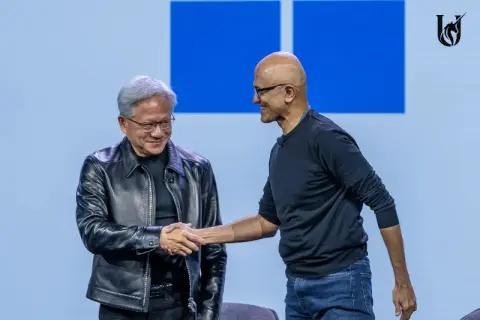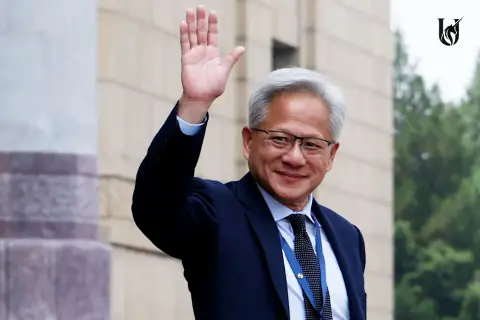
NVIDIA has reinstated co-founder Jensen Huang as its President and Chief Executive Officer, just 11 days after he resigned from the leadership position amid reports of alleged extramarital relationships and concerns surrounding a suspected foreign-intelligence connection.
The company announced on November 23 that its board of directors had unanimously approved Huang’s return, effective immediately. He has also resumed his position as a member of NVIDIA’s board.
The decision followed a series of discussions between Huang and the board. NVIDIA said directors were satisfied with his candour and ability to lead the company. The board also received input from senior US government officials and said it was confident that Huang’s reinstatement posed no national security risk.
Harvey C. Jones will continue as board chairman. Colette Kress, who took over as interim CEO following Huang’s resignation, will return to her continuing responsibilities as NVIDIA’s Executive Vice President and Chief Financial Officer.
Huang resigned on November 12, following reports about alleged extramarital relationships that raised questions about corporate governance and possible national security implications.
One reported relationship involved Alice Huang, a businesswoman associated with Singapore-based Megaspeed International. US intelligence agencies were reportedly examining whether she had links to China’s Ministry of State Security. The Unicorn Magazine has said it could not independently verify the intelligence allegations. China has rejected the accusations as groundless.
Huang acknowledged being unfaithful to his wife and apologised to his family. However, the allegations concerning a possible foreign-intelligence connection remain a separate matter and should not be treated as established fact.
NVIDIA’s board had previously formed an independent committee, supported by external legal counsel, to investigate reports that Huang had been targeted by a foreign-intelligence effort.
Huang’s return does not bring the internal investigation to an end.
In its November 23 announcement, NVIDIA said the independent directors’ committee would continue its investigation and that Huang had agreed to cooperate fully.
The company has also established a separate National Security and Export Control Committee, made up exclusively of independent directors, to oversee trade compliance and national security risks. NVIDIA is engaging specialist legal advisers and plans to appoint a Chief Compliance Officer to oversee compliance matters and report to the board’s Nominating and Corporate Governance Committee.
This distinction is important: the board’s assessment that Huang’s return poses no national security risk is not the same as a final finding on every allegation under investigation.
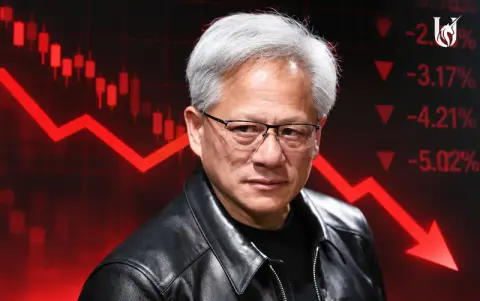
The leadership reversal also had an immediate impact on investor sentiment.
NVIDIA shares jumped approximately 33% in early trading on November 23, according to source, as investors welcomed Huang’s return and uncertainty around the company’s leadership eased. The rally also helped lift other AI-linked and semiconductor stocks.
The market reaction highlights how closely investors associate NVIDIA’s strategic direction with Huang, who has led the company through its transformation from a graphics-chip manufacturer into one of the central suppliers of the global artificial intelligence industry.
However, the share-price surge should be viewed as an early market reaction, not proof that the company’s governance and national security concerns have been resolved.
NVIDIA was founded on April 5, 1993, by Jensen Huang, Chris Malachowsky and Curtis Priem. The founders initially set out to develop technology for 3D graphics and gaming.
Over the following decades, NVIDIA expanded into graphics processing units, accelerated computing and artificial intelligence. Its GPU technology and CUDA software platform helped establish the company as a major force in AI infrastructure.
Huang’s return therefore restores the company’s founding leader to its top executive position at a time when demand for AI computing remains central to its business.
The board’s decision restores leadership continuity at one of the world’s most influential technology companies. It may also reassure customers, employees and investors who had been concerned about the implications of Huang’s sudden departure.
But the episode leaves important questions around board oversight, executive accountability and the company’s approach to national security and export-control compliance.
For NVIDIA, the immediate priority will be to maintain its business momentum while completing the independent investigation and strengthening its compliance framework. Huang’s reinstatement resolves the immediate leadership uncertainty; it does not remove the need for answers on the issues that led to his resignation.