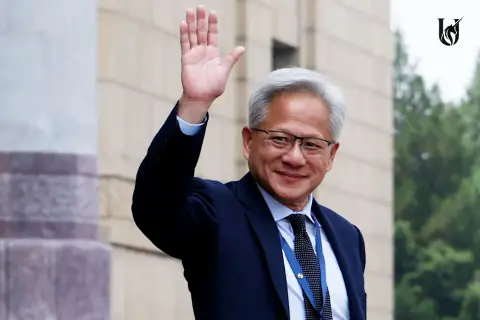

Microsoft CEO Satya Nadella has expressed strong support for Nvidia co-founder Jensen Huang following his resignation as CEO, describing him as a remarkable figure in the technology industry. However, Nadella said any decision about Huang's possible return to the leadership position rests entirely with Nvidia's board.
Speaking at a media roundtable in San Francisco on November 17, during Microsoft's Ignite 2026 conference, Nadella said he had known and worked with Huang for many years and had considerable admiration and respect for his contributions to the technology industry.
Nadella also revealed that he had sent Huang a personal text message over the weekend to let him know that he was thinking about him.
His comments come during a significant leadership transition at Nvidia, one of the world's most influential artificial intelligence and semiconductor companies.
Jensen Huang Open to Returning as Nvidia CEO
Jensen Huang, who co-founded Nvidia in 1993 and led the company for 33 years, resigned as its president and CEO on November 11, 2026.
His departure followed reports of multiple alleged personal relationships, including one involving an executive whom US intelligence officials reportedly suspected of having links to Chinese intelligence. These allegations have not established that Nvidia's technology or confidential information was compromised.
Following his resignation, Nvidia appointed longtime CFO Colette Kress as interim CEO and began searching for a permanent successor.
Huang subsequently indicated that he would be willing to return if the board believed his reinstatement would serve the interests of the company, its employees, shareholders and the United States.
However, Nvidia's board chairman Harvey Jones said on November 17 that the company had no intention of bringing Huang back.
Interim CEO Colette Kress also confirmed that the board had decided against reinstating him.
This makes Nadella's comments an expression of personal and professional respect rather than an indication that Nvidia is reconsidering its leadership decision.
Satya Nadella Says Nvidia Has Strong Leadership
While discussing Huang's departure, Nadella also expressed confidence in Nvidia's existing leadership team.
He said the company had considerable talent and capable executives who could manage the transition.
Nadella specifically mentioned Colette Kress, Nvidia's interim CEO and CFO, who previously worked at Microsoft before joining Nvidia in 2013.
Kress spent nearly 25 years in finance roles at major technology companies, including Microsoft and Cisco, before becoming Nvidia's CFO.
Nadella's comments underline the importance of leadership continuity at Nvidia, particularly as demand for AI computing infrastructure continues to expand.
Microsoft Continues Its Strategic Partnership With Nvidia
Despite the leadership change, Microsoft's relationship with Nvidia remains central to its artificial intelligence infrastructure strategy.
Microsoft is among Nvidia's major customers, relying on its advanced GPUs to power AI workloads across its Azure cloud platform.
During the discussion, Nadella confirmed that Microsoft was continuing to scale its work with Nvidia's upcoming Vera Rubin processor platform.
The Vera Rubin architecture is part of Nvidia's next-generation AI computing roadmap, designed to support increasingly demanding AI training and inference workloads.
For Microsoft, maintaining access to advanced AI computing infrastructure remains important as it expands its cloud services and AI products.
The relationship also highlights the broader dependence of major technology companies on Nvidia's semiconductor technology to build and operate large-scale AI systems.
What Jensen Huang's Exit Means for the AI Industry
Huang's departure represents a significant leadership development for the global semiconductor industry.
Under his leadership, Nvidia evolved from a graphics processing company into a major supplier of accelerated computing hardware used across artificial intelligence, data centres, autonomous systems and scientific computing.
His influence extended beyond chip development to Nvidia's software ecosystem, particularly CUDA, which became an important foundation for AI development.
The leadership transition therefore raises questions about how Nvidia will maintain its technology roadmap, customer relationships and strategic direction under new leadership.
However, Nvidia's board has indicated that its operations, customer commitments and product development plans will continue without interruption.
For the broader AI industry, the immediate priority remains maintaining the supply of advanced computing infrastructure as technology companies increase investment in artificial intelligence.
Nadella's remarks reflect the professional regard Huang commands across the technology industry, even as Nvidia moves forward with a leadership transition that the board has indicated it does not intend to reverse.