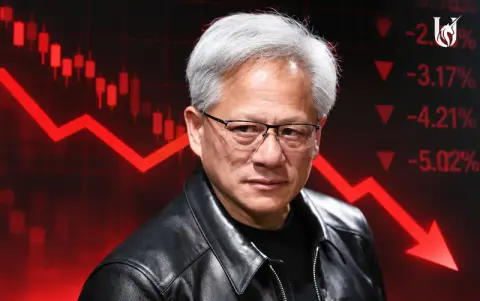

Nvidia founder and CEO Jensen Huang has slipped to 12th place on the Bloomberg Billionaires Index after his estimated net worth fell to $148 billion, following another decline in the chipmaker’s shares. The latest November 10 update puts his daily wealth loss at $6.47 billion, or 4.2%, while his fortune is down approximately $15 billion, or 9.2%, over the past year.
The fall moves Huang outside the world’s 10 richest people, with Walmart heirs Jim Walton and Rob Walton ranking ahead of him. His wealth remains closely linked to Nvidia, where he owns a 3.58% stake, according to the company’s 2026 proxy filing with the US Securities and Exchange Commission.
Nvidia Shares Face Pressure Amid Leadership Scrutiny
The latest wealth decline comes as Nvidia faces heightened investor scrutiny following reports about Huang’s relationship with Alice Huang, a former executive at Singapore-based technology company Megaspeed. The woman is not related to the Nvidia chief and has reportedly been suspected by US intelligence officials of gathering information for China. These allegations have not been established as fact.
Huang acknowledged being unfaithful to his wife in a message to Nvidia employees. US President Donald Trump subsequently said the FBI was looking into the matter. Trump also said Huang had told him he had no knowledge that the woman was allegedly involved in espionage, and described the Nvidia chief as an honourable person.
Nvidia’s board announced an independent investigation on November 8 into reports that Huang had been the target of a foreign intelligence effort. The inquiry will be overseen by independent directors and outside counsel.
The board said it had no reason to believe that US national security or Nvidia’s confidential information had been compromised. Huang has agreed to cooperate with the review.
A Significant Market Reaction
Nvidia shares fell more than 4% on November 9, even as major US stock indices recovered. The decline followed a period of weakness in technology stocks and added to investor concerns about the company’s leadership and governance.
The distinction matters: Huang’s personal net worth is largely driven by his Nvidia holdings, so changes in the company’s share price directly affect his estimated wealth. The billionaire index figures are estimates, not cash losses or a measure of money withdrawn from the company.
According to Nvidia’s 2026 proxy statement, Huang beneficially owned approximately 870.6 million shares, representing 3.58% of the company’s outstanding stock as of the filing’s reference date. This makes him the company’s largest individual shareholder among the executives and directors listed in the filing.
Why The Controversy Matters For Nvidia
The episode has implications beyond Huang’s personal finances. Nvidia is central to the global artificial intelligence infrastructure market, supplying advanced processors used by cloud providers, technology companies and AI developers.
For investors, the immediate concerns include leadership continuity, corporate governance, potential regulatory scrutiny and the company’s exposure to US-China technology tensions. Any prolonged uncertainty around its chief executive could become a source of volatility, although the board has publicly expressed confidence in Huang.
Huang co-founded Nvidia in 1993 and has led the company through its transformation from a graphics-chip maker into one of the most influential businesses in the AI industry. His founder-led leadership and substantial shareholding make his position particularly important to investors.
For now, the board investigation remains ongoing, and there is no confirmed finding that Nvidia’s secrets or national security information were compromised. The next developments in the inquiry, and the market’s response will be closely watched by shareholders.