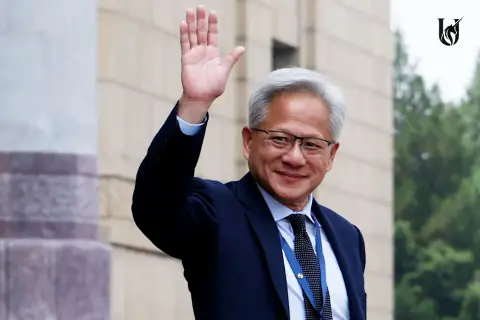
Jensen Huang’s sudden departure as Nvidia’s chief executive has raised questions about the future of the chipmaker’s engagement with India’s AI ecosystem, including its investments in startups such as Sarvam AI and Simplismart.
While the leadership change is unlikely to immediately disrupt existing investments or technology partnerships, it puts the spotlight on how Nvidia will approach venture investments, startup support and strategic collaborations under its next permanent CEO.
Nvidia announced on November 12, 2026, that Jensen Huang had resigned as president, CEO and board member with immediate effect. The company appointed Chief Financial Officer Colette Kress as interim CEO while its board begins the search for a permanent successor.
The company has said its operations, customer commitments and product roadmap are expected to continue without interruption.
Nvidia's India Investments: Sarvam AI and Simplismart
Nvidia's direct investment activity in India includes two notable AI companies: Sarvam AI and Simplismart.
In August 2026, Bengaluru-based Sarvam AI received a fresh funding tranche of $74 million from Nvidia, Activate, Glade Brook Capital and Gaja Capital, according to regulatory filings reported by The Unicorn Magazine. The investment formed part of Sarvam's broader $300 Mn Series B round, which valued the company at $1.5 Bn.
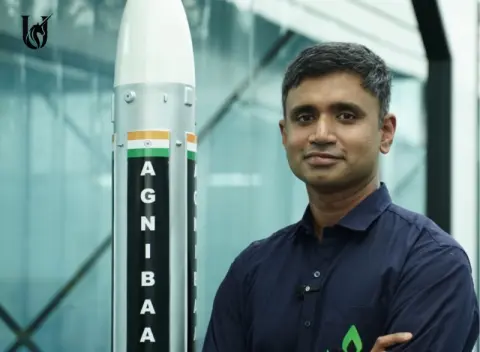
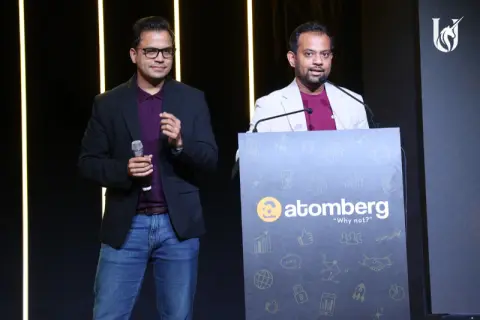
Founded in 2023 by Pratyush Kumar and Vivek Raghavan, Sarvam is developing a full-stack sovereign AI platform focused on Indian languages, foundation models and enterprise applications.
Nvidia also participated in Simplismart's $14 Mn Series B round announced in October 2026. The round was led by Dallas Venture Capital, with participation from Nvidia, Accel, Shastra VC and Micromax.
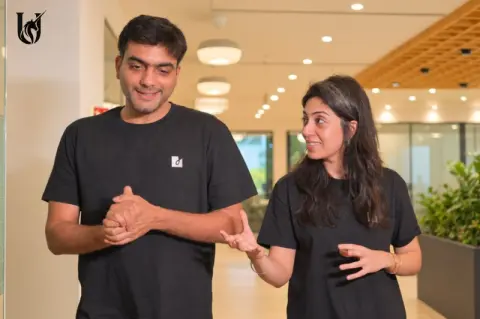
Founded by Amritanshu Jain and Devansh Ghatak, Bengaluru-based Simplismart builds software that helps businesses deploy, manage and optimise AI models across cloud and private infrastructure.
Its relationship with Nvidia extends beyond equity investment. The companies have worked together on technical integrations involving Nvidia's Dynamo inference software, while Nvidia's engineering teams have supported technical collaboration and industry introductions.
More Than Funding: Nvidia's Technology and Startup Network
For Indian AI startups, Nvidia's importance goes beyond the capital it invests.
Its GPUs, CUDA software ecosystem, developer tools and technical expertise form a significant part of the infrastructure used to train and deploy advanced AI models.
The company's Inception programme provides eligible startups with technical resources, training, preferred pricing on select hardware and software, cloud credits through partners and access to investor networks.
Nvidia has also worked with Indian venture capital firms, including Peak XV Partners, Elevation Capital, Nexus Venture Partners and Accel India, to identify and support AI businesses.
This ecosystem gives startups access to expertise and commercial relationships that can be difficult to build independently.
A change in leadership could influence how much management attention and resources Nvidia allocates to such initiatives. However, the programme is institutional rather than dependent solely on its CEO, making an immediate withdrawal unlikely without a broader strategic decision.
Will Nvidia Change Its Investment Priorities?
Investors tracking the Indian AI ecosystem expect existing initiatives to continue in the near term, while acknowledging that the company's longer-term priorities could evolve.
V Laxmikanth, managing partner at Pavestone Capital, said that the immediate impact on Indian startups was likely to be limited. He suggested that any meaningful changes in Nvidia's product roadmap and long-term vision could become more visible over the next three to four years.
Manu Iyer, co-founder and general partner at Bluehill.vc, highlighted the possibility that a new management team could reassess existing programmes and investment priorities.
The distinction is important: existing portfolio companies are unlikely to lose their investments simply because of a leadership transition. However, future funding decisions, technical collaborations and ecosystem initiatives will depend on the priorities of the incoming leadership.
AMD and Intel Could Find an Opening
A potential shift in Nvidia's engagement with startups could create opportunities for competitors such as AMD and Intel to strengthen their relationships with Indian AI companies.
Both chipmakers are seeking a larger share of the AI computing market. However, Nvidia's competitive advantage is not limited to its hardware. Its CUDA software platform, developer community, engineering support and established industry relationships have created a strong ecosystem around its products.
For startups, switching hardware providers can involve additional software optimisation, engineering costs and changes to deployment infrastructure.
Competitors will therefore need to offer more than alternative processors. Strong developer support, accessible computing capacity and meaningful partnerships with startups will be essential to gaining ground.
What Indian AI Founders Should Watch
Huang co-founded Nvidia in 1993 with Chris Malachowsky and Curtis Priem and led its transformation from a graphics-chip company into a major force in accelerated computing and artificial intelligence.
His departure marks a significant leadership transition, but it does not automatically change Nvidia's technology capabilities or existing contractual commitments.
For Indian founders, the more relevant indicators will be whether Nvidia continues investing in local AI companies, maintains its engineering engagement, supports the Inception programme and works with Indian venture capital firms.
The next permanent CEO's approach to venture investing and ecosystem development will matter particularly for startups building foundation models, inference infrastructure and enterprise AI applications.
For India, the opportunity is to build a deeper AI ecosystem that benefits from global technology partnerships without becoming dependent on any single hardware provider or corporate leader.
Editorial notes
-
Sarvam funding: The $74 Mn figure refers to a funding tranche involving four investors, Nvidia, Activate, Glade Brook Capital and Gaja Capital. It should not be described as Nvidia's individual investment.
-
Simplismart: Nvidia participated in the $14 million Series B; its individual cheque size has not been disclosed.
-
Inception programme figures: The supplied report cites more than 4,000 Indian AI startups. Nvidia's current India hiring page separately refers to more than 2,000 India-based startups in the programme. Since the figures differ, the article avoids stating a definitive India membership count.
-
Leadership transition: Huang's resignation and Kress's interim appointment are confirmed by Nvidia and its SEC filing.
-
Personal allegations: The supplied copy includes allegations about Huang's personal relationships and a suspected foreign intelligence effort. These have not been repeated as established facts. Nvidia has confirmed an independent board investigation into reports of a foreign intelligence effort, while saying it has no reason to believe company secrets or national security information were compromised. The allegations should not be presented as proven explanations for the resignation.
-
Investor comments: Views attributed to V Laxmikanth and Manu Iyer are from Moneycontrol's reporting, not independently conducted interviews for this article.