Global investment firm Brookfield has agreed to acquire Indian specialty glass packaging manufacturer PGP Glass from Blackstone for $1.7 billion (approximately Rs 15,800 Cr), marking one of the biggest private equity transactions in India's manufacturing sector.
Announced on November 23, 2026, the transaction will see Brookfield acquire the business from funds managed by Blackstone Private Equity through its flagship private equity strategy. The deal is expected to close in the first quarter of 2027, subject to customary closing conditions, including regulatory and government approvals.
The transaction also marks the first acquisition deal between Brookfield and Blackstone involving an Indian business, according to media reports. It is Brookfield's largest private equity buyout in India, excluding its infrastructure and real estate investments.
For Blackstone, the deal represents an exit from an investment it has held since acquiring the glass packaging business from the Piramal Group in 2020-21. For Brookfield, it offers an opportunity to expand its presence in industrial manufacturing and premium packaging.
PGP Glass manufactures specialty glass packaging for the cosmetics and perfumery, pharmaceutical, specialty food and beverage industries. Its customers include global brands across more than 70 countries.
The company provides integrated services covering product design, mould-making, glass manufacturing and decoration. Its manufacturing operations are supported by three facilities across India and Sri Lanka, alongside an international logistics and warehousing network.
PGP operates 13 furnaces with production capacity exceeding 1,800 tonnes per day, according to the transaction announcement. Overseas markets contribute more than 70% of its sales, making international demand an important driver of its business.
Brookfield sees opportunities to expand the company's existing customer relationships, enter new markets and invest in additional manufacturing capacity.
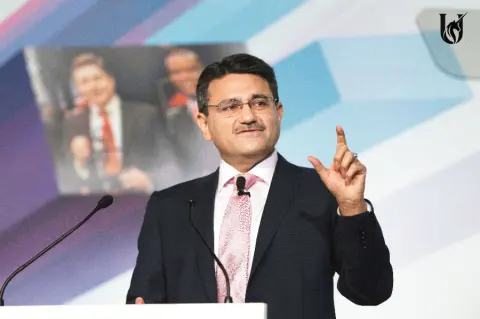
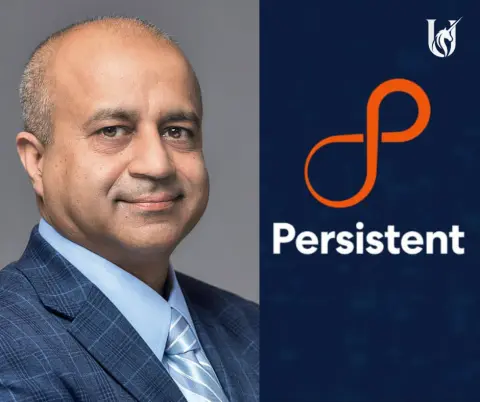
Aditya Joshi, Managing Partner and Head of Private Equity for Asia Pacific and the Middle East at Brookfield, said the firm plans to accelerate PGP's growth through an AI-led transformation programme.
The proposed technology initiatives will focus on improving sales and operations planning, manufacturing productivity and quality control.
PGP Glass enters the proposed ownership transition with a growing revenue base and established international operations.
According to its FY2025-26 annual report, the company reported revenue of Rs 4,801 crore, registering 12% growth over the previous financial year. Its adjusted EBITDA margin stood at approximately 32%.
However, reported EBITDA declined 9% to ₹1,307 crore during FY26, with the company attributing the pressure to factors including higher tariffs in the US, geopolitical disruptions in the Middle East, supply-chain challenges and an unplanned furnace shutdown in Sri Lanka.
The company also reported that its revenue increased from Rs 2,973 crore in FY22 to Rs 4,801 crore in FY26, representing a compound annual growth rate of approximately 13%.
Its business spans three major segments:
-
Specialty Food and Beverage: Packaging for food, beverages and specialty spirits.
-
Cosmetics and Perfumery: Premium glass bottles and containers for fragrances and beauty products.
-
Pharmaceuticals: Glass packaging solutions for pharmaceutical companies.
The diversified business mix gives PGP exposure to several consumer and industrial categories rather than relying on a single end market.
Beyond acquiring an established manufacturer, Brookfield is looking to use technology to improve operational efficiency across PGP Glass.
The proposed AI-led transformation will focus on three key areas: sales and operations planning, production efficiency and quality control.
In glass manufacturing, improvements in furnace utilisation, production planning, energy consumption and quality monitoring can influence operating costs and output. Applying data analytics and AI across these processes could help improve productivity as the company expands its manufacturing footprint.
Brookfield also sees opportunities to deepen relationships with existing customers, increase sales in current markets and expand into new geographies.
The strategy reflects a wider shift among private equity investors towards operational improvements and technology-led value creation in traditional industrial businesses.
PGP Glass traces its origins to Gujarat Glass, established in 1974. The business was acquired by the Piramal Group in 1984 and subsequently became part of Piramal Glass.
In 2020, Blackstone agreed to acquire the glass packaging business from the Piramal Group for approximately ₹6,988 crore. The acquisition was implemented in 2021, when the business was transferred to a new company that became PGP Glass.
The company's official history does not identify an individual founder of the original Gujarat Glass business. Therefore, this transaction is best understood as a change in institutional ownership rather than a founder-led company succession.
During Blackstone's ownership, PGP expanded manufacturing capacity, improved operations and strengthened its sustainability initiatives.
PGP Glass CEO Vijay Shah credited Blackstone with supporting these improvements and said Brookfield's international presence and experience in managing businesses across economic cycles would help the company pursue its next phase of growth.
The proposed acquisition highlights international private equity interest in Indian manufacturing businesses with established export markets, specialised production capabilities and long-term customer relationships.
PGP Glass has built a presence across premium packaging categories and serves customers in more than 70 countries. Its overseas revenue contribution also provides Brookfield with exposure to international demand for specialty glass packaging.
The deal's next phase will depend on regulatory approvals and completion of the transaction, followed by Brookfield's execution of its expansion and AI-led operational strategy.
For India's manufacturing sector, the acquisition is another significant example of global investors backing businesses that have moved beyond domestic operations to build international industrial capabilities.