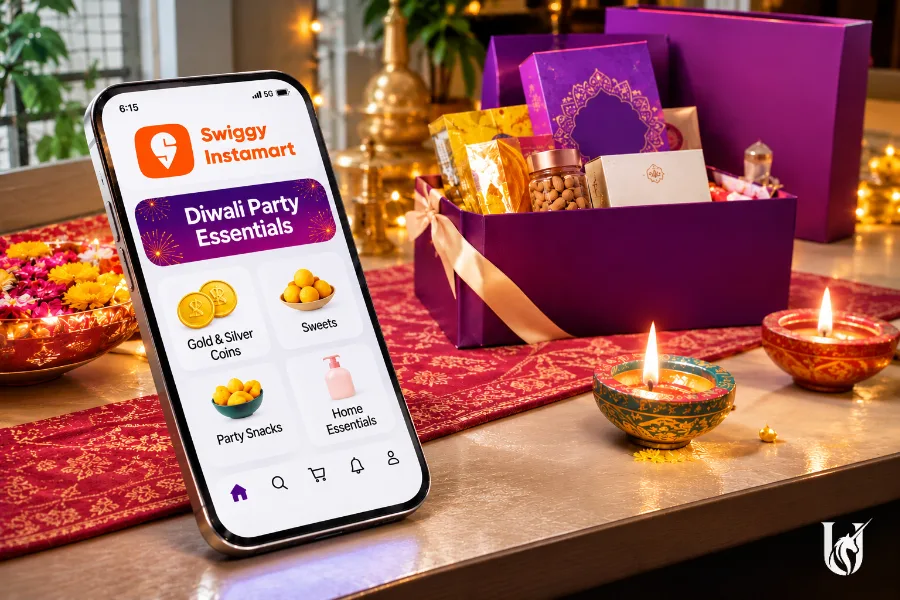
India’s quick-commerce platforms witnessed a sharp festive shopping surge during Diwali 2026, with consumers using delivery apps for everything from traditional sweets and party snacks to gold coins, silver bars, festive hampers and home appliances. Swiggy’s Instamart reported a 162% YoY increase in party-planning orders, while Zepto recorded a threefold rise in festive hamper orders compared with last Diwali.
The latest figures underline how quick commerce is moving beyond its traditional grocery-delivery business. Platforms are increasingly positioning themselves as convenient shopping destinations for celebrations, gifting and household purchases, particularly when consumers need products at short notice.
The figures were shared by the companies as part of their festive shopping updates and reflect platform-reported order trends rather than audited sales revenue.
Instamart Sees Higher Demand For Party Supplies And Snacks
Swiggy’s quick-commerce arm Instamart recorded a 162% YoY rise in party-planning orders during the Diwali period. Demand for munchies and snacks also increased 42%, indicating stronger activity around home celebrations and festive gatherings.
Kaju Katli emerged as the most popular mithai on the platform, followed by Motichoor Laddoo and Besan Laddoo. Mysore Pak, Soan Papdi, Peda and Gulab Jamun also featured among the preferred sweets.
Shopping activity peaked between 11 am and noon on November 8, Diwali day, with 11:18 am recording the highest number of orders in a single minute. Diet Coke was the most popular non-grocery item on Diwali eve.
The platform also reported demand across clothing, jewellery, hair accessories, electronics, appliances and kitchen products. Dinner sets emerged as the most popular gifting item, while assorted dry-fruit gift packs recorded more than 100% growth in demand.
Festive shopping was not limited to major metropolitan markets. Raipur, Madurai, Guwahati, Thrissur and Kollam featured among the leading cities for festive purchases on Instamart.
Zepto Hampers Triple As Diyas And Festive Fashion Gain Traction
Zepto also reported strong festive demand, with orders for curated hampers tripling compared with the previous Diwali season.
The platform recorded 4.68 lakh diya orders during the festive period. Demand for flowers and garlands increased 2.5 times, while purchases of festive fashion doubled, led by ethnic wear and traditional accessories.
In the sweets category, laddu was the most frequently ordered mithai on Zepto, while Soan Papdi led in terms of total quantity sold. Beauty products also recorded their highest demand on Diwali, according to the company.
Zepto said its partnerships with local artisans helped bring traditional and locally made products to a wider customer base. The trend points to an opportunity for quick-commerce platforms to expand beyond standard packaged goods and offer more region-specific festive products.
Gold And Silver Coins Enter Quick-Commerce Baskets
One of the notable trends this year was the purchase of precious metals through quick-commerce platforms.
On Instamart, the first gold coin order on Dhanteras, November 6, was placed at 12:00:30 am from Hyderabad for a floral-design 24-karat gold coin. The first order containing a silver coin followed four seconds later from Bengaluru.
Floral designs accounted for nearly two-thirds of gold coin purchases, while Lakshmi-Ganesh designs represented 73% of silver coin purchases. Orders for gold and silver coins peaked at 6:38 pm.
Mumbai recorded the platform’s largest festive shopping basket, valued at ₹1.11 lakh, comprising gold coins featuring Lakshmi-Ganesh and lotus designs.
Other high-value orders included a ₹52,215 purchase from Hyderabad containing a 2-gram floral-design gold coin and a 100-gram silver bar. A Bengaluru customer placed a ₹32,298 order for a 2-gram Lakshmi gold coin, olive oil and other essentials.
A Gurugram shopper spent ₹30,855 on a 1 gram Lakshmi gold coin and a children's lunch box. In Delhi, a customer placed a ₹29,907 order for a 1 gram floral-design gold coin and LED curtain lights. A Chennai shopper spent ₹26,770 on a 1 gram Lakshmi gold coin and a 50 gram silver bar.
The largest non-precious-metal purchase highlighted in the data came from Noida, where a customer ordered an air purifier and cordless vacuum cleaner for ₹25,313.
What The Festive Numbers Mean For Quick-Commerce Companies
The expansion of festive shopping categories has strategic significance for India's quick-commerce businesses. Higher demand for gifting, fashion, decorations and appliances gives platforms an opportunity to increase the range of products customers buy through a single app.
For Swiggy, founded by Sriharsha Majety, Nandan Reddy and Rahul Jaimini, Instamart is an important part of its broader convenience-commerce strategy. Zepto, founded by Aadit Palicha and Kaivalya Vohra, is also competing to build a wider shopping platform beyond groceries.
The opportunity, however, comes with operational demands. Precious metals, appliances and curated hampers require different inventory planning, quality checks, fulfilment processes and customer-service capabilities compared with everyday grocery orders.
The festive data also highlights the importance of local demand. Orders from smaller cities and purchases of regionally relevant sweets, decorations and artisan products suggest that quick-commerce platforms can find growth opportunities beyond India's largest urban markets.
For investors and industry watchers, the key question will be whether these festive purchases translate into repeat customer behaviour and sustainable order economics after the seasonal rush ends. A rise in order volumes alone does not establish higher profitability.
Diwali 2026 nevertheless offered a clear indication of how consumer expectations are changing. From last-minute snacks to gold coins and household appliances, quick commerce is increasingly becoming part of India's wider festive retail ecosystem.