Paytm has moved a step closer to reviving its digital wallet business after the Reserve Bank of India (RBI) granted in-principle authorisation to its wholly owned subsidiary, Paytm Payments Services Limited (PPSL), to issue prepaid payment instruments (PPIs), including digital wallets.
One 97 Communications, Paytm's parent company, disclosed the development in a stock exchange filing on November 13, 2026. The authorisation has been granted under the Payment and Settlement Systems Act, 2007.
However, the approval does not allow PPSL to start issuing wallets immediately. The subsidiary must complete a system audit, including a cybersecurity audit, and obtain the RBI's final authorisation or Certificate of Authorisation before commencing operations.
The development is significant for Paytm because it offers a route to operate a wallet business independently of Paytm Payments Bank, which previously housed its wallet services.
Six-Month Deadline for Cybersecurity and System Audit
The RBI has attached specific conditions to its in-principle approval.
PPSL must conduct a comprehensive system audit, including a cybersecurity assessment, through an eligible auditor. The audit must cover the central bank's prescribed cybersecurity and digital payment security requirements for non-bank payment system operators.
The company has been directed to submit the audit report within six months of the RBI's November 13 letter. Failure to meet the deadline will result in the in-principle authorisation automatically lapsing, after which the RBI will not consider granting final authorisation under this approval.
The regulator has also instructed PPSL to obtain prior approval for changes in its shareholding or ownership in accordance with its directions governing changes in control of non-bank payment system operators.
PPSL had applied for a fresh PPI authorisation on December 31, 2025, as disclosed in Paytm's Q1 FY27 earnings communication.
The next milestone is therefore regulatory rather than commercial: the company must complete the audit and secure the final licence before its wallet services can return.
How Paytm Lost Its Wallet Business
Paytm launched its digital wallet in 2014, and the product became an important part of its consumer payments ecosystem. In 2017, the wallet business was transferred to Paytm Payments Bank (PPBL).
The regulatory setback began before the major restrictions of 2024. In March 2022, the RBI barred PPBL from onboarding new customers. On January 31, 2024, the central bank imposed further restrictions, prohibiting the bank from accepting fresh deposits, credit transactions and top-ups in customer accounts and wallets, with the restrictions taking effect from March 15, 2024.
The restrictions disrupted Paytm's ability to operate its wallet through the banking subsidiary. The RBI subsequently cancelled PPBL's banking licence on April 24, 2026.
PPSL's fresh application offered Paytm a separate route to obtain authorisation as a non-bank payment system operator. The latest in-principle approval moves that process forward.
Why the Wallet Still Matters to Paytm
The return of wallets could help Paytm broaden its consumer payment options and increase engagement across its app. It may also create opportunities to connect payments with other financial services, including Paytm Postpaid, personal loans and wealth management.
However, the competitive environment has changed considerably since Paytm's wallet business was at its peak. UPI has become the dominant option for everyday digital payments, reducing the importance of general-purpose wallets for many consumers.
The opportunity may therefore lie in specific use cases, such as prepaid balances, recurring payments, gifting and integration with other financial products, rather than simply rebuilding the old wallet business.
During its Q2 FY27 earnings call, Paytm's management discussed the possibility of connecting wallets with Paytm Postpaid to strengthen its consumer payments offering. No confirmed relaunch date has been announced.
Paytm's Profit Rises to Rs 225 Cr in Q2 FY27
The regulatory development comes as Paytm reports stronger financial performance.
For Q2 FY27, the company recorded operating revenue of Rs 2,648 crore, up 28% YoY. Profit after tax stood at Rs 225 Cr, compared with Rs 21 Cr in the corresponding quarter last year, representing more than a tenfold increase.
EBITDA rose 90% YoY to Rs 270 Cr, with the EBITDA margin reaching 10%. The company also reported 8% sequential growth in operating revenue.
The improvement in profitability and the progress towards a separate wallet authorisation provide two positive developments for Paytm's consumer payments strategy. However, the financial contribution of a revived wallet business will depend on customer adoption, transaction volumes and the company's ability to monetise the service.
Vijay Shekhar Sharma's Broader Consumer Financial Services Strategy
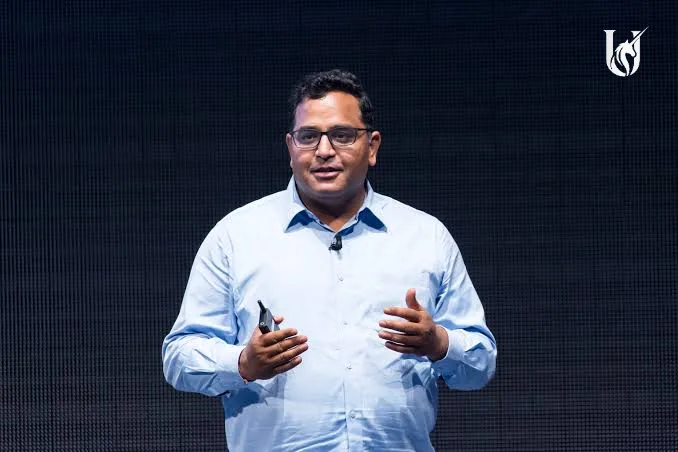
Paytm was founded by Vijay Shekhar Sharma, who continues to lead One 97 Communications as its founder and CEO.
Under Sharma's leadership, the company has expanded beyond mobile recharges and digital payments into merchant services, lending distribution, insurance, wealth management and other financial products.
The wallet's potential return fits into this broader strategy of building a payments-led financial services platform. It could provide another entry point for consumer engagement, although it will have to compete with UPI-based payment options and other established digital financial products.
Following the announcement, One 97 Communications shares touched an intraday high of Rs 1,958.80 on the BSE on November 13, 2026, before closing at Rs 1,945.
For now, the RBI's decision represents an important regulatory milestone rather than an immediate business revival. Paytm's ability to complete the required audit and obtain final authorisation will determine when it can bring its wallet offering back to consumers.
Editorial notes
-
Founder name: Vijay Shekhar Sharma is Paytm's founder. Paytm is operated by listed parent company One 97 Communications.
-
Correct subsidiary: The approval is granted to Paytm Payments Services Limited (PPSL), not Paytm Payments Bank Limited (PPBL). These are separate entities.
-
Approval status: This is an in-principle authorisation, not a final PPI licence. Paytm cannot issue wallets until it completes the audit and receives final RBI approval.
-
Audit deadline: 6 months from the RBI letter dated November 13, 2026. Failure to submit the report within the deadline will cause the in-principle authorisation to lapse.
-
Financial figures: Q2 FY27 revenue of Rs 2,648 Cr, PAT of Rs 225 Cr and EBITDA of Rs 270 Cr are from Paytm's official results. PAT is not the same as EBITDA.
-
Share price: Rs 1,958.80 is the BSE intraday high, while Rs 1,945 was the closing price on November 13. The NSE intraday high was Rs 1,960.
-
Commercial outlook: The wallet's potential contribution to future revenue has not been quantified by the company. Avoid presenting cross-selling benefits as guaranteed financial gains.