The Woman Who Entered an Industry That Wasn’t Ready for Her
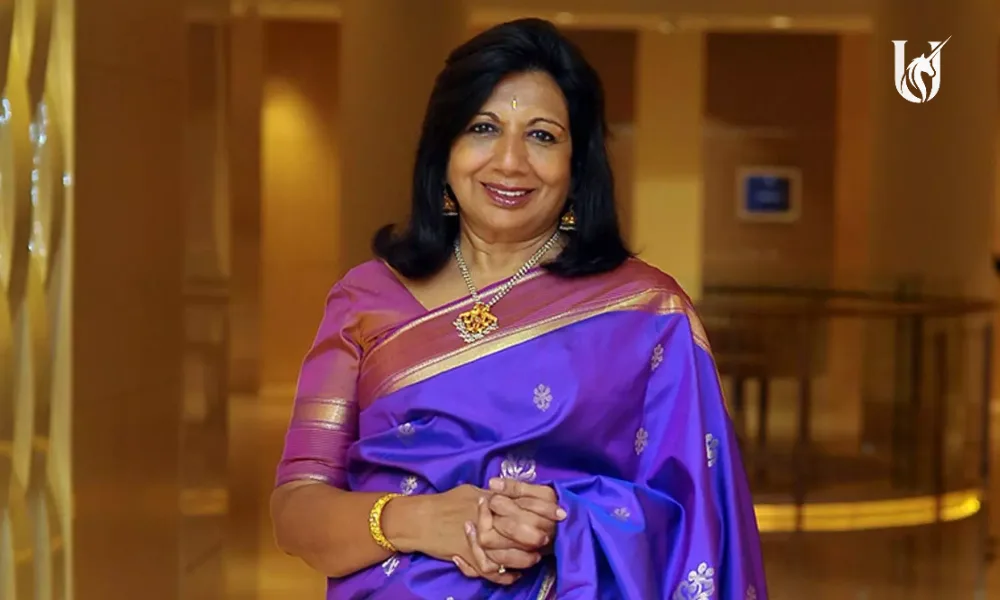
In 1978, when biotechnology was barely a business conversation in India, Kiran Mazumdar Shaw decided to build a company around it. She was only 25, had no business degree, limited capital and almost no industry support. What she did have was a strong belief that science could solve real problems, and that India could build world-class businesses around it.
Today, that small beginning has grown into Biocon, a global biopharmaceutical enterprise serving patients across markets. Her journey is not simply about becoming wealthy; it is about proving that an unconventional idea can survive long enough to change an industry.
Kiran Mazumdar Shaw Education: From Zoology to Brewing
Kiran was born in Bengaluru in 1953 and completed her B.Sc. in Zoology from Bangalore University in 1973. Her career took an unusual turn when she went to Australia and completed a postgraduate qualification in Malting and Brewing from Ballarat Institute of Advanced Education in 1975. At the time, becoming a brewer was hardly a conventional career choice for an Indian woman, but Kiran was attracted to fermentation science and its wider possibilities.
That decision would later become the unexpected bridge between her scientific training and the biotechnology company she built.
The Career Rejection That Became Her Turning Point
Kiran returned to India hoping to build a career in brewing, but the industry was not willing to easily accept a young woman in a technical leadership role. Instead of allowing that rejection to decide her future, she began exploring another field where fermentation science could create something valuable. An encounter with Irish entrepreneur Leslie Aufrecht opened the door to biotechnology and eventually led to the formation of Biocon India. Sometimes, the career that rejects you is simply pushing you toward the business you were meant to build.
Rs 10,000 and a 10x10 Garage: The Birth of Biocon
On November 29, 1978, Biocon India began its journey as a joint venture between Kiran Mazumdar Shaw and Ireland-based Biocon Biochemicals. Kiran started with only Rs 10,000 of capital, operating from a small garage in Bengaluru at a time when India had very little biotechnology infrastructure. The company initially focused on manufacturing enzymes, including papain and isinglass, used in industries such as brewing. It was a tiny beginning, but Kiran was building in a sector where very few Indian entrepreneurs were willing to take the risk.
When Banks, Employees and Customers Said “No”
Starting Biocon was far harder than simply finding a product and selling it. Kiran had to convince banks to lend to a young woman running an unfamiliar technology business. Recruiting skilled employees was another challenge because biotechnology was still a relatively unknown field in India. Even customers and business partners needed convincing that an Indian startup could deliver sophisticated scientific products. Every early deal became more than a transaction, it became proof that the business could be trusted.
The First Breakthrough: Taking Indian Biotechnology Abroad
Kiran did not want Biocon to remain a small domestic enzyme manufacturer. She saw an opportunity to make India a serious player in biotechnology.
By 1979, Biocon became the first Indian company to manufacture and export enzymes to markets including the United States and Europe. That achievement gave the young company something more valuable than revenue: international credibility. The garage business was slowly proving that Indian science could compete beyond Indian borders.
The Big Shift From Enzymes to Healthcare
The biggest chapter of Biocon’s story began when Kiran started thinking beyond industrial enzymes and toward healthcare. She believed biotechnology could eventually make complex medicines more affordable, especially treatments such as insulin and other biologic therapies.
Instead of chasing quick commercial wins, Biocon began investing in research, fermentation technology and scientific capabilities that could take years to pay off. That long-term approach gradually transformed Biocon from an enzyme company into a much broader biopharmaceutical enterprise.
Building a Research-Driven Company
Kiran understood something early: in biotechnology, the real competitive advantage is not simply manufacturing, it is knowledge. Biocon therefore invested heavily in research and development, building capabilities that could support more complex products and technologies. The company’s evolution was driven by a combination of science, manufacturing expertise and the goal of making advanced therapies more accessible. That research-first mindset became one of the strongest foundations of Biocon’s global expansion.
The Vision: Make Complex Medicines More Affordable
For Kiran, biotechnology was never meant to be only about building a large company. She wanted science to have a real impact on patients. Her focus on access and affordability became a defining part of Biocon’s identity, particularly as the company expanded into biosimilars and other complex therapies. The idea was simple: advanced medicines should not remain available only to people who can afford the highest prices. That philosophy continues to shape Biocon’s work across global healthcare markets.
Biocon Becomes a Global Biopharmaceutical Company
Over the decades, Biocon expanded far beyond its original enzyme business and developed capabilities across biosimilars, generics and research services. Its international footprint grew through partnerships, product launches and investments in advanced manufacturing and research. Biocon’s biosimilars business became particularly important, helping the company establish a stronger presence in major global markets. The transformation was remarkable: a company born in a Bengaluru garage had become part of the global biopharmaceutical landscape.
The $3.3 Billion Viatris Deal
One of Biocon’s biggest global moves came in 2022, when Biocon Biologics acquired Viatris’ biosimilars business for approximately $3.3 Bn. The deal significantly expanded Biocon’s presence in developed markets and strengthened its position in the global biosimilars industry.
It was a powerful sign of how far the company had travelled from its early enzyme-manufacturing days. The entrepreneur who once struggled to convince people to trust her startup was now leading a business making billion-dollar global acquisitions.
Biocon’s Next Chapter: Consolidating Biologics
Biocon continued reshaping its business as the global opportunity in biosimilars grew. In December 2025, the company announced plans to acquire the remaining stake in Biocon Biologics, valuing the subsidiary at about $5.5 billion. The move was designed to bring the biosimilars and generics businesses closer together within the Biocon group. It reflected a much bigger ambition: building a stronger, more integrated global biopharmaceutical platform. The company that started with enzymes was now operating at a completely different scale.
Biocon’s FY26 Numbers Tell the Bigger Story
Biocon’s latest financial performance shows how strongly the business has evolved. In FY26, the group reported total income of approximately Rs 17,270 crore and operating revenue of about Rs 16,927 crore. Biosimilars remained the largest contributor, generating around ₹10,431 crore, while generics contributed Rs 3,168 crore and research services Rs 3,739 crore.
Biocon also reported Rs 3,798 crore in EBITDA and Rs 436 crore in net profit before exceptional items. These numbers show the scale of the business Kiran built over more than four decades.
From a Rs 10,000 Startup to a Global Business
The contrast between Biocon’s beginning and its present scale is almost difficult to imagine.
In 1978, Kiran was working with Rs 10,000 and a tiny workspace; today, Biocon operates across major areas of global healthcare and serves patients around the world. Its transformation was not created by one lucky product or one big funding round, it came through decades of research, patience, partnerships and calculated risks. That is what makes the Biocon story different from a typical startup success story.
Kiran Mazumdar-Shaw’s $3.4 Billion Net Worth
Kiran Mazumdar-Shaw is among India’s most successful self-made women, and Forbes estimated her real-time net worth at about $3.4 billion as of September 2, 2026. Much of her wealth is connected to her ownership and long-term association with Biocon, making her fortune closely linked to the company she founded. Her wealth has therefore grown alongside Biocon’s transformation from a small biotechnology venture into a global healthcare enterprise.
But the most striking number in her story remains the first one: Rs 10,000.
The Woman Who Put Indian Biotech on the Global Map
Kiran’s impact goes beyond Biocon’s financial success. She helped put biotechnology on the map as a serious entrepreneurial opportunity in India. Her leadership demonstrated that scientific research could become the foundation of a globally competitive Indian company. She also became a powerful example for women entering science, technology and entrepreneurship at a time when very few women occupied such positions. Biocon’s success changed not only one company, but also the way many people viewed India’s biotechnology potential.
Awards That Marked a Remarkable Career
Kiran has received some of India’s and the world’s most respected honours for entrepreneurship, science and healthcare. She was awarded the Padma Shri in 1989 and Padma Bhushan in 2005, and later received the Othmer Gold Medal and the EY World Entrepreneur of the Year award.
She has also received the Order of Australia and the French Legion of Honour, among several other international recognitions. These honours reflect the wider impact of her work on biotechnology, innovation and affordable healthcare.
Giving Back: The Other Side of Her Success
Kiran’s definition of success has never stopped at business. Through her philanthropic initiatives, she has invested in healthcare, education, research and community development. The Mazumdar Shaw Medical Center in Bengaluru was established with the ambition of providing high-quality cancer care at more affordable costs. She has also supported scientific research and healthcare initiatives aimed at reaching communities that often struggle to access quality treatment. For her, wealth carries a responsibility to create opportunities and improve lives.
A Legacy Built for Women in Science
When Kiran started Biocon, women were still fighting for acceptance in many technical and leadership roles. She wanted Biocon to become a place where women scientists could build serious careers and take leadership positions. Over the years, her own journey became a powerful message: you do not need permission from an industry to enter it. Sometimes, the best way to change an industry is to enter it when nobody expects you to succeed.
The Real Lesson Behind the Rs 10,000
Kiran Mazumdar-Shaw’s story is not really about turning Rs 10,000 into billions. It is about what she did when the world gave her very little reason to believe it was possible. She faced rejection, limited funding, hiring challenges, an unfamiliar industry and the pressure of building something that India had barely seen before. Instead of choosing the safer path, she kept investing in knowledge, research and a long-term vision.
That patience turned a small garage venture into one of India’s most recognised biotechnology success stories.
From a Bengaluru Garage to a Global Healthcare Legacy
Kiran Mazumdar-Shaw began with a small amount of money, an unconventional education and an idea that most people around her did not fully understand. More than four decades later, Biocon stands as a global biopharmaceutical enterprise, while Kiran remains one of India’s most influential self-made business leaders. Her story proves that entrepreneurship is not always about having the right connections, the perfect background or huge capital on day one.
Sometimes, it begins with one person willing to believe in an idea long before the world is ready to believe in it.