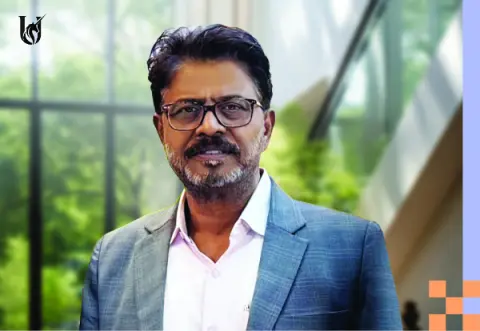
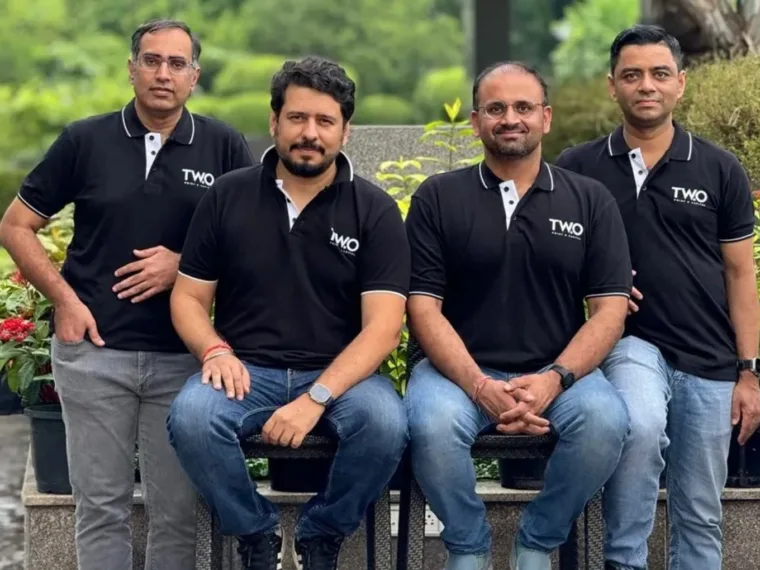
Two Point O Capital, a clean energy financing startup founded by Karan Bhutani and three co-founders, has raised $10 million (around ₹95 crore) in a Series A funding round led by Transition Venture Capital (TVC).
Existing investor Omnivore and angel investors Chiranjeev Singh Saluja and Sudhir M Reddy also participated in the round.
The Mumbai-based startup plans to use a major share of the fresh capital to finance clean energy asset deployments for commercial and industrial (C&I) customers. It will also invest in technology development, hiring and expansion into new clean energy segments, including battery energy storage systems (BESS).
The funding comes as businesses look for ways to manage rising energy costs, reduce upfront investment in clean infrastructure and improve resource efficiency.
Karan Bhutani’s Two Point O targets the clean energy financing gap
Founded in 2024 by Karan Bhutani, Archit Mehrotra, Manya Ranjan and Shashidhar Reddy, Two Point O Capital combines financing, technology and project execution to help businesses adopt clean energy infrastructure.
Its offerings cover four major areas: rooftop solar, battery energy storage, energy efficiency and wastewater treatment.
Unlike a conventional equipment seller, the company offers financing structures that can include loans, leasing and service-based arrangements. It also operates through original equipment manufacturers (OEMs) and engineering, procurement and construction (EPC) partners for project execution.
According to Bhutani, the company has developed a technology-led underwriting system that assesses project specifications, expected performance and customer credit profiles. The platform is also used to monitor deployed assets and support preventive maintenance.
The company says this integrated model helps businesses adopt clean energy solutions without bearing the entire upfront capital expenditure.
Premier Energies, Godrej and Wipro among customers
Two Point O is focusing on large commercial and industrial customers and expanding its relationship with them through multiple solutions.
Its reported customer base includes Premier Energies, Godrej, JK Tyre, Morepen Pharma, Wipro and Phoenix Mills. The startup has said it has onboarded around 25–30 large customers so far.
The company also reported that its assets under management (AUM) grew 1.5 times sequentially in each of the last three quarters. This is a company-reported growth metric; it has not disclosed the underlying AUM base alongside the figure.
Bhutani estimates that its existing customer relationships could generate ₹400-500 crore in transactions over the next two to three years. This is a business opportunity estimate, not revenue already booked.
Expansion into battery storage and new industries
With the latest funding, Two Point O plans to expand its battery storage business while growing its existing solar, energy efficiency and wastewater treatment operations.
It is also looking to serve industries with high energy and water requirements, including data centres, automotive, pharmaceuticals, manufacturing and healthcare.
The startup has outlined plans to enter the SME segment, expand its presence across India and build AUM of $75 million to $100 million over the next couple of years. These are management targets rather than achieved milestones.
The latest round follows an earlier funding raise of more than $6 million through a mix of equity and debt in 2024.
Can Two Point O scale its multi-asset model?
Two Point O is working in a segment where financing can be as important as the technology itself. While rooftop solar, energy efficiency and battery storage solutions are available, businesses still need suitable financing, reliable project execution and ongoing asset monitoring.
Its multi-asset approach could help the company generate repeat business from existing customers instead of depending entirely on acquiring new accounts. However, expansion will also test its ability to assess credit risk, monitor asset performance and manage execution partners across different industries.
The planned move into SMEs will bring another challenge: serving smaller customers while maintaining disciplined underwriting and project economics.
For Bhutani and his co-founders, the next phase will be about turning the funding and customer pipeline into deployed assets, growing AUM sustainably and building a scalable clean energy financing business.