Pune-based last-mile delivery startup Dispatch Network has raised ₹5 crore in a pre-seed funding round led by Antler India. Angel investors Krishi Fagwani, founder of Thrive, Yashin Mahadevia and Parth Modwadhia also participated in the round.
The company will use the capital to strengthen its artificial intelligence capabilities, particularly its proprietary Large Logistics Spatio-Temporal Model (LLSTM), and improve delivery rider productivity. This is Dispatch Network’s first publicly announced funding round.
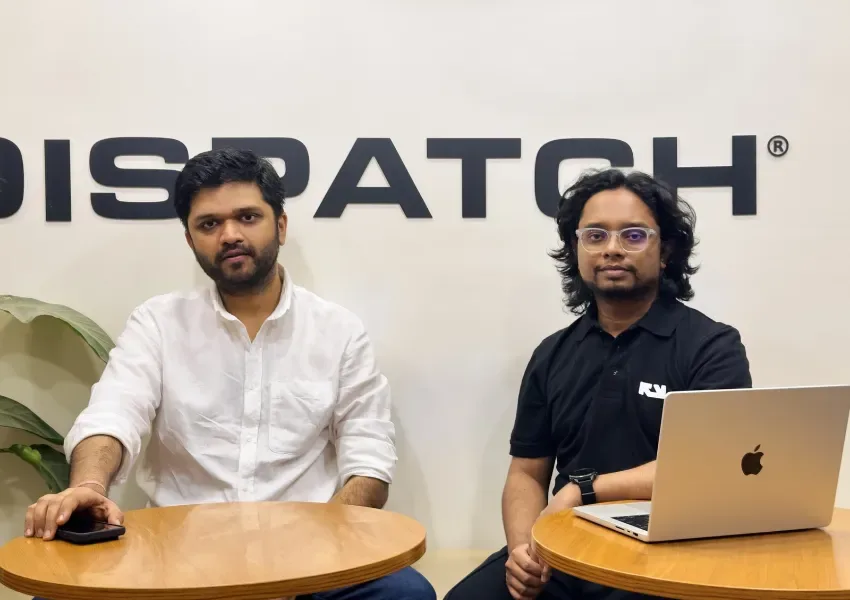
Founded by Rajit Arya and Navneeth Kannan, Dispatch is building a technology-led delivery network that aims to make each rider’s working hours more productive. Its model focuses on deciding which order a rider should take next and where they should position themselves to receive subsequent orders.
Tackling the Cost of Empty Kilometres
A persistent challenge in last-mile delivery is the time and distance riders spend between assignments. Demand can fluctuate sharply across locations and hours, leaving delivery partners waiting for orders or travelling without one.
Dispatch estimates that riders can cover up to 50% of their kilometres without carrying an order. These unproductive trips affect both delivery economics and rider earnings.
The startup’s approach is to coordinate orders across platforms rather than treat every delivery request as an isolated assignment. Its system considers order sequencing, rider location and expected demand to reduce unnecessary travel.
Dispatch says its model has helped cut empty kilometres by two-thirds, while riders take home around 55% more each month than the industry average. These are company-reported performance figures and have not been independently verified.
Building an AI Model for City Logistics
At the centre of the platform is LLSTM, which Dispatch describes as a foundation model for intracity logistics and mobility. It uses city-level movement and delivery data to make decisions about order allocation and rider positioning.
Each completed delivery, along with the decisions taken during the process and their outcomes, provides additional data for the model. The company believes this continuous feedback can help improve how its network responds to changing demand.
The distinction is important: instead of optimising only for the number of orders delivered, Dispatch is attempting to improve the productivity of each rider and reduce the distance travelled without an assignment.
From Pune to Five Cities
Dispatch says it has completed more than one lakh deliveries since beginning operations in Pune in June 2026. Monthly delivery volumes reportedly rose from 3,014 in June to 55,000 in October, with the company currently handling approximately 3,500 deliveries a day.
It also reports that order volumes are doubling every month and rider retention is 80% higher than the industry average.
The startup plans to expand to Mumbai in November and has set a target of reaching 50,000 daily orders across five cities.
Its delivery network serves food delivery and quick-commerce platforms, including Zomato, Swiggy, Zepto, Instamart and BigBasket. Dispatch also works with restaurants and merchants through direct API integrations and the Open Network for Digital Commerce (ONDC).
The latest funding will support expansion of its AI team and further development of LLSTM.
For the wider delivery ecosystem, Dispatch’s model raises an important operational question: can better order allocation improve rider earnings while also lowering the cost of fulfilment for platforms? Its ability to demonstrate those gains consistently across multiple cities will be central to its next phase of growth.